Stone Coated Metal Roofing Tiles: Factory Direct Supply from China — Global Export Channels Open for Building Material Importers and Engineering Partners
The international construction materials market continues to expand, driven by urbanization, infrastructure development, and a growing emphasis on durable, cost-efficient building solutions. Among these, stone coated metal roofing tiles have emerged as a material of significant interest for building material importers, distributors, and engineering contractors worldwide.
FUODE Roofing, a registered manufacturer of stone coated steel roofing products based in Shandong, China, announces the formal opening of its global export programme. This initiative connects international buyers directly with the production source — eliminating intermediary markups and offering competitive factory-direct pricing for wholesale orders of Galvalume stone coated roofing tiles.
This article provides a comprehensive overview of FUODE's stone coated metal roofing tile manufacturing, product specifications, quality control framework, global logistics capabilities, and the partnership models available to building material importers and engineering project agents.
1. Understanding Stone Coated Metal Roofing Technology
Stone coated metal roofing tiles represent a category of roofing material that combines the structural strength of steel with the aesthetic appearance of traditional roofing. Each tile is manufactured using a multi-layer process that bonds natural stone granules to a Galvalume steel substrate.
1.1 Multi-Layer Construction
A stone coated steel roofing tile consists of several functional layers, each contributing to the overall performance characteristics of the finished product:
• Base substrate: Galvalume steel sheet (aluminium-zinc alloy coated), offering corrosion resistance that significantly exceeds conventional galvanized steel.
• Acrylic primer layer: A bonding agent that creates a durable adhesion surface for the stone coating.
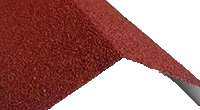
• Natural stone granule layer: Basalt or quartz granules, selected for colour stability, UV resistance, and sound-dampening properties.
• Acrylic overglaze: A transparent protective top layer that seals the stone surface and provides additional weather resistance.
This layered architecture results in a roofing tile that weighs approximately 6 kg per square metre — roughly one-eighth the weight of traditional clay or concrete tiles — while delivering comparable or superior durability across a range of climate conditions.
1.2 Performance Characteristics
Independent testing and field application data indicate that stone coated metal roofing tiles offer several performance attributes relevant to international construction projects:
• Service life: Designed for extended use, with many installations remaining functional for multiple decades.
• Fire performance: Non-combustible steel base with mineral coating contributes to fire-resistant roof assemblies.
• Wind resistance: Interlocking installation system provides resistance to wind uplift when installed according to manufacturer specifications.
• Thermal performance: Stone coating contributes to solar reflectance, which may assist in reducing heat transfer to building interiors in warm climates.
• Acoustic properties: The granular stone surface dampens impact noise from rainfall, addressing a common concern associated with bare metal roofing.
2. Galvalume Steel: The Foundation of Durable Roofing
The performance of stone coated metal roofing begins with the quality of the steel substrate. FUODE stone coated tiles are manufactured using Galvalume steel — a aluminium-zinc alloy coated steel product recognized in the construction industry for its corrosion resistance properties.
2.1 What is Galvalume Steel?
Galvalume is a steel sheet product coated with an alloy of approximately 55% aluminium, 43.4% zinc, and 1.6% silicon. This coating composition was developed to combine the barrier protection of aluminium with the galvanic protection of zinc. The resulting material demonstrates corrosion resistance that, in standardized salt spray testing (ASTM B117), has been observed to outperform conventional galvanized coatings by a considerable margin.
For importers and specifiers, the use of Galvalume steel means the tile substrate carries inherent protection against the environmental factors that commonly degrade roofing materials — including moisture exposure, coastal salt spray, and industrial atmospheric conditions.
2.2 Steel Thickness Options and Applications
FUODE stone coated steel roofing tiles are available in multiple steel base thicknesses, typically ranging from 0.12 mm to 0.60 mm. The selection of base thickness depends on project-specific factors including local wind load requirements, roof pitch, expected snow loads, and building code specifications in the destination market.
Our technical team provides guidance on appropriate specification for each project, taking into account the relevant building standards in the importer's country or region. This consultative approach helps ensure that the supplied tiles meet both regulatory requirements and performance expectations.
3. Factory-Direct Supply Model: How It Benefits Importers
The factory-direct supply model eliminates intermediary trading entities from the procurement chain. When a building material importer or engineering contractor sources stone coated roofing tiles directly from the manufacturing facility, several economic and practical advantages are typically realized.
3.1 Cost Structure Transparency
In a conventional trading company arrangement, the end buyer's price includes the manufacturer's cost plus margins applied by one or more intermediary entities — export trading companies, regional agents, or domestic wholesalers. The factory-direct model provides pricing that reflects the actual production cost plus a single, transparent margin.
For wholesale stone coated roofing tile orders — the per-unit cost difference can be meaningful when compared against multi-tier distribution channels.
3.2 Direct Communication and Customization
Working directly with the manufacturer enables importers to communicate specifications, customization requirements, and quality expectations without information loss through intermediaries. Whether the requirement involves specific stone coating colours, tile dimensions for a particular architectural style, or packaging and labelling specifications for the destination market, direct communication with the production team facilitates accurate fulfilment.
This is particularly relevant for engineering project agents who may need to match existing roofing materials, comply with project-specific technical schedules, or coordinate phased delivery timelines for large-scale developments.
3.3 Quality Traceability
When importers purchase directly from the stone coated metal roofing tile manufacturer, the quality accountability chain is straightforward. From incoming steel coil inspection through in-process checks to pre-shipment sampling, every quality control touchpoint is documented and traceable to the buyer's specific order. This traceability supports dispute resolution, warranty claims processing, and ongoing specification confidence for repeat procurement.
4. Global Export Capabilities and Logistics
FUODE Roofing has developed export logistics capabilities to serve building material importers across multiple continents. The manufacturing facility in Shandong Province is positioned with convenient access to major Chinese export ports, facilitating efficient container loading and shipping to destinations worldwide.
4.1 Markets Served
Stone coated metal roofing tiles from FUODE are currently exported to markets in Africa, Southeast Asia, Central Asia, the Middle East, and Latin America. Each market presents distinct regulatory environments, architectural preferences, and climate conditions — and our export team has developed experience in adapting documentation, packaging, and product specifications accordingly.
Key export destinations include, but are not limited to: Kenya, South Africa, Nigeria, Ghana, Egypt, the Philippines, Indonesia, Kazakhstan, Uzbekistan, and several markets in the Middle East and Latin America.
4.2 Shipping and Documentation
For each export order, FUODE prepares a complete documentation package including:
• Commercial Invoice with detailed product descriptions and harmonized system (HS) codes.
• Packing List specifying pallet contents, quantities, dimensions, and weights.
• Bill of Lading (for sea freight) or Air Waybill (for air freight samples).
• Certificate of Origin, issued by relevant Chinese authorities, which may assist importers in claiming preferential tariff treatment under applicable trade agreements.
4.3 Container Loading Optimization
Tile packaging is designed for export efficiency. FUODE's stone coated roofing tiles are stacked and palletized to maximize container utilization while protecting the stone coating surface during transit. Typical container capacities are:
• 20-foot container: accommodates approximately 8,000 square metres of tile coverage.
These figures are provided as estimates; exact capacity depends on tile profile, steel thickness, and specific packaging configuration. Our logistics team provides precise loading plans for each order.
5. Product Specifications and Quality Standards
Transparency in product specifications is fundamental to informed procurement decisions. The following table summarizes the standard specifications for FUODE stone coated steel roofing tiles.
5.1 Standard Product Specifications
• Tile dimensions (nominal): 1,340 mm × 420 mm.
• Effective coverage per tile: approximately 1,270 mm × 370 mm (0.47 square metres).
• Tiles per square metre: approximately 2.1 pieces.
• Weight per square metre: approximately 3 to 8 kg, depending on steel base thickness.
• Steel base material: Galvalume (AZ150 aluminium-zinc alloy coated steel).
• Available steel thicknesses: 0.12mm-0.6mm.
• Stone coating material: natural basalt and quartz granules.
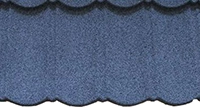
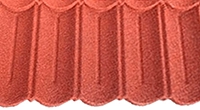
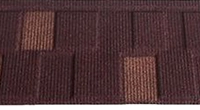
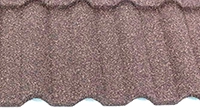
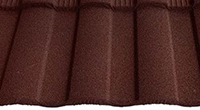
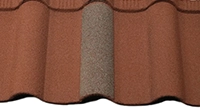
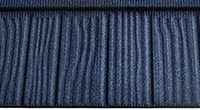
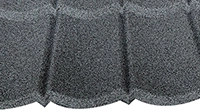
• Available colours: Red, Brown, Black, Green, Blue, Grey — with custom colour matching available for volume orders.
• Minimum recommended roof pitch: 12 degrees.
5.2 Quality Management System
The FUODE manufacturing facility operates under an ISO 9001 certified quality management system. This certification, maintained through regular surveillance audits, provides independent verification that production processes are documented, controlled, and continuously improved.
The quality control process encompasses: incoming raw material inspection (steel coil thickness, coating weight, surface quality); in-process monitoring at each production stage (base forming, primer application, stone coating, curing); finished product testing (coating adhesion, colour consistency, dimensional accuracy); and pre-shipment inspection (random sampling against order specifications, packaging integrity verification).
6. Quality Assurance and Manufacturing Process
Understanding the manufacturing process helps importers assess supplier capability and product consistency. The production of stone coated metal roofing tiles at FUODE follows a documented, stage-gated process.
6.1 Production Workflow
• Stage 1 — Decoiling and levelling: Galvalume steel coil is decoiled, levelled, and fed into the production line.
• Stage 2 — Base forming: The steel sheet is roll-formed into the tile profile, creating the interlocking edges, water channels, and surface contours.
• Stage 3 — Primer application: An acrylic primer is applied to the formed steel surface, creating the bonding layer for stone granule adhesion.
• Stage 4 — Stone coating: Natural basalt or quartz granules are evenly distributed onto the wet primer surface using controlled application equipment to ensure uniform coverage.
• Stage 5 — Curing: Coated tiles pass through a curing oven where the primer cross-links, permanently bonding the stone granules to the steel substrate.
• Stage 6 — Overglaze application: A transparent acrylic overglaze is applied to seal the stone surface and provide additional environmental protection.
• Stage 7 — Final curing and cooling: Tiles undergo a secondary curing phase followed by controlled cooling to ambient temperature.
• Stage 8 — Quality inspection and packaging: Each batch undergoes visual and dimensional inspection before being packed according to export packaging specifications.
6.2 Raw Material Sourcing
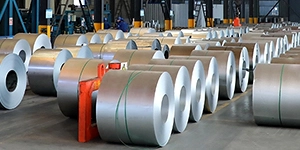
The primary raw materials — Galvalume steel coil, acrylic resins, and natural stone granules — are sourced from established suppliers with documented quality records. Steel coil is procured from mills that provide material test certificates (MTCs) verifying chemical composition and mechanical properties. Stone granules are sourced from quarries producing material with verified colour stability, hardness, and particle size distribution suitable for roofing applications.
7. How to Begin Your Import Journey
For building material importers, distributors, and engineering contractors interested in exploring a supply relationship with FUODE, the process is designed to be straightforward and transparent.
7.1 Initial Inquiry
Prospective buyers are invited to make contact via the following channels:
• Website: www.fuode.com — visit the contact page or submit an inquiry through the online form.
• Email: Send product inquiries, project specifications, and partnership proposals to the FUODE international sales team.
• WhatsApp: Direct messaging is available for urgent inquiries, sample requests, and real-time technical consultation.
7.2 Quotation and Sampling
Upon receiving an inquiry with the following information — delivery port or destination country, estimated order volume, preferred tile colour and steel thickness, and any project-specific requirements — the FUODE sales team provides a formal quotation within two working days. For buyers who wish to evaluate product samples before proceeding to a container order, sample kits are available and are typically dispatched within five working days of sample order confirmation.
7.3 Order Confirmation and Production
Following sample approval and commercial terms agreement, a proforma invoice is issued. Upon confirmation, production is scheduled and the buyer receives a production timeline with estimated completion and ready-for-shipment dates. Standard production lead time is approximately 15 to 25 working days, subject to order volume and current production queue.
7.4 Shipment and Ongoing Support
Once production is complete and quality inspection is passed, the order is loaded into the assigned container and shipped to the buyer's designated port. The FUODE team provides shipping updates, including vessel name, estimated departure and arrival dates, and tracking information where available. Post-delivery technical support remains available for installation guidance and any product-related inquiries.