Español
 العربية
 Francés
 Русский
 Português
 Deutsch
 日本語
日本語
 한국어
한국어
 Việt
Việt

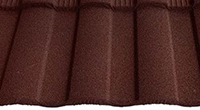
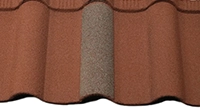
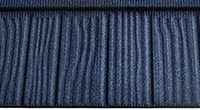

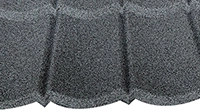


Africa Self-Build Housing Market Heats Up, Stone Coated Metal Roofing Tiles Shipped from Liaocheng Factory to Lagos
Africa Self-Build Housing Market Heats Up, Stone Coated Metal Roofing Tiles Shipped from Liaocheng Factory to Lagos
Africa is in the middle of a self-build housing boom. From Lagos to Nairobi, from Accra to Dar es Salaam, more and more families are choosing to buy their own land, design their own homes, and source building materials directly. This pattern is especially common in Nigeria — according to estimates from local real estate professionals, over sixty percent of homes in the greater Lagos metropolitan area are self-built rather than purchased from developers.

The logic behind this is straightforward. Urbanization across many African countries is outpacing formal housing supply. Developer-built homes come with high barriers and long timelines — ordinary people can neither wait that long nor afford the price tag. Self-building lets you work to your own budget in stages: lay the foundation and put up the steel frame this year, install doors and windows next year, get the roof on the year after. Step by step, no rush. This incremental approach means every batch of materials needs to be chosen carefully, and the roof — a major one-time outlay — is the last place you want to cut corners.
Among all the decisions in a self-build, the roof is often the one that takes the most thought. Tropical climates place almost extreme demands on roofing: six months of scorching sun every year, torrential downpours during the rainy season, and for coastal cities, the added problem of salt spray corrosion. Traditional clay tiles are heavy — they need extra roof structure reinforcement and suffer high breakage rates during transport. Asbestos sheets may be cheap, but health concerns have seen them banned in a growing number of countries. Plain corrugated metal sheets are fast to install and low in upfront cost, but the insulation is terrible — at a Lagos midday, the room directly under a bare metal roof feels like an oven. And along the coast, rust spots begin appearing within three to five years.
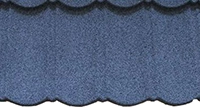
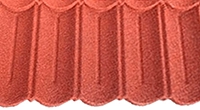
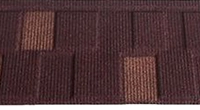
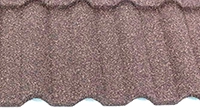
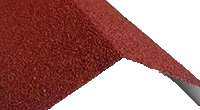
Stone coated metal roofing tiles fill this gap neatly. The base material is galvalume steel sheet, with a layer of natural stone granules bonded to the surface through a high-temperature sintering process. The result keeps the lightweight strength of metal while solving the main drawbacks of plain metal sheets: poor heat insulation, loud rain noise, and vulnerability to corrosion. A standard stone coated tile weighs only about one-sixth of a traditional clay tile. That means the roof structure can be lighter, and the overall building cost actually comes down rather than up. For the light-gauge steel frame homes widely adopted across Africa, this weight advantage is a factor you simply cannot ignore.
Liaocheng, a prefecture-level city in Shandong Province, has grown over the past decade into a major production hub for stone coated metal roofing. The FUODE ROOFING factory is located here, roughly a four-hour drive from Qingdao Port. From Qingdao, container vessels travel via the South China Sea, through the Strait of Malacca, across the Indian Ocean, and arrive at Apapa Port in Lagos about thirty-five days later. FUODE's team has worked this route many times. Every link — booking, customs declaration, destination clearance — is handled by long-term service partners, not a freight forwarder found online at the last minute.
Most first-time buyers sourcing stone coated metal roofing from China share a handful of common concerns. Quality tops the list. The goods spend over a month at sea — if they arrive looking nothing like the sample, what's lost isn't just the payment but also the construction schedule waiting on that roof. FUODE's approach is step-by-step confirmation: before mass production begins, a small sample panel is made for the customer to approve the color and stone granule mix. Production only starts after sign-off. Retained samples from every batch are kept on file. Before shipment, the customer can appoint a third-party inspection company to check the goods at the factory, or join a live video walkthrough. Before the container leaves, every pallet is stretch-wrapped and strapped, and the pallet bases are treated for moisture protection — keeping the risk of sea-damp damage firmly under control.
After-sales is the second big one. Roofing materials are meant to last decades. If you need to add a room or do renovation work a few years down the line, will the factory still be there? Can they still produce the exact same color? This is a genuine headache for buyers who source through intermediaries — their stock often comes from multiple factories, batches are inconsistent, and colors have no fixed reference codes. Buying directly from the source factory changes that equation. FUODE maintains its own color system: every shade has a code and a formula on file. A color produced three years ago can be matched today. For a reorder, you just quote the code and quantity — no need to ship an old tile back for color matching.
Payment security is another topic you cannot skip. Cross-border trade, paying in full before seeing the goods — anyone would hesitate. Two approaches are standard practice now. One is to go through a B2B platform with trade assurance: the buyer pays the platform, the platform releases funds to the seller after the buyer confirms receipt, and the platform steps in if there is a dispute. The other is T/T with a deposit upfront and the balance against a copy of the bill of lading — each side carries a share of the risk. For customers with an established trading history, O/A credit terms can also be discussed, though naturally this requires a track record to back it up.
Looking at the broader market, demand for stone coated metal roofing in Africa is spreading from the coast inland. Lagos and Abuja in Nigeria were among the early adopters. Now stable orders are coming from Accra in Ghana, Nairobi in Kenya, Dar es Salaam in Tanzania, and Kampala in Uganda. A noteworthy shift: early procurement was driven mainly by government projects and mid-to-high-end commercial buildings, but over the past two years the share of ordinary household orders has risen markedly. That signals market awareness and acceptance of this material are entering an acceleration phase.
For building materials importers in Africa, there are several tailwinds for entering the stone coated metal roofing category right now. On tariffs: HS code 73089000 enjoys relatively low import duty rates across most African countries, and a number of nations have even placed it on duty-exempt building materials lists to encourage housing construction. On the installation side: no heavy equipment is needed, and any local roofing contractor can get up to speed with brief training. On compatibility: the tiles work on light-gauge steel, timber, and concrete roof structures alike — the substrate doesn't matter.
Coming back to the self-build trend we started with, stone coated metal roofing and Africa's self-build market are a strong fit. Self-builders really care about three things: keeping the total cost within budget, getting reliable quality, and not having to spend time on maintenance. Stone coated metal tiles go down fast — a roof of around one hundred square meters can be finished by two or three workers in a week, so labor costs stay low. The service life is measured in thirty-year increments, and in that time there is almost no maintenance to speak of — rain washes the surface clean, no rust, no fading, no moss. If the house gets extended or renovated later, the tiles can be taken off and reused, with zero construction waste.
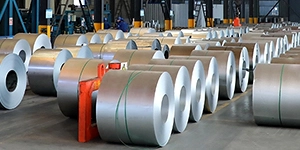
When it comes down to it, choosing a supplier is about choosing certainty. Certainty that this batch and the last batch come from one standard, one formula, one color. Certainty that the shipping schedule won't drift into the unknown. Certainty that five or ten years from now, when you need a reorder, the factory is still there and your contact still replies. For a building materials business you intend to run over the long haul, that kind of certainty carries far more weight than a dollar or two off the unit price. At FUODE ROOFING's factory in Liaocheng, the production line proves this point every day. The distance from a coil of steel to a stone coated metal tile that can take thirty years of sun and rain on a Lagos rooftop — what bridges that gap isn't some technical secret. It's the quiet consistency of getting it right, shipment after shipment.