Español
 العربية
 Francés
 Русский
 Português
 Deutsch
 日本語
 한국어
 Việt
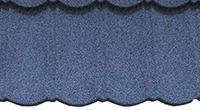
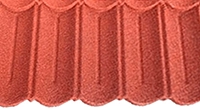

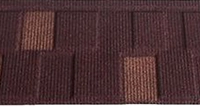
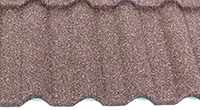
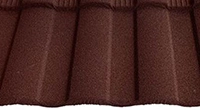
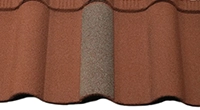


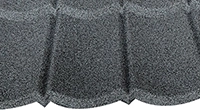
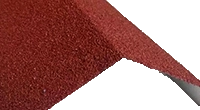




A Practical Guide to Stone Coated Metal Roof Tile Profiles
A Practical Guide to Stone Coated Metal Roof Tile Profiles
Why profile choice matters
A roof tile profile influences the visual character of a building and the way individual tiles overlap. In the stone coated metal roofing market, buyers may encounter profile names such as Bond, Shingle, Classic and Milano. These names are useful starting points, but they should not be treated as universal standards. Different manufacturers may use different dimensions or details for products with similar names.
For that reason, a profile should be reviewed through drawings, dimensions and a physical sample. A photograph may show the general pattern, but it may not reveal the profile height, side lock, overlap, fixing area or effective coverage. These details affect quantity estimation and installation planning. Buyers should request the manufacturer's technical information before comparing profile options.
Match the profile to the building design
The right profile depends partly on the building's architectural style. Some projects call for a more traditional tile-like appearance, while others may suit a simpler or more linear pattern. The surrounding buildings, roof shape, facade materials and intended market can all influence the choice. A distributor may also need to consider which profiles local contractors are familiar with and which options can be stocked efficiently.
The visual choice should not be separated from the roof plan. A complex roof with multiple hips, valleys and dormers may require more accessory coordination than a simple roof. Before selecting a profile, review the roof geometry and ask whether the manufacturer offers matching ridge, hip and other components. If a special detail is required, confirm who will design or supply it.
Understand dimensions and effective coverage
Overall tile dimensions are not the same as effective coverage. Tiles overlap during installation, so the area covered by each piece is usually smaller than the product's full length and width. The exact coverage depends on the profile and installation arrangement. This is one reason why buyers should request an effective coverage figure and confirm the assumptions behind it.
When estimating quantities, use the roof area and layout rather than multiplying the total area by a figure based only on overall dimensions. Include allowances for cuts and the roof's geometry according to the project estimator's method. Accessories such as ridge pieces, valleys and flashings should be calculated separately. The supplier can provide product dimensions, but the final takeoff should be checked against project drawings.
Review the overlap and fixing areas
The overlap design affects how adjacent tiles connect and how the roof assembly is installed. Buyers should ask for the manufacturer's installation drawing and fixing guidance. The location and type of fastener depend on the product design and supporting structure. Contractors should follow the instructions and local building requirements rather than applying a generic fixing pattern from another product.
A sample can help reveal the side and end overlap, but a single tile may not show how several pieces fit together. Ask for a small demonstration arrangement or a drawing showing the relationship between adjacent tiles. This is especially helpful when comparing two suppliers or assessing whether a profile will work with the project's roof geometry.
Consider local market preferences without assuming uniform demand
Roofing preferences vary between countries and within each country. A profile popular in one city may not be the preferred option in another region or customer segment. Importers should speak with local contractors, merchants and project buyers to understand which roof appearances are familiar and which products may need more explanation.
For markets such as South Africa, Kenya, Nigeria, Malaysia, Indonesia, the Philippines, Kyrgyzstan, Uzbekistan and Canada, the buyer should consider local building styles, contractor experience, distribution channels and regulatory requirements. The purpose is not to label a whole country with one preference, but to identify the target customer and project type. A small sample range can help test interest before a distributor commits to a broader stock program.
Accessories must follow the selected profile
A profile selection affects more than the field tile. Ridge, hip, valley, eaves and gable details should be compatible with the chosen tile design. Ask the manufacturer which accessories are standard and which require separate fabrication or local sourcing. The quotation should state quantities and dimensions wherever possible.
If accessories are purchased from another supplier, confirm that their material, finish and dimensions suit the tile system. The installer should review the interface details before work begins. This coordination is particularly important at roof intersections, penetrations and drainage paths, where a generic accessory may not fit the intended arrangement.
How to compare profile samples
Place samples on a flat surface and compare the shape, height, edge details, surface texture and dimensions. If possible, arrange several tiles in the intended overlap pattern. Review the appearance from different viewing angles and under consistent light. Keep a note of the profile name and the supplier's drawing reference so that the sample can be matched to the quotation.
A sample approval should not be based on profile appearance alone. Confirm the material specification, effective coverage, accessory availability and installation guidance. If the buyer needs a custom profile or a modified dimension, ask about feasibility, tooling, minimum quantity and sample lead time. Written approval should be obtained before production.
Choose a profile through a complete project brief
A useful profile enquiry includes roof drawings or photographs, building type, preferred appearance, approximate roof area, location, required material specification and any known local installation requirements. The manufacturer can then recommend which standard profile information to review and identify details that need confirmation. If the project has a designer or roofing contractor, involve them in the technical review.
FUODE ROOFING offers different stone coated metal roofing profile options for buyer evaluation. Importers and contractors can share the intended market and project details to begin a product discussion. A profile should be selected because it fits the building and installation plan, not only because its name or photograph looks familiar.

Visit www.fuode.com for more details.
— FUODE ROOFING —
Stone Coated Metal Roofing Source Factory | Shandong, China
www.fuode.com | Welcome factory visit & sample requests