Español
 العربية
 Francés
 Русский
 Português
 Deutsch
 日本語
日本語
 한국어
한국어
 Việt
Việt
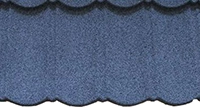
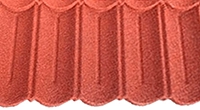

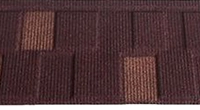
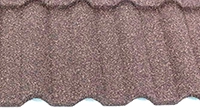
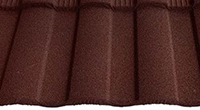
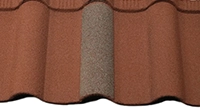
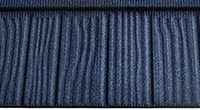

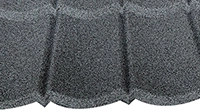



5 Years Later: A Customer’s Stone Coated Metal Roof Still Looks Fresh
5 Years Later: A Customer’s Stone Coated Metal Roof Still Looks Fresh
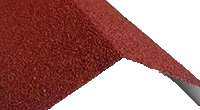
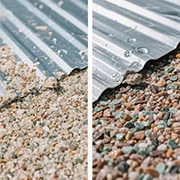
A few days ago, a customer sent us several photos of a roof project that had been completed about five years ago using stone coated metal roof tiles. We always like receiving this kind of feedback. Factory production photos can show how a tile looks when it has just come off the line, but a roof that has already spent years outdoors tells a different story. It has experienced sunlight, rain, wind, dust, seasonal temperature changes and everyday weather conditions that simply cannot be reproduced by looking at a new sample in the showroom. In the photos the customer shared, the roof still had a clean and consistent appearance, and the stone-coated surface remained visually intact. Of course, a few photographs are not the same as a laboratory weathering test, and we would not use one project to make a blanket statement about every roof or every climate. But for a manufacturer, this kind of real-world feedback is valuable because it gives us an opportunity to look back at what was actually supplied, how it was installed and how the material has been performing in use.
What Can We Really Learn From a Five-Year-Old Roof?
When customers compare stone coated roofing tiles, the first thing they usually notice is the color and surface texture. That makes sense. A new roof is highly visible, and appearance is an important part of the purchasing decision. But after several years outdoors, the things that matter become much more practical: whether the stone granules remain properly bonded, whether the color has changed noticeably, whether exposed areas show premature corrosion, whether the tile edges remain in good condition and whether the roof continues to look consistent from one section to another.
This is why we often tell overseas buyers not to judge a roofing tile only from a small sample. A sample is useful for checking the profile, color, texture and general workmanship, but it is only the beginning of the evaluation. A better procurement process also looks at the material specification, production process, quality inspection and, where available, actual project feedback.
For a stone coated metal roof tile manufacturer, these details are connected. The final appearance of a roof does not come from the stone granules alone. It starts with the metal substrate and continues through forming, surface preparation, adhesive application, stone granule distribution, curing, inspection, packaging and finally installation.
At FUODE ROOFING, our stone coated metal roofing tiles are produced in-house using galvalume steel coils, adhesive and colored stone granules. The company currently reports more than ten years of experience in metal building materials, annual production capacity of more than 5 million square metres, an 80,000+ square metre factory area and exports to more than 30 countries.
Those numbers are part of our factory background, but they are not the reason a five-year-old roof deserves attention. The more useful question is what happens to the product after it leaves the factory.
The Surface Is More Than Just a Color
A stone coated metal roof has a different appearance from a smooth painted metal sheet because the surface is covered with stone granules. The granules provide the textured finish that customers see from the ground, while the underlying coating system and metal substrate form the rest of the roofing material.
For this reason, when a customer sends us older roof photos, one of the first things we look at is the surface condition. Are there obvious areas where granules have been lost? Does the color remain reasonably consistent? Are there visible signs of coating damage around cut edges or exposed areas? Are there unusual differences between roof sections?
None of these observations should be treated as a substitute for formal testing. They are simply useful real-world clues.
The official FUODE product information lists specific quality documentation for selected stone-coated products, including ISO 9001, CE, COC and SGS-related inspection information. For export projects, buyers can also discuss third-party inspection requirements before shipment, which is particularly useful when the order involves a large quantity or a customized specification.
This is one reason we encourage customers to confirm the technical specification before production rather than judging everything after the container arrives.
Why the First Five Years Matter
Five years is not the end of a roof's life, and it should not be presented that way. But it is long enough for a roof to have experienced thousands of hours of outdoor exposure. That makes a five-year project interesting from a practical perspective.
During this period, a roof may have gone through:
· Strong sunlight and ultraviolet exposure
· Heavy rain and repeated wet-dry cycles
· Wind carrying dust and small particles
· Seasonal temperature changes
· Moisture around valleys, eaves and roof junctions
· Routine cleaning, maintenance or inspection
· Normal movement of the roof structure and fasteners
The actual conditions vary greatly from one location to another. A roof in a dry inland area does not experience the same environment as one near the coast, and a roof in a tropical region has a different moisture profile from one in a cold continental climate.
That is why we prefer to talk about material selection and project conditions rather than making a simple statement that one roofing tile will perform identically everywhere.
For example, FUODE's product range includes different steel thicknesses, profiles and color options, and the company describes OEM/ODM customization covering areas such as logo imprinting, profile and size adjustments and color formulation. The right specification can therefore be discussed according to the buyer's market and project requirements instead of assuming that every order should use exactly the same configuration.
Installation Still Matters After the Factory
There is another lesson hidden in that five-year-old customer photo: the factory does not control the entire life of a roof.
Once the tiles arrive at the construction site, installation becomes a major part of the result. Even a properly manufactured stone coated metal roofing product needs to be installed according to the roof design and the requirements of the specific profile.
Roof slope, battens, tile overlap, fastener positioning, valleys, ridges, eaves, gable edges and flashing all affect how the finished roof works as a system. FUODE's installation resources cover these areas and also emphasize that installation references do not replace local building codes or project-specific engineering requirements.
This is especially important when looking at older project photos. If a roof still looks good after several years, we should not automatically say, “It is because of the tile.” The result may reflect a combination of the roofing material, supporting structure, installation method, drainage design, local climate and maintenance.
That is actually a more useful way to evaluate a roofing supplier.
A factory should be able to talk about the product honestly, including where the material needs to be handled carefully and what depends on the installer or project designer.
What Should Buyers Check Before Ordering Stone Coated Metal Roof Tiles?
If you are a distributor, contractor or building-material importer comparing suppliers, a simple checklist can help you look beyond the sample color.
1. Check the steel substrate
Ask for the actual steel thickness and coating specification rather than relying only on the product name. The substrate is an important part of the roofing system, particularly for projects exposed to moisture or corrosive environments.
2. Look at the stone coating
Check the stone granule texture, distribution and adhesion. The surface should correspond with the approved sample and agreed specification. For customized colors, keeping an approved physical sample is especially useful for future production comparisons.
3. Check dimensions and forming
A roofing tile needs to fit with the intended overlap and supporting structure. Small dimensional differences can become more noticeable when thousands of tiles are installed across a large roof.
4. Understand the accessories
Ridge caps, valley components, flashing and edge details are not decorative extras. They are part of the roof system. FUODE's product and technical materials discuss matching components and details around roof junctions, which are important areas to review before installation.
5. Keep the approved sample
This sounds simple, but it is useful. Keep the approved sample, technical specification, color reference and order information together. If another order is placed months later, these records give both the buyer and factory a clearer reference point.
A Five-Year Photo Is Useful, But It Is Not the Whole Story
The customer who sent us these photos probably was not trying to conduct a scientific test. They simply wanted to show us how the roof looked after several years of use. For us, that simple gesture was meaningful.
It reminds us that the relationship between a factory and a customer should not end when the container leaves the warehouse.
When we receive project photos, installation feedback or questions about a roof that has already been in use for several years, we can compare that information with the original product specification and production records. Over time, this kind of feedback helps manufacturers understand what customers are actually experiencing in different markets.
It also explains why we place importance on production consistency. According to FUODE's current factory information, the company integrates raw-material sourcing, production and factory-direct supply, while its OEM process includes pre-production sample approval and quality checks during and before shipment.
For a buyer, this means there is a clearer reference point when discussing a repeat order. If you purchased a particular profile, thickness and color five years ago, the original specification can be brought back into the conversation instead of starting from a vague description such as “the dark grey tile we bought last time.”
That may sound like a small detail, but international roofing procurement often involves containers, distributors, contractors and projects separated by thousands of kilometres. Clear records make communication much easier.

From a New Sample to a Roof That Has Been Outdoors for Years
When you are looking at a new stone coated metal roof tile, it is easy to focus on what you can see immediately: the color, profile, texture and price.
When you look at a roof after five years, the questions become different.
How has the surface held up?
How consistent is the appearance?
Was the original material specification appropriate for the project?
Was the roof installed correctly?
Were the valleys, ridges and flashing handled properly?
Has the roof been maintained as recommended?
There is no single photograph that can answer all of these questions. But real project feedback can add another useful piece to the picture.
That is what this customer's photos mean to us at FUODE ROOFING. We are not using one five-year-old roof to make a promise about every project. Instead, we see it as a practical example of why buyers should look at the complete chain—from steel substrate and stone coating to forming, quality inspection, installation and long-term project feedback.
As a stone coated roofing tiles factory, our job is not simply to produce a tile that looks good when it leaves the production line. It is to maintain clear specifications, consistent manufacturing processes and straightforward communication with the people who will eventually install and use the product.
Five years after delivery, when a customer takes the time to send photos back to the factory, that is a useful part of the story.
And for the next customer considering stone coated metal roof tiles, it is a good reminder to ask not only, “How does this tile look today?” but also, “What is behind the tile, how is it made, and how will this roof be designed and installed for the conditions where it will actually be used?”

— FUODE ROOFING —
Stone Coated Metal Roofing Source Factory | Shandong, China
www.fuode.com | Welcome factory visit & sample requests