Español
 العربية
 Francés
 Русский
 Português
 Deutsch
 日本語
 한국어
 Việt




Stone Coated Metal Roofing Fire Rating: How to Read Fire Test Reports Before Buying
Stone Coated Metal Roofing Fire Rating: What to Check in a Test Report Before Buying
When choosing roofing materials, buyers usually pay attention to appearance, price, thickness, weight and expected service life. Fire performance is another important factor, but it is not always easy to understand from a product catalogue. A supplier may describe a roofing product as fire-resistant or provide a test report with a classification, yet many buyers are unsure what that result actually means. Does it apply to the roofing tile itself, or to the complete roof structure? Can a report issued under one country's standard be used for a project in another country? And how can a buyer tell whether the document really matches the product being purchased?
These questions are worth asking before placing an order. Stone coated metal roofing is a layered product, and its fire performance should be evaluated according to the relevant test method and intended installation. A metal base, adhesive coating and colored stone granules each have their own material characteristics, but a roofing system also includes the supporting deck, underlayment, insulation, fasteners and other components. Looking at only one part of the product may give an incomplete picture.
At FUODE ROOFING, we believe that a useful product discussion should go beyond a simple statement about fire ratings. Buyers need to understand what a test report covers and whether the result is suitable for their local building requirements. Before selecting stone coated metal roofing tiles for a residential, commercial or industrial project, it is worth taking a few minutes to understand the basics.
What Does a Fire Rating for Stone Coated Metal Roofing Mean?
A roofing fire rating is a classification or test result used to describe how a roofing product or roof assembly performs under specified fire exposure conditions. It does not mean that a roof can never catch fire, remain unaffected by every fire scenario or protect a building under all circumstances. Laboratory tests are conducted under controlled conditions, and their results must be interpreted within the scope of the relevant standard.
One important distinction is the difference between the reaction to fire of a material and the performance of a roof when exposed to an external fire. Reaction-to-fire testing examines how a material behaves when exposed to heat or flame, including characteristics such as combustibility, flame spread and smoke production, depending on the test method. External roof fire testing, on the other hand, evaluates how a roof covering or roof assembly responds to fire exposure from outside the building.
These are related aspects of fire safety, but they are not interchangeable. A material classification does not automatically establish the external fire classification of a complete roof. Likewise, a roof covering classification under an external fire test does not provide every piece of information about the reaction to fire of each individual component. This distinction is particularly important when reviewing stone coated metal roofing fire ratings, because buyers may see different standards and classification labels on documents from different markets.
The first question should therefore not be simply, "What is the fire rating?" A more useful question is, "Which fire performance was tested, under which standard, and for which product or roof construction?"
ASTM E108: Understanding Class A, Class B and Class C
For buyers working with the North American market, ASTM E108 is an important standard to recognize. It is titled Standard Test Methods for Fire Tests of Roof Coverings. The standard evaluates the fire response of roof coverings under simulated external fire exposure and includes procedures such as intermittent flame exposure, flame spread, burning brand and flying brand tests, with additional rain or weathering tests where applicable.
Under the ASTM E108 classification system, roof coverings may be classified as Class A, Class B or Class C. These classes represent different levels of test exposure. Class A applies to the most severe exposure conditions in this classification system, Class B to moderate exposure conditions, and Class C to light exposure conditions. The classifications are based on whether the tested roof covering or assembly meets the specified performance criteria under the relevant test conditions.
For a buyer, Class A is often a classification worth checking when a project has demanding roofing fire requirements. However, it is important not to assume that every stone coated metal roofing product automatically qualifies for Class A simply because it contains a metal base. The result must be supported by appropriate testing, listing or other accepted evidence, and the scope of the result must match the intended application.
The roof deck and installation arrangement can make a difference. A test report may describe a particular deck material, roof slope, underlayment, fastening method or other construction details. If a project uses a different arrangement, the original classification may not necessarily apply. This is why a buyer should read the complete report or certification information rather than relying on a single Class A, B or C statement in a brochure.
EN 13501-5: What Does BROOF(t1) or BROOF(t4) Mean?
For many European projects, buyers may come across EN 13501-5, which covers the fire classification of construction products and building elements using data from external fire exposure tests for roofs. The classification is based on test methods described in CEN/TS 1187 and the applicable classification rules.
You may see designations such as BROOF(t1), BROOF(t2), BROOF(t3) or BROOF(t4) in technical documents. The letter B indicates a classification category for external fire performance, while the suffix in brackets identifies the test method used. The different test methods reflect different testing procedures and exposure conditions. They should not be treated as interchangeable labels.
For example, a report showing BROOF(t4) is not simply another way of writing ASTM E108 Class A. These classifications belong to different standards and testing systems. A buyer should not convert one result into another without an accepted regulatory basis or supporting assessment. Even within the same broad European classification framework, the relevant test method can depend on the country, project specification and applicable national requirements.
It is also important to distinguish EN 13501-5 from EN 13501-1. The latter is commonly associated with reaction-to-fire classification of construction products, while Part 5 addresses the external fire performance of roofs and roof coverings. If a supplier provides an EN 13501-1 classification, buyers should check whether it answers the specific roofing fire requirement in their project. A document may be valid and useful, but it may not be the document the local building authority or project specification asks for.
The safest approach is to confirm the required standard and classification with the local architect, consultant, contractor or building control authority before ordering. This is especially important for export projects, where building regulations and accepted test methods can vary between markets.
How to Read a Roofing Fire Test Report
A fire test report should tell you more than the final classification. Start with the product identification. Check the manufacturer name, product name, product type, model or profile and the description of the specimen tested. If the report refers to a particular roofing tile construction, compare it with the product quotation and technical specification you have received. A report for a different product or an earlier construction should not automatically be treated as evidence for the current item.
Next, look at the test standard and its edition. Standards can be revised, and project specifications may refer to a particular edition. The report should identify the method used and provide enough information to establish what was actually evaluated. If the classification is intended for a particular market, make sure the standard is recognized for that application.
The specimen description is another section worth reading carefully. For roofing products, this may include the metal base, coatings, surface finish, underlayment, roof deck, supporting materials, fixing details and installation arrangement. These details are not merely laboratory paperwork. They help define the construction to which the test result applies. If the report describes a specific roof assembly, replacing one layer or changing the installation method may affect whether the result remains applicable.
Buyers should also check the testing laboratory's identity and relevant accreditation or recognition. Look for the report number, issue date, test date, laboratory details and any certification or listing information. Where the project requires third-party certification, a test report alone may not be sufficient. A certification or listing document may be needed to show that the product is covered by an approved scheme and that the relevant conditions have been met.
Finally, read the conclusion and any limitations. Some reports apply only to the specimen tested, while others may include an extended field of application or specific conditions for using the result. Pay attention to notes about permitted roof decks, slopes, insulation, underlayment and fixing methods. If anything is unclear, ask the supplier or laboratory to explain it before treating the report as proof of compliance.
Why the Complete Roof Structure Matters
A common misunderstanding is that the fire rating belongs only to the visible roofing tile. In many external fire tests, the specimen is installed as a roof covering or assembly. The result may therefore depend on the way the tile is combined with the deck and other specified components.
Consider two projects using the same stone coated metal roofing tile. One project installs it on a specified non-combustible supporting deck, while the other uses a different deck and adds an insulation layer that was not included in the original test arrangement. Even though the visible tiles look identical, the complete constructions are not necessarily the same. A classification obtained from one tested arrangement should not be assumed to cover every possible arrangement.
Underlayment and insulation deserve particular attention. Their material composition and position within the roof can influence the fire performance of the overall construction. The same applies to membranes, timber battens and other supporting components. This does not mean that a particular component automatically makes a roof safer or less safe. It means that the complete assembly should be checked against the requirements of the project and the scope of the relevant test evidence.
For contractors and developers, this is also a reason to coordinate material selection early. The roofing supplier can provide product specifications and information about the tile, while the architect, roofing designer or qualified local professional should confirm the suitability of the complete construction. Making these decisions before installation helps reduce the risk of discovering a compliance issue after materials have arrived at the site.
Does a Metal Base Automatically Mean Better Fire Performance?
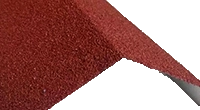
Stone coated metal roofing is generally manufactured using a metal base, an adhesive layer and colored stone granules. The metal base is an important part of the product structure, but it is not enough on its own to establish a specific fire classification for the finished roofing system.
The adhesive and other coatings also form part of the product construction. Their composition and quantity may vary between manufacturers and product specifications. In addition, the supporting deck, insulation and underlayment can influence the performance of the complete roof. It is therefore not technically sound to judge a finished roofing product only by saying that it is made from metal.
This is also why buyers should be cautious about broad claims such as "completely fireproof" or "cannot burn." No roofing material should be presented as eliminating every fire risk. A responsible product evaluation focuses on the actual test method, classification and intended application. It also considers the other fire safety measures required by the building design, including structural protection, separation distances, fire stopping and local code compliance.
When comparing suppliers, ask for specific documents rather than relying on general descriptions. A clear answer about the product construction and the scope of available test evidence is more useful than an impressive-sounding claim without supporting information.
What Should Importers and Distributors Confirm Before Ordering?
For importers, distributors and roofing contractors, checking fire documentation before placing an order can save time later. First, identify the destination market and confirm which roofing fire standard is required. Do not assume that a report accepted in one country will automatically satisfy another country's regulations. If the project specification requests ASTM E108, for example, a report using a different test method should be reviewed with the project consultant or relevant authority before it is accepted as an alternative.
Then compare the tested specimen with the product being quoted. Confirm the tile profile, metal specifications, coating construction and any other details that may affect the product identity. If the report is tied to a particular roof assembly, confirm that the proposed deck, underlayment, insulation and installation method are within the report's stated scope or permitted application.
It is also worth asking whether the document is a laboratory test report, a product certificate or a formal listing. These documents serve different purposes. A laboratory report records the test and its findings, while a certification or listing may provide additional evidence that a product has been evaluated under a particular scheme. The exact documentation needed depends on the market and the project.
For larger developments, it is sensible to send the technical documents to the local project team before confirming the purchase. This allows the architect, consultant or contractor to review the information while there is still time to clarify product details or adjust the roof specification. A little checking at the quotation stage is usually easier than dealing with a mismatch after shipment.
FUODE ROOFING: Product Information That Supports Better Decisions
FUODE ROOFING is a manufacturer of stone coated metal roofing tiles based in Liaocheng, Shandong Province, China. Our products are made using a metal base, adhesive and colored stone granules, with different profiles and colors available for different roofing projects and market preferences.
We understand that overseas buyers need more than product photographs and prices when evaluating a roofing supplier. They also need clear information about product construction, specifications, available accessories and the documents relevant to their target market. For projects with specific fire performance requirements, the most useful starting point is to identify the required standard and then check whether the available product documentation matches that requirement.
We encourage buyers to confirm the intended application before selecting a product. A residential project, a commercial building and an industrial development may have different roof construction details and regulatory requirements. Providing the project location, roof structure and requested fire classification helps make the technical discussion more focused. Where a particular test report or certification is required, its applicability should be confirmed rather than assumed.
Our approach is straightforward: understand the project first, discuss the product specifications clearly and help buyers make decisions based on relevant information. We believe this is a more reliable way to build long-term cooperation than relying on broad claims that cannot be checked.
A Fire Rating Is Only Useful When You Understand Its Scope
Before choosing stone coated metal roofing, do not stop at the words "fire-resistant" or a classification printed on a product sheet. Find out which standard was used, whether the test covers reaction to fire or external roof fire exposure, what construction was tested and whether the result applies to your intended installation.
ASTM E108 Class A, B and C classifications and EN 13501-5 designations such as BROOF(t4) belong to different testing and classification systems. They should be read in their own context, not treated as direct equivalents. The roof deck, underlayment, insulation and fixing arrangement may also be part of the test scope, so the complete report matters.
A suitable roofing material is not selected by one label alone. It is selected by matching the product, test evidence, installation details and local building requirements. If you are sourcing stone coated metal roofing tiles for a new market or a specific construction project, taking time to review the fire test report before ordering is a practical step toward a more informed purchasing decision. At FUODE ROOFING, we welcome technical discussions with distributors, contractors and project buyers who want to understand our roofing products and evaluate whether they fit their project requirements.

— FUODE ROOFING —
Stone Coated Metal Roofing Source Factory | Shandong, China
www.fuode.com | Welcome factory visit & sample requests