Español
 العربية
 Francés
 Русский
 Português
 Deutsch
 日本語
 한국어
 Việt




Condensation on Stone Coated Metal Roofing: Is the Back Coating or Ventilation More Important?
Condensation on Stone Coated Metal Roofing: Is the Back Coating or Ventilation More Important?
Why Does Condensation Form Under a Metal Roof?
Some roofing problems are easy to notice. A damaged tile, a loose ridge cap or a leaking flashing can usually be spotted during a roof inspection. Condensation is different. It may begin as small water droplets on the underside of a roofing sheet or around the roof structure, and people may not notice it until they find damp insulation, water marks on the ceiling or signs of corrosion. This often leads to a familiar question from buyers and contractors: if a stone coated metal roof has a protective coating on its back, is that enough to prevent condensation, or does the roof still need ventilation?
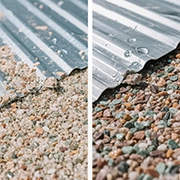
Before comparing these two measures, it helps to understand where condensation comes from. Air naturally contains water vapor. When warm, moisture-containing air comes into contact with a surface that is colder than its dew point, some of that vapor can turn into liquid water. This can happen beneath metal roofing during cold nights, seasonal temperature changes or other conditions where the metal surface cools quickly. It can also happen when warm, humid indoor air enters a colder roof space through gaps in the ceiling or an incomplete air barrier.
Metal roofing is particularly worth discussing because metal surfaces can respond quickly to changes in outdoor temperature. A clear night, a sudden drop in temperature or a difference between indoor and outdoor conditions may create an environment where condensation forms on the underside of the roofing material. The exact risk depends on the climate, indoor humidity, roof construction, insulation, air leakage and ventilation arrangement. It is not simply a matter of whether the roofing material is metal or whether the roof has a certain color.
For stone coated metal roofing projects, this distinction is important. The stone granules on the upper surface provide the product's characteristic appearance, while the steel base and its protective layers form part of the roofing material's construction. However, the roofing tile itself is only one layer in the complete roof assembly. Underlayment, roof battens or decking, insulation, air barriers and ventilation all influence how moisture is managed. Looking at the tile alone will not explain every condensation problem.
What Does the Back Coating Actually Do?
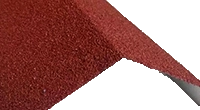
The back coating of a stone coated metal roofing tile is an important part of the product's construction. It is applied to the underside of the metal base and forms part of the protective finish. Depending on the coating formulation and the product specification, it can contribute to protecting the metal surface and supporting the overall coating system. For buyers, this is a detail worth checking when comparing products from different suppliers, especially when the roofing material will be used in a humid or demanding environment.
However, there is an important difference between protecting a metal surface and preventing water vapor from condensing. A conventional protective back coating should not automatically be described as an anti-condensation solution. Condensation occurs because of temperature and moisture conditions around a surface. If the underside of a metal tile becomes colder than the dew point of the surrounding air, water droplets may still form unless the roof assembly has been designed to manage those conditions.
Some products may use a specially designed anti-condensation treatment or a moisture-absorbing layer on the underside. These systems are different from an ordinary protective coating and should be evaluated according to their actual technical specifications. Their performance depends on the material, the amount of moisture it can temporarily hold, the conditions under which it releases moisture and whether the roof assembly allows it to dry. Buyers should not assume that every dark-colored back coating has these properties.
This is why it is useful to ask a supplier what the back coating is designed to do. Is it a protective coating for the metal surface, a specified anti-condensation treatment, or another type of finish? What material is used, and is there technical information available to support the claimed function? Clear answers are more valuable than a broad statement that a product is simply “condensation-proof.”
At FUODE ROOFING, we believe product details should be explained according to the actual material and manufacturing specification. When customers compare stone coated metal roofing tiles, we encourage them to look at the complete product construction rather than judging the underside by appearance alone. A back coating is worth considering, but it should not be expected to replace a properly designed roof structure.
How Roof Ventilation Helps Manage Moisture
Roof ventilation works in a different way. Rather than changing the surface coating of the tile, it helps move air through a designed space within the roof assembly. In a conventional ventilated attic, outdoor air enters through lower intake openings, often near the eaves, and moves through the attic toward higher exhaust openings near the ridge. This airflow can help remove accumulated heat and moisture and support drying when moisture is present.
The important point is that ventilation needs a complete air path. Installing a ridge vent without suitable intake openings does not automatically create effective airflow. Similarly, soffit vents will not work as intended if insulation, construction debris or other materials block the route. A balanced arrangement needs to be considered in relation to the attic size, roof pitch, building layout and local building requirements.
Ventilation can help reduce the time moisture remains within a roof space, but it is not a substitute for controlling indoor air leakage. Warm, humid air from bathrooms, kitchens, laundry areas or poorly sealed ceiling penetrations can enter the attic and increase the amount of moisture available for condensation. If that moisture source is not addressed, simply adding more roof vents may not solve the underlying problem.
There is also no single ventilation arrangement that applies to every building. Some roofs are designed as ventilated attic assemblies, while others use carefully designed unvented roof constructions with specific insulation and moisture-control layers. The correct solution depends on the climate, building design and applicable construction standards. Buyers should therefore avoid assuming that every stone coated metal roof must use the same ventilation detail.
For many conventional pitched roofs, however, a properly designed intake-and-exhaust arrangement is an important part of moisture management. When combined with suitable insulation and air sealing, it can help the roof space dry more effectively and reduce the risk of prolonged moisture accumulation.
Back Coating vs. Ventilation: Which One Is More Important?
If the question is which one should be prioritized, the most accurate answer is that they perform different jobs and should not be treated as alternatives. The back coating is part of the roofing tile's material protection. Ventilation is part of the building's moisture and heat management strategy. One cannot simply replace the other.
Imagine a roof installed in a humid region where indoor moisture regularly enters the attic. Even if the metal tiles have a suitable protective back coating, condensation may still occur when the underside of the roofing material becomes colder than the surrounding air's dew point. If the roof space has poor air movement and no effective drying path, moisture may remain for longer. In this situation, the building's air sealing, insulation and ventilation arrangement deserve attention. The coating alone cannot correct the whole problem.
Now consider a roof where the attic ventilation and air barrier are properly designed, but the roofing material has an unsuitable or poorly applied protective finish. The roof assembly may manage moisture more effectively, but the metal surface still needs appropriate protection for its intended exposure conditions. Ventilation does not replace the need for a suitable coating system either.
The better way to think about the issue is to divide the responsibilities. The roofing tile should have a suitable material and coating specification. The roof assembly should have an appropriate strategy for controlling moisture, including underlayment, insulation, air sealing and ventilation where required. The installation should then follow the details designed for that particular building.
For buyers, this is a more useful approach than asking a supplier to promise that one coating or one vent will eliminate condensation. A reliable roofing specification should explain what each component is intended to do and how the components work together.
Do Not Overlook Underlayment and the Roof Structure
When discussing condensation, the conversation often focuses on the metal tile and the ventilation opening. Yet the layers beneath the roofing material also matter. Underlayment is commonly installed below the roof covering as part of the secondary water-management layer. Depending on the product and roof design, it can help protect the roof deck from water that passes beneath the outer covering. It should be selected and installed according to the roofing system and local requirements.
Underlayment should not be confused with a ventilation system. A membrane may help manage water, but it does not automatically provide a route for moisture to escape from the roof assembly. Some roof designs use a ventilation space or drainage layer beneath the exterior roofing material. Others use different combinations of air, vapor and water-control layers. The correct arrangement depends on the complete roof design, not simply the name of the membrane.
The supporting structure also needs attention. Timber battens, roof decking, insulation and other components may respond differently when exposed to repeated moisture. If water accumulates or cannot dry properly, the consequences may extend beyond the metal tile itself. Damp insulation may lose some of its intended performance, and moisture-sensitive materials may develop damage over time. This is one reason condensation should be considered during roof planning rather than treated as a minor issue after installation.
For a stone coated metal roofing project, buyers should understand what is included in the roofing package and what must be supplied separately. The main tiles, ridge caps, flashing, fasteners, underlayment and ventilation accessories each have their own functions. A complete project specification should identify the relevant components and the installation details that connect them.
Common Mistakes When Dealing with Roof Condensation
One common mistake is assuming that a protective back coating means condensation cannot occur. This mixes up surface protection with moisture control. Unless a product has a specifically tested anti-condensation function, its ordinary back coating should not be treated as a moisture-absorbing or condensation-prevention layer. Buyers should ask for the actual product specification before making that assumption.
Another mistake is adding ventilation without checking where the moisture is coming from. If warm indoor air is leaking into the attic through ceiling gaps, recessed lights, ducts or other penetrations, the moisture source may continue even after additional vents are installed. Air sealing and indoor humidity management may be necessary parts of the solution. In some cases, bathroom or kitchen exhaust ducts may also need to be checked to ensure that they discharge outdoors rather than into the attic.
A third mistake is treating every roof as a ventilated roof. Some buildings use unvented roof assemblies designed around specific insulation and moisture-control details. Adding vents without understanding the existing design may create unintended airflow or moisture behavior. Before making changes to an existing roof, the construction should be assessed by a qualified roofing or building professional.
Finally, some buyers focus only on the roofing tile price and leave the underlayment, ventilation and other accessories until later. This can make it difficult to coordinate the complete roof system and may lead to extra work during installation. Discussing these details before ordering gives the supplier, contractor and buyer a clearer understanding of the project requirements.
What Should Buyers Ask a Stone Coated Metal Roofing Manufacturer?
When purchasing stone coated metal roofing tiles, it is useful to ask about the steel base, the coating layers and the product's intended application. Buyers should confirm what the underside coating is designed to provide and whether the supplier has technical information for the coating system. If anti-condensation performance is specifically required, it should be identified as a separate product feature and supported by relevant specifications or test information.
It is also important to discuss the roof structure. Will the tiles be installed over battens or a roof deck? Is there an attic space, or is the project using a compact roof assembly? What type of underlayment is planned? Are intake and exhaust ventilation openings included in the building design? These questions help establish whether the proposed materials are suitable for the actual construction.
For projects in coastal, humid or cold regions, buyers may also need to consider the local exposure conditions and applicable building standards. A product specification that works for one project should not automatically be transferred to another country or climate. The responsible designer or installer should verify the roof assembly, ventilation strategy and material compatibility according to local requirements.
At FUODE ROOFING, we understand that overseas buyers need clear information when selecting roofing materials for different markets. As a stone coated metal roofing manufacturer, we focus on communicating product details and helping customers understand the components involved in a roofing order. Sharing the tile profile, project location, roof structure and intended application makes the discussion more practical and helps clarify which product and accessories need to be considered.
A Reliable Roof Needs More Than One Layer of Protection
So, is the back coating or ventilation more important when dealing with condensation under stone coated metal roofing? The answer depends on what problem you are trying to solve. The back coating is part of the tile's material protection, while ventilation helps manage air movement and drying within a suitable roof assembly. Neither should be expected to perform the other's job.
The most practical approach is to consider the entire roof system. Select roofing tiles with an appropriate coating specification, use suitable underlayment, provide the insulation and air sealing required by the building design, and include a ventilation strategy where the roof assembly calls for it. These details work together to manage moisture and support the long-term condition of the roof structure.
At FUODE ROOFING, we believe that a good supplier relationship begins with honest product information and realistic technical communication. When choosing stone coated metal roofing tiles, do not focus only on the visible surface or a single feature described in a quotation. Ask how the product is constructed, what the back coating is designed to do and how the roofing materials fit into the complete roof assembly. Understanding these details before ordering helps you make a more informed decision for your project.

— FUODE ROOFING —
Stone Coated Metal Roofing Source Factory | Shandong, China
www.fuode.com | Welcome factory visit & sample requests