Español
 العربية
 Francés
 Русский
 Português
 Deutsch
 日本語
日本語
 한국어
한국어
 Việt
Việt
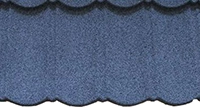
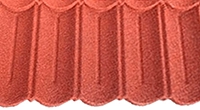

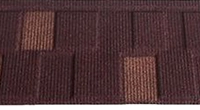
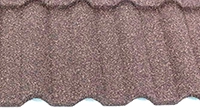
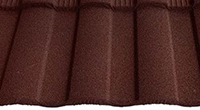
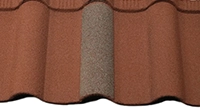
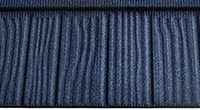

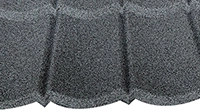
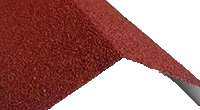
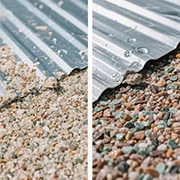




Galvalume Stone Coated Roof Tiles Manufacturer: One-Stop Export Supply for Global Buyers
Galvalume Stone Coated Roof Tiles Manufacturer: One-Stop Export Supply for Global Buyers
In the international construction materials trade, the choice of roofing manufacturer determines more than product quality—it shapes supply chain efficiency, project delivery timelines, and total procurement cost. This article examines the role of galvalume stone coated roof tiles in modern construction, how a vertically integrated stone coated metal roofing factory serves diverse buyer categories through one-stop export supply, and what procurement managers should evaluate when selecting a long-term roofing tiles wholesale export partner.

What Are Galvalume Stone Coated Roof Tiles?
Galvalume stone coated roof tiles begin with a steel substrate coated in galvalume—a proprietary aluminum-zinc alloy (typically 55% aluminum, 43.4% zinc, and 1.6% silicon) that provides significantly greater corrosion resistance than conventional galvanized coatings. Onto this alu-zinc steel base, the manufacturer applies an acrylic resin-bonded layer of natural stone granules, creating a finished roofing material that combines the structural integrity of steel with the aesthetic appearance of traditional tile roofing.
The galvalume coating serves as the critical first line of defense against environmental degradation. In accelerated laboratory testing, galvalume-coated steel demonstrates corrosion resistance several times that of standard galvanized steel of equivalent coating thickness. For buildings located in coastal environments, tropical climates with high humidity, or industrial zones with atmospheric pollutants, this enhanced substrate protection translates into measurably longer roof service life.
The stone granule layer applied over the galvalume substrate provides additional functions: UV radiation shielding that protects the underlying coating from solar degradation, impact resistance against hail and wind-borne debris, sound dampening that reduces rain noise compared to bare metal roofing, and the visual appearance of natural stone or clay tiles that architects and property developers value.
One-Stop Export Supply: The Integrated Factory Model
The term "one-stop export supply" describes a manufacturing operation where all production stages—from raw material processing to finished goods packaging—occur within a single facility or under unified management control. For international buyers of stone coated roofing tiles, this integrated model offers several practical advantages over fragmented supply chains where different processes are handled by separate entities.
Production Integration and Quality Continuity
In a one-stop stone coated metal roofing factory, the same quality management team oversees the entire manufacturing sequence: galvalume coil inspection, profile roll-forming, surface preparation, stone coating application, oven curing, cooling, and final inspection. This continuous oversight eliminates the quality gaps that can occur when semi-finished materials move between independent processors. Quality records trace each production batch from coil to container, providing buyers with transparent documentation for their own compliance requirements.
Inventory Coordination and Lead Time Control
Integrated factories maintain coordinated raw material, work-in-progress, and finished goods inventories. When a trading company or distributor places an order for stone coated roof tiles wholesale, the production planning team can commit to a delivery schedule based on real-time material availability and production capacity data—not estimates passed between separate entities. This coordination reduces the risk of delayed shipments caused by misaligned production schedules between independent subcontractors.
Single-Point Communication
Procurement managers and importers dealing with multiple suppliers for different stages of the roofing tile supply chain face coordination complexity. A one-stop roofing tiles export supplier provides a single point of contact for all technical inquiries, order status updates, quality documentation, and logistics coordination. This simplified communication structure reduces the chance of information loss during handoffs and accelerates problem resolution when issues arise.
Serving Global Buyers Across Business Categories
The procurement priorities of a construction materials buyer vary significantly depending on their position in the supply chain. A stone coated roofing manufacturer serving global export markets adapts its service model to address these distinct requirements.
Wholesale Distributors
Distributors managing regional warehouse networks prioritize consistent product availability, predictable quality across repeat orders, and packaging configurations that support efficient downstream distribution. Galvalume stone coated roof tiles supplied to wholesale buyers are typically palletized by color and profile, with bilingual labeling that enables warehouse staff at the destination to identify and allocate stock without opening packages. Mixed-container loading—combining multiple colors or profiles in a single shipment—allows distributors to test market response to new variants without committing to full container quantities of each option.
Trading Companies
International trading companies handling multi-country procurement programs value export documentation accuracy, flexible payment structures, and the manufacturer's ability to adapt product specifications to meet destination-country standards. For traders managing tenders or competitive bids, a responsive stone coated roof tiles manufacturer supports the bidding process with sample provision, technical compliance statements, and production capability documentation that strengthens the trader's proposal to their end client.
Project Engineering and Construction Firms
For project engineering firms specifying roofing materials for residential developments, commercial complexes, or institutional buildings, the supplier evaluation criteria extend beyond product and price to include technical performance data.
Direct Importers and Developers
Property developers and direct importers purchasing roofing materials for their own construction projects evaluate suppliers on total cost of ownership—factoring in landed cost, installation labor productivity, material wastage rates, and expected maintenance requirements over the building's design life. Detailed technical specifications and transparent performance data enable these buyers to conduct accurate cost-benefit comparisons between roofing material alternatives.
Manufacturing Strength: Key Indicators to Assess
For procurement professionals evaluating stone coated metal roofing factories, several observable indicators provide evidence of manufacturing capability beyond marketing materials.
Production Line Configuration
A well-configured production line for galvalume stone coated roofing tiles typically includes: a hydraulic decoiler for smooth coil feeding, a precision roll-forming station producing consistent tile profiles, an automated surface treatment system ensuring uniform coating adhesion, a computer-controlled stone granule application station delivering repeatable texture density, a multi-zone curing oven with temperature monitoring, and a cooling and cutting section maintaining dimensional accuracy. Buyers can request production line walkthrough videos to observe equipment condition, housekeeping standards, and workflow organization—all indicators of operational discipline.
Export Logistics Infrastructure
The physical infrastructure supporting export operations—finished goods warehouse capacity, container loading facilities, palletizing and wrapping equipment, and loading bay configuration—affects a manufacturer's ability to handle peak-season shipping volumes without compromising packing quality. Photographs of active loading operations, showing container utilization rates and protective packaging details, provide insight into logistics execution capability.
Customization Capabilities in Stone Coated Roof Tile Production
Different construction markets demand different roofing specifications. A responsive stone coated roofing manufacturer China offers customization across several dimensions:
Profile Selection — Classical, Roman, Shingles, Bond, Milano, and custom profiles developed to match regional architectural traditions or specific project designs. Each profile requires dedicated forming rollers and calibrated production parameters.
Color Matching — Beyond standard color ranges, manufacturers with in-house stone coating capabilities can formulate custom color blends to match a client's existing product line, a project architect's specification, or regional color preferences. The ability to produce consistent color across separate production batches demonstrates coating process control.
Substrate Specification — Galvalume coating weight (AZ100, AZ150, AZ180), base steel thickness (typically 0.35mm to 0.60mm depending on profile and application), and steel grade can be specified to meet regional building code requirements or project-specific engineering calculations.
Packaging Customization — Neutral packaging for distributors selling under their own brand, color-coded pallet labels for mixed-container shipments, language-specific documentation, and retail-ready packaging configurations for markets where products are sold through building material retailers rather than contractor-direct channels.
Quality Verification Before Placing Orders
International buyers unable to conduct in-person factory inspections can implement several remote verification steps to evaluate a galvalume stone coated roof tiles manufacturer before committing to a purchase order:
· Request a production sample from current inventory (not a specially prepared demonstration sample) to assess representative quality. Compare the received sample against product specification documents for dimensional accuracy, coating uniformity, and stone granule adhesion.
· Arrange a real-time video call with the production manager during an active production run. Observe material handling practices, quality checkpoint procedures, and general factory housekeeping. A manufacturer that accommodates such requests demonstrates transparency.
· Ask for export documentation samples—bill of lading, packing list, certificate of origin—from recent shipments to the buyer's country or region. This confirms the manufacturer has practical experience with the destination country's import procedures and documentation requirements.
· Contact references—distributors, traders, or project managers who have purchased from the manufacturer within the past twelve months. Ask about actual lead time performance versus quoted lead times, packaging quality upon arrival, and how the manufacturer handled any post-delivery issues.
Logistics and Shipping: From Factory to Global Destinations
The export supply chain for stone coated roofing tiles involves coordinated execution across multiple stages: container booking and equipment availability at the factory location, loading supervision to verify quantities and packaging integrity, customs clearance documentation preparation, ocean freight transit, and destination port handling.
Experienced roofing tiles export suppliers maintain relationships with multiple freight forwarders serving different trade routes, enabling competitive freight rates and flexible sailing schedules. For African destinations such as Nigeria, Kenya, Ghana, and Tanzania—significant markets for stone coated metal roofing—manufacturers familiar with port-specific requirements provide documentation support that prevents clearance delays.
Container loading optimization for stone coated roof tiles involves calculating the square meter coverage per container to determine the delivered cost per square meter—a key metric for buyers comparing supplier quotations. Experienced manufacturers configure pallet layouts and stacking patterns that protect the stone coating surface while maximizing the quantity of usable roofing material per container.
Market Applications for Galvalume Stone Coated Roof Tiles
Galvalume stone coated roof tiles find application across diverse building types and climate zones:
Residential Housing — Single-family homes, multi-unit residential buildings, and housing development projects benefit from the combination of aesthetic variety (multiple profiles and colors), lightweight structural loading (reducing roof framing costs), and long maintenance intervals.
Hospitality and Tourism — Hotels, resorts, and vacation properties in coastal and tropical locations, where the galvalume substrate's corrosion resistance addresses the challenge of salt-laden air and high humidity that accelerates deterioration of conventional roofing materials.
Commercial and Institutional — Office buildings, schools, healthcare facilities, and government structures where procurement decisions consider life-cycle cost, fire safety performance, and compliance with public building standards.
Agricultural and Industrial — Farm buildings, warehouses, and processing facilities where large roof spans, material cost efficiency, and resistance to agricultural chemicals or industrial emissions influence roofing material selection.
The Procurement Process: Steps to a Successful Order
For buyers initiating a sourcing relationship with a stone coated roof tiles manufacturer, a structured procurement process reduces risk and sets clear expectations:
1. Inquiry Specification — Provide the supplier with detailed requirements: target market, annual volume estimate, preferred profiles and colors, substrate specification (galvalume coating weight, steel thickness), packaging requirements, and any certification or testing documentation needs. A detailed inquiry enables the manufacturer to prepare a relevant and accurate quotation.
2. Quotation and Sample Review — Evaluate the commercial offer alongside product samples. Verify that quoted specifications match the received sample characteristics. Confirm delivery terms (FOB, CIF, or other Incoterms), payment structure, and production lead time.
3. Production Monitoring — After order confirmation, request production progress updates at agreed milestones. Photographs or video clips of the order during production provide visual confirmation that manufacturing is proceeding as scheduled.
4. Pre-Shipment Inspection — Before container loading, arrange inspection—either by the buyer's appointed representative, a third-party inspection service, or through comprehensive photographs and measurement reports provided by the manufacturer. Verify quantity, packaging quality, and visual product condition.
5. Shipping and Documentation — Confirm that all export documents (commercial invoice, packing list, bill of lading, certificate of origin, and any destination-specific certificates) are correctly prepared before the vessel departure. Documentation errors discovered after shipment is underway are significantly more difficult to correct.
6. Post-Delivery Review — After the shipment arrives, assess packaging condition, product quality consistency with the approved sample, and the manufacturer's responsiveness to any questions or issues. This evaluation informs future procurement decisions and supplier relationship development.
Selecting a Long-Term Roofing Supply Partner
The relationship between an international buyer and a galvalume stone coated roof tiles manufacturer extends beyond individual transactions. Consistent product quality, reliable delivery performance, responsive communication, and the flexibility to accommodate evolving market requirements distinguish transactional suppliers from strategic supply partners.
For wholesalers building regional distribution networks, trading companies managing complex multi-country supply programs, project engineering firms delivering construction projects on fixed schedules, and direct importers seeking to optimize roofing procurement costs—the evaluation of a stone coated metal roofing factory involves assessing evidence of manufacturing capability, quality management maturity, export logistics competence, and organizational responsiveness.
If you are currently evaluating stone coated roofing tile suppliers for your import program, consider initiating contact with a detailed specification of your market requirements, volume projections, and technical needs. A substantive initial inquiry enables both parties to determine mutual fit efficiently and establishes the foundation for a productive supply relationship.