Español
 العربية
 Francés
 Русский
 Português
 Deutsch
 日本語
日本語
 한국어
한국어
 Việt
Việt
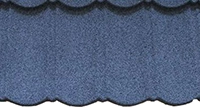
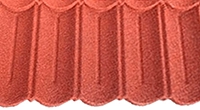

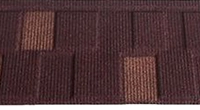
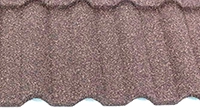
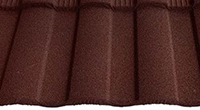
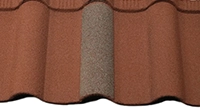
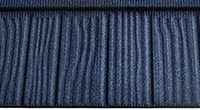

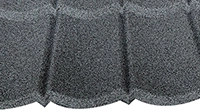



Stone Coated Roof Tiles Source Factory: Full-Category OEM Customization for Large-Volume Export Orders
Stone Coated Roof Tiles Source Factory: Full-Category OEM Customization for Large-Volume Export Orders
For international buyers of construction materials—wholesale distributors managing regional supply chains, trading companies coordinating multi-country procurement programs, and project developers sourcing roofing at scale—the decision to work directly with a source factory rather than through intermediary trading layers can reshape procurement economics. This article examines the advantages of sourcing from a stone coated roof tiles source factory, the scope of OEM stone coated metal roof tiles customization available, and the operational capabilities required to fulfill large-volume export orders reliably.
What Defines a Source Factory for Stone Coated Roof Tiles?
A source factory—as distinct from a trading company or reseller—owns and operates the production equipment, maintains direct relationships with raw material suppliers, employs the production workforce, and manages quality control internally. When an international buyer purchases from a stone coated metal roofing source factory, the commercial transaction connects directly to the manufacturing operation without intermediary markup or information filtering.
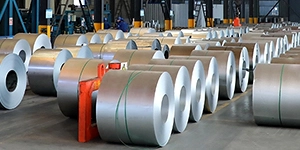
Several characteristics distinguish a genuine stone coated roof tiles factory from intermediary suppliers. The facility houses profile roll-forming lines, stone coating application systems, and curing ovens under one roof. Raw material inventory—galvalume or galvanized steel coils in various thicknesses and coating weights, natural stone granules in multiple color grades, acrylic resin binders, and packaging materials—is stored on-site and managed by the factory's own procurement and warehousing teams. Quality testing equipment for coating thickness measurement, adhesion testing, and dimensional inspection is integrated into the production workflow rather than outsourced to third-party laboratories after production.
For the buyer, the source factory model offers practical benefits: direct access to production scheduling information, the ability to request real-time production progress updates, and pricing that reflects manufacturing cost structures rather than reseller margins. When issues arise—a specification clarification, a packaging adjustment, a shipping schedule change—communication flows directly to the production team capable of implementing the change, not through multiple organizational layers.
Full-Category OEM Customization: What Can Be Customized
OEM (Original Equipment Manufacturing) in the context of stone coated metal roof tiles extends across multiple dimensions. A source factory with full-category OEM capability offers customization that allows buyers to align the product precisely with their market positioning, regulatory requirements, and customer preferences.
Tile Profile Customization
Standard stone coated roof tile profiles—Roman, Bond, Shingle, Classic, Milano, and Tudor—each serve different architectural traditions and market preferences. Beyond these established profiles, a factory with in-house mold and roller fabrication capability can develop custom profiles to match specific regional designs or to create differentiated product offerings for distributors seeking market exclusivity. Profile customization involves engineering the roll-forming tooling, adjusting the production line parameters for the new geometry, and validating that the finished profile meets structural and aesthetic specifications before series production begins.
Substrate Specification
The steel substrate—its grade, thickness, and metallic coating—directly affects roofing performance in specific environments. Source factories maintain inventory of multiple steel specifications: galvalume AZ100 through AZ150 for varying corrosion resistance requirements, base metal thicknesses from 0.35mm to 0.50mm depending on profile design and wind load calculations, and different steel grades suited to structural or architectural applications. Buyers serving coastal markets may specify higher aluminum-zinc coating weights; those supplying high-wind regions may prioritize thicker gauge substrates or specific profile geometries with enhanced interlocking features.
Stone Coating Color and Texture
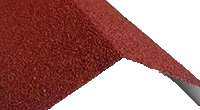
The aesthetic signature of stone coated roof tiles comes from the natural stone granules bonded to the surface. OEM color customization involves formulating proprietary granule blends—combining different base stone colors, particle size distributions, and coating ratios—to achieve a specific visual result. A source factory with in-house color matching capability can produce custom shades based on a client's provided sample, existing product line reference, or project architect specification. Texture customization ranges from fine-grain smooth finishes to coarse-grain rustic surfaces, achieved through granule size selection and application density control.
Accessory and Component Configuration
A complete roofing system encompasses more than field tiles. Ridge caps, hip tiles, gable trim, valley flashing, eaves closures, fasteners, and sealants must be compatible in material specification, color matching, and dimensional fit. Source factories that manufacture or coordinate the supply of matched accessories enable buyers to procure a complete roofing system from a single supplier, simplifying logistics and ensuring component compatibility. Custom accessory specifications—such as extended ridge cap lengths for specific roof geometries or color-matched fasteners for visible installations—fall within the scope of full-category OEM service.
Packaging and Branding
OEM packaging customization supports distributors operating under proprietary brand names, importers complying with destination-country labeling regulations, and retailers requiring shelf-ready packaging formats. Options include neutral (unbranded) packaging, custom-printed pallet labels and carton markings, multi-language technical documentation, and packaging configurations optimized for different distribution channels—from bulk pallets for wholesale warehouses to retail-ready individual cartons for building material stores.
Large-Volume Export Order Handling: Operational Requirements
Fulfilling large-volume export orders for stone coated roof tiles—multi-container shipments, continuous rolling orders, or project-scale single deliveries—demands operational capabilities beyond basic production capacity. The following elements distinguish factories equipped to handle significant export volumes:
Production Capacity and Scalability
Monthly production capacity—measured in square meters of finished roofing tile output—determines whether a factory can accommodate large orders without displacing existing customer commitments. A factory operating multiple parallel production lines can allocate dedicated lines to large orders while maintaining regular production for ongoing clients. Capacity scalability—the ability to increase output through additional shifts, overtime production, or temporary line speed adjustments—provides flexibility for buyers whose order volumes fluctuate seasonally or grow with market expansion.
Raw Material Inventory Management
Large orders consume significant quantities of steel coil, stone granules, and resin. A source factory handling export volumes maintains safety stock levels calibrated to typical order sizes and lead times for raw material replenishment. When a buyer places an order for multiple containers of stone coated metal roof tiles in a specific color, the production team confirms material availability before committing to a delivery schedule—avoiding the disruption of mid-production material shortages that delay shipments.
Container Loading Optimization
For large-volume buyers, the number of square meters of roofing material packed per container directly affects landed cost per square meter. Experienced export roof tiles factories develop pallet configurations and stacking patterns that maximize container utilization while maintaining surface protection for the stone coating. Mixed-profile and mixed-color container loading—common for distributors stocking a product range—requires careful planning to ensure each item category is clearly segregated and labeled for efficient unloading and warehouse allocation at destination.
Quality Assurance for OEM Export Orders
OEM customization introduces variables into the production process—new profiles, custom colors, different substrate specifications—that require systematic quality assurance to maintain consistency across production batches. A stone coated roofing OEM manufacturer with mature quality systems addresses these variables through:
· Pre-Production Approval: Before series production begins, the factory produces a pre-production sample reflecting all custom specifications—profile, substrate, color, and texture. The buyer approves this sample as the quality reference standard for the entire order. This step aligns expectations and provides an objective benchmark for subsequent inspection.
· In-Process Quality Checks: During production, quality inspectors verify profile dimensions (using calibrated gauges), coating adhesion (through cross-hatch testing), color consistency (against the approved reference sample under standardized lighting), and stone granule distribution uniformity (visual inspection at defined intervals).
· Pre-Shipment Inspection: Before container loading, a final inspection—conducted by the factory's QC team, the buyer's appointed representative, or an independent third-party inspection service—verifies quantity accuracy, packaging integrity, labeling correctness, and visual product quality against the approved pre-production sample.
The Buyer's Perspective: Evaluating a Stone Coated Tile Source Factory
International buyers considering a direct factory relationship for stone coated roofing procurement can structure their evaluation around several observable criteria:
Factory Visit or Virtual Tour — Observing the production facility—whether in person or through a structured video tour covering raw material storage, production lines, quality testing stations, finished goods warehouse, and container loading area—provides direct evidence of manufacturing capability. During a factory visit or virtual tour, attention to general housekeeping, equipment maintenance condition, and workflow organization reveals operational discipline that marketing materials cannot convey.
OEM Project Portfolio — Request examples of previous OEM customization projects: custom profiles developed for specific markets, unique color formulations produced for distributor brands, packaging configurations designed for retail channels. A factory with diverse OEM experience can discuss specific customization challenges and solutions from past projects, demonstrating practical capability rather than theoretical potential.
Production and Delivery Track Record — Inquire about the factory's experience with orders of similar scale to the buyer's anticipated volume. How many containers per month does the factory typically ship? What is the largest single order the factory has fulfilled? How does the factory manage production scheduling when multiple large orders overlap? Specific, verifiable answers build confidence in a supplier's claims.
Communication and Responsiveness — The inquiry and negotiation process itself serves as an evaluation opportunity. Does the factory respond with specific, technically informed answers to detailed questions? Does the quotation include complete specifications rather than vague descriptions? Is the communication timely and professional? A factory that demonstrates attention to detail during the sales process is more likely to maintain that standard during production and delivery.
Common OEM Order Scenarios and How a Source Factory Responds
Scenario 1: Distributor Launching a Private-Label Roofing Brand
A regional building materials distributor plans to launch a proprietary brand of stone coated roof tiles to differentiate from competitors selling generic products. The source factory supports this initiative through: custom color formulation aligned with the distributor's brand identity, private-label packaging design and production, development of a focused product range suited to the distributor's market, and consistent quality across repeat orders to build brand reputation. The factory's OEM flexibility allows the distributor to enter the market with a differentiated offering without investing in manufacturing infrastructure.
Scenario 2: Project Developer Sourcing for a Large Housing Development
A property developer constructing a multi-phase residential community requires roofing materials for several hundred units over an 18-month construction schedule. The source factory supports this project through: technical documentation for regulatory approval, production scheduling aligned with phased construction milestones to avoid on-site material stockpiling, consistent color and profile supply across multiple production batches spaced months apart, and containerized delivery coordinated with the construction logistics plan.
Scenario 3: Trading Company Responding to a Government Tender
A trading company bidding on a public-sector roofing supply tender requires comprehensive supplier documentation to support its proposal. The source factory provides: company registration and manufacturing license documentation, production capacity statements and equipment lists, ISO or equivalent quality management system certification, third-party product test reports from recognized laboratories, and sample provision for tender evaluation panels. The factory's willingness and ability to support the tender documentation process can determine whether the trader's bid is competitive.
Shipping and Logistics for Export Orders
The export logistics capability of a stone coated roof tiles source factory directly impacts delivered cost, transit time reliability, and cargo condition upon arrival. Factories with established export operations maintain relationships with multiple freight forwarders, enabling route-specific carrier selection and competitive rate negotiation.
Container loading supervision ensures that palletized roofing tiles are correctly positioned and secured within the container, with adequate protective materials preventing abrasion between pallets during ocean transit. Photographic documentation of the loading process—showing container interior condition before loading, pallet placement, blocking and bracing, and container sealing—provides buyers with loading verification before the vessel sails.
Building a Long-Term Factory Partnership
The transition from trial order to established supply relationship depends on consistent performance across multiple transactions. Buyers who invest time in supplier qualification—conducting due diligence, communicating requirements clearly, establishing quality benchmarks through pre-production samples, and providing constructive feedback after initial deliveries—position the relationship for long-term success.
A stone coated roof tiles source factory that demonstrates production consistency, OEM flexibility, and reliable export execution across multiple orders earns a position in the buyer's supply chain that extends beyond price-based transactional competition. For wholesalers, distributors, traders, and project developers sourcing stone coated metal roofing at scale, the quality of the factory relationship determines the quality of their market offering.
If you are evaluating source factories for your stone coated roof tile procurement program, consider initiating a detailed discussion of your market requirements, customization needs, and volume projections. A substantive early conversation enables both parties to assess compatibility and defines the parameters for a productive commercial relationship.