Español
 العربية
 Francés
 Русский
 Português
 Deutsch
 日本語
日本語
 한국어
한국어
 Việt
Việt
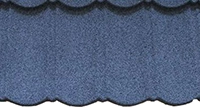
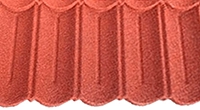

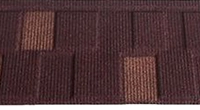
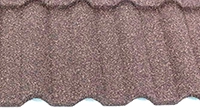
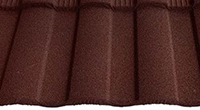
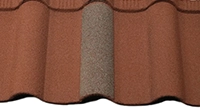
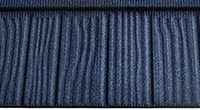

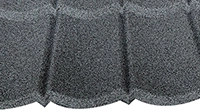



What Is Stone Coated Metal Roof Tile? Understanding the Technology, Engineering, and Future Market Outlook
What Is Stone Coated Metal Roof Tile? Understanding the Technology, Engineering, and Future Market Outlook
A comprehensive guide to the layered composite roofing material that is reshaping residential and commercial architecture across global markets — from its manufacturing process and technical specifications to the forces driving adoption through 2035.

A Roofing Material That Defies Easy Classification
Walk through a neighborhood where stone coated metal roof tiles have been installed, and the first thing you notice is that they do not look like metal at all. From ground level, the roof reads as clay tile, slate, or wood shake — depending on the profile chosen. It is only upon closer inspection, or by lifting a single tile and feeling its weight, that the true nature of the material becomes apparent: a formed steel panel, coated in stone granules, combining the structural properties of metal with the aesthetic language of traditional roofing.
This hybrid identity is precisely what has driven the product category from a niche offering to a mainstream roofing solution in markets as diverse as Southeast Asia, East Africa, the Middle East, and Latin America. But the category is also surrounded by questions — some from homeowners encountering it for the first time, others from contractors and importers evaluating whether to add it to their product lines. This article addresses those questions from the ground up: what the material actually is, how it is manufactured, what makes the technology work, and where the global market appears to be heading.
The Anatomy of a Stone Coated Metal Roof Tile
A stone coated metal roof tile is not a single material but a composite system — four to five distinct layers, each performing a different function, bonded together in a continuous manufacturing process. Understanding the product requires understanding each layer and what it contributes to the whole.
Layer 1 — The Steel Substrate
The foundation of every tile is a sheet of galvanized steel, typically conforming to ASTM A653 or equivalent standards, with a thickness between 0.18 mm and 0.6 mm depending on the profile and intended application. The zinc coating weight — commonly specified as Z20 to Z150 (grams per square meter, double-sided) — determines the baseline corrosion resistance of the product. This is the load-bearing element: it carries the weight of foot traffic during installation and maintenance, and it holds the fasteners that secure the tile to the roof structure. Unlike a polymer-based roofing product, the steel core provides a defined yield strength — typically in the range of 250 to 350 MPa — which translates directly into impact resistance and wind-uplift performance.
Layer 2 — The Primer and Adhesion System
Applied directly to the galvanized steel is a primer layer that serves two purposes: it passivates the zinc surface to prevent short-term oxidation before the subsequent coatings are applied, and it creates a chemical and mechanical bond between the metal substrate and the acrylic base coat. The chemistry of this primer layer is often proprietary to each manufacturer, but its function is universal — without a properly formulated and cured primer, the stone coating system has no reliable attachment to the steel.
Layer 3 — The Acrylic Base Coat
An acrylic resin compound is applied to the primed steel panel. This layer acts as the adhesive bed into which the stone granules will be embedded. The thickness and formulation of the base coat determine how deeply the granules can be set, how well they bond, and how the system responds to thermal cycling. Manufacturers formulate their acrylic compounds to balance flexibility — so the coating moves with the steel without cracking — against hardness, so the granules remain locked in place under mechanical abrasion.
Layer 4 — The Stone Granules
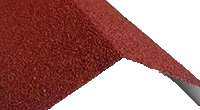
Natural stone granules — typically basalt, quartz, or crushed granite — are applied to the wet acrylic base coat. These granules are the visible surface of the tile. They provide the color (either through the natural stone color or through a ceramic coating applied to the granules during a high-temperature firing process), and they create the textured surface that gives the roof its traditional appearance. The granules also serve a functional role: they shade the acrylic binder from direct UV exposure, absorb and disperse the kinetic energy of rain impact, and provide a measure of foot-traffic slip resistance. Granule size distribution — typically 0.5 mm to 2.5 mm — is controlled to ensure consistent coverage and optimal packing density.
Layer 5 — The Overglaze
A clear acrylic overglaze is applied over the stone granules as the final manufacturing step. This transparent layer locks the granules in place, seals the surface against moisture penetration into the acrylic binder, and provides an additional UV-absorbing barrier. The overglaze is formulated to remain clear over time — yellowing of this layer is a known failure mode in lower-quality products, and reputable manufacturers invest in UV-stable resin chemistry to avoid it.
How the Manufacturing Process Works
The manufacturing line for stone coated metal roof tiles integrates several industrial processes into a continuous or semi-continuous workflow. Steel coil enters at one end; finished, packaged tiles exit at the other. The core stages are as follows.
1. Galvanized steel coil is unrolled and leveled to remove coil-set curvature. The flatness of the sheet at this stage directly affects the consistency of subsequent coating applications.
2. The steel passes through a degreasing and surface-preparation stage — typically a chemical wash and rinse system — to remove mill oils and ensure primer adhesion.
3. Primer is applied by roller coater or spray system and cured in a convection or infrared oven. The curing temperature and dwell time are critical parameters: under-curing leaves the primer vulnerable to delamination; over-curing can embrittle it.
4. The acrylic base coat is applied at a controlled thickness, and stone granules are immediately deposited onto the wet surface. Granule application can be done by gravity feed, electrostatic deposition, or a combination. Excess granules are recovered and recirculated.
5. The panel passes through a first-stage curing oven to set the base coat and fix the granules in place.
6. The clear overglaze is applied, and the panel enters a final curing stage.
7. The coated flat sheet is then fed into a roll-forming line, where it is progressively shaped into the tile profile — Roman, shingle, shake, or custom profiles — using a series of roller dies. Lubrication at this stage is carefully managed to avoid contamination of the stone-coated surface.
8. Formed tiles are cut to length, inspected, and packaged. Quality control checks typically include coating thickness measurement, granule adhesion testing, impact resistance testing, and color consistency evaluation under standardized lighting.
The entire process — from coil to packaged tile — involves approximately eight to twelve minutes of line time per tile, depending on line speed and curing-oven length. A modern production line can produce between 3,000 and 8,000 tiles per day, depending on the profile complexity and line configuration.
The Global Market Outlook: Growth Drivers Through 2035
The stone coated metal roofing market has experienced compound annual growth in the range of 4% to 7% globally over the past five years, according to multiple industry research reports. Looking forward, several structural factors suggest this trajectory is likely to continue or accelerate — though as with any market forecast, the usual caveats about geopolitical disruption, raw material price volatility, and currency fluctuation apply.
Urbanization in Tropical and Subtropical Regions
The fastest-growing urban populations are concentrated in climate zones where UV exposure and heavy rainfall place high demands on roofing materials — Southeast Asia, South Asia, sub-Saharan Africa, and coastal Latin America. These are precisely the conditions under which stone coated metal roof tiles demonstrate their strongest relative advantage over polymer-based alternatives. As new housing stock is built in these regions, the addressable market for durable, lightweight roofing expands accordingly.
Replacement Cycle in Developed Markets
In North America, Western Europe, and Oceania, a substantial inventory of asphalt shingle roofs installed in the 1990s and early 2000s is reaching the end of its service life. Asphalt shingle replacement represents a significant market opportunity for stone coated metal roofing, which offers a longer service interval at a higher initial cost — a trade-off that becomes more attractive as homeowners plan for longer tenure in their properties.
Building Code Evolution Toward Resilience
Wildfire-prone regions in North America and Australia, hurricane-prone coastal zones, and areas with increasing hail frequency are progressively tightening building code requirements for roofing materials. Stone coated metal roof tiles, with their Class A fire rating, high wind-uplift resistance, and Class 4 impact rating, are well positioned relative to code trajectories.
Rising Consumer Awareness of Lifecycle Cost
A growing segment of building owners is evaluating roofing decisions on a total-cost-of-ownership basis rather than upfront installation cost alone. When the comparison window extends to 20 or 30 years, materials with longer service intervals and lower maintenance requirements — such as stone coated metal — become increasingly competitive against lower-cost alternatives that require more frequent replacement.
Limitations and Honest Trade-offs
No roofing material is without limitations, and a fair assessment of stone coated metal roof tiles should acknowledge them.
· Initial material cost is higher than asphalt shingles and economy-grade resin tiles. The premium is typically recovered through longer service life, but it represents a real budget consideration for cost-constrained projects.
· Installation requires familiarity with the specific tile profile and fastening system. While the learning curve is not steep for experienced roofing contractors, improper installation — particularly around valleys, hips, and penetrations — can compromise the roof's weather-tightness regardless of the material quality.
· Color selection, while broader than it was a decade ago, remains more limited than factory-painted metal sheet roofing. Custom color matching is possible but may involve minimum order quantities.
· The stone coating can be damaged by severe abrasion or heavy concentrated loads. While the tile is impact-resistant in the hail sense, dragging heavy equipment across the surface or walking on the tiles without proper load distribution can dislodge granules.
· In coastal environments with direct salt spray exposure, the cut edges of the steel substrate require careful detailing and periodic inspection. The zinc galvanization provides protection, but salt-laden moisture is an aggressive environment for any coated steel product.
A Material That Earns Its Place Through Engineering, Not Hype
Stone coated metal roof tiles occupy a distinctive position in the roofing materials landscape. They are neither the cheapest option nor the most expensive. They are not the lightest nor the heaviest. What they offer — and what has driven their steady market growth across multiple continents — is a specific combination of attributes that few other materials match in a single product: the structural resilience of steel, the aesthetic flexibility of formed profiles with natural stone color, a weight that does not require structural reinforcement of the building frame, and a service-life expectation that extends well beyond three decades when the product is properly manufactured and installed.
For the homeowner, the value proposition is straightforward: a roof that looks traditional, survives severe weather, and does not need to be thought about for a generation. For the contractor, it is a product category with growing demand, manageable installation requirements, and the ability to offer clients a differentiated option between economy sheet metal and premium tile roofing. For the importer or distributor, it is a category where manufacturing quality varies significantly — and where selecting the right factory partner is the single most important business decision.
As building codes tighten, climate patterns grow more demanding, and building owners become more informed about lifecycle economics, the market trajectory for stone coated metal roofing appears well-supported by fundamentals. The technology is mature. The manufacturing base is diversifying beyond its historical concentration. And the product itself — a steel tile dressed in stone — continues to earn its place on roofs across an increasingly wide swath of the world.