Español
 العربية
 Francés
 Русский
 Português
 Deutsch
 日本語
日本語
 한국어
한국어
 Việt
Việt

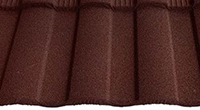
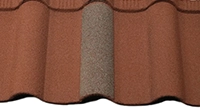
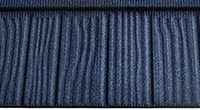

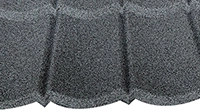



10 Years Later: Stone Coated Metal Roof Tiles vs Resin Roof Tiles — Which Material Breaks Down First?
10 Years Later: Stone Coated Metal Roof Tiles vs Resin Roof Tiles — Which Material Breaks Down First?
An objective, data-backed comparison of long-term durability for two popular roofing materials. Homeowners, contractors, and importers will find the answer here — not from marketing claims, but from how materials actually behave under sun, rain, and time.

The Question Every Building Owner Eventually Asks
When a new roof goes up, nobody thinks about what happens in year ten. The color looks fresh. The surface is intact. The contractor has packed up and left. But roofing is one of the few building components that takes punishment every single day — ultraviolet radiation, thermal expansion and contraction, wind-driven rain, and in coastal or tropical regions, salt-laden air that accelerates material fatigue.
Two materials have gained significant market share in residential and light-commercial roofing over the past decade: stone coated metal roof tiles and synthetic resin roof tiles. Both are marketed as durable, lightweight alternatives to traditional clay or concrete tiles. Both have their advocates. But the question that matters — the one that separates short-term performance from genuine value — is this: after ten years of real-world exposure, which one is still doing its job, and which one is showing signs of irreversible breakdown?
This article examines the available data, material science fundamentals, and field observations to answer that question without leaning on manufacturer marketing language. No superlatives. No guarantees. Just the facts as they stand in mid-2026.
Understanding What Each Material Actually Is
Before comparing durability, it is worth clarifying that these two products are fundamentally different in composition — and that difference is the starting point for everything that happens over the next ten years.
Stone Coated Metal Roof Tiles: Steel at the Core
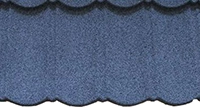
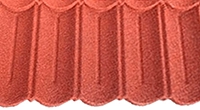
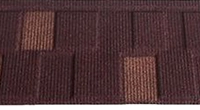
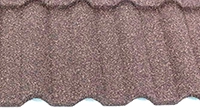
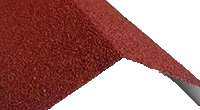
A stone coated metal roof tile begins with a galvanized steel base — typically 0.4 mm to 0.55 mm thick — formed into a tile profile. The steel substrate is then coated with an acrylic resin layer into which natural stone granules are embedded. A final clear overglaze is applied to lock the granules in place and provide additional weather resistance. The result is a composite material: the structural strength of steel, combined with the aesthetic appearance of traditional stone or clay tiles, at roughly one-sixth the weight of concrete roofing.
This layered structure is important to understand because the long-term behavior of the product depends on every layer doing its job. The steel core resists impact and provides the mechanical bond for fastening. The stone coating shields the steel from direct sunlight, absorbs rain impact noise, and creates the visual profile. The acrylic binder and overglaze protect against moisture ingress and ultraviolet degradation of the underlying layers.
Resin Roof Tiles: Polymer Through and Through
Synthetic resin roof tiles — sometimes marketed as PVC roof tiles, ASA resin tiles, or synthetic slate — are manufactured from thermoplastic polymers, most commonly polyvinyl chloride (PVC) or acrylonitrile styrene acrylate (ASA). Calcium carbonate and other mineral fillers are typically added to the polymer matrix to increase rigidity and reduce cost. The tile is formed by extrusion or injection molding and colored either through the material body or via a co-extruded surface layer.
Unlike stone coated metal roof tiles, resin tiles contain no metal substrate. Their entire structural integrity depends on the polymer compound. This makes them lightweight — often the lightest roofing option available — and resistant to corrosion in the conventional sense. But it also means that every degradation mechanism that affects polymers applies to the entire tile cross-section, not just a surface coating.
The 10-Year Comparison: How Each Material Ages
The ten-year mark is significant in roofing. By this point, a roof has endured roughly 3,650 days of thermal cycling, hundreds of rain events, and in tropical climates, the equivalent of several years of continuous UV exposure. Surface-level differences that seemed minor at installation become impossible to ignore.
Ultraviolet Resistance: The Silent Degrader
Ultraviolet radiation is the single most destructive environmental factor for roofing materials. It breaks chemical bonds at the molecular level, causing discoloration, embrittlement, and surface erosion — even on materials that appear otherwise intact.
For stone coated metal roof tiles, the UV burden falls primarily on the acrylic overglaze and the stone granules themselves. Natural stone is inherently UV-stable — it has already spent millions of years exposed to sunlight. The acrylic binder, while organic and therefore subject to photodegradation, is protected in part by the stone granules that shade much of its surface area. Industry data suggests that a properly formulated acrylic stone coating system maintains adhesion and color stability for well beyond a decade, with gradual fading measured in Delta-E values of 3 to 5 over ten years — a shift perceptible only on close inspection.
Resin roof tiles face a different UV equation. Because the tile is polymer through its entire thickness, UV exposure triggers a process called photo-oxidation that propagates from the surface inward. Higher-quality resin tiles incorporate UV stabilizers and use co-extruded ASA surface layers (ASA is significantly more UV-resistant than PVC). However, in lower-cost resin products — which represent a substantial share of the market — the UV stabilizer loading is often minimal. After five to seven years of tropical or subtropical sun exposure, these tiles can exhibit chalking on the surface, measurable thinning of the exposed face, and in some cases, color shift that is clearly visible from ground level.
A 2023 technical review published in the Journal of Building Engineering examined accelerated weathering data for multiple roofing materials and noted that polymer-based roofing products in high-UV environments showed surface degradation onset at approximately 4,000 to 6,000 hours of accelerated UV exposure — equivalent to roughly 6 to 10 years of outdoor exposure in equatorial regions. The same review found that stone-coated metal systems with acrylic-glazed stone surfaces showed no significant surface changes at equivalent exposure levels.
Water and Moisture: Beyond Surface Wetness
Resin roof tiles are often described as waterproof — and in the short term, this is accurate: the polymer matrix does not absorb liquid water. But the more relevant question for long-term performance is whether this property holds as the material ages. As UV exposure and thermal cycling create micro-cracks in the polymer surface, water can penetrate into the tile body. In regions with freeze-thaw cycles, trapped moisture expands upon freezing and accelerates crack propagation. In tropical climates, the concern is different: water trapped in micro-cracks combined with heat can promote hydrolysis of certain polymer types, gradually reducing molecular weight and mechanical strength.
Stone coated metal roof tiles address water through a different mechanism. The stone-acrylic composite surface is designed to shed water rapidly — the surface texture breaks the water film and channels it toward the interlocking edges. The underlying steel is protected from moisture by the zinc galvanization layer, which provides galvanic protection: even if moisture reaches the steel at a cut edge or scratch, the zinc sacrifices itself to protect the steel. In a properly manufactured stone coated metal roof tile, the zinc layer alone is specified to provide corrosion protection for 20 to 30 years under normal conditions, with the stone coating adding an additional mechanical and chemical barrier.
Thermal Stability: Expansion, Contraction, and the Cycle Count
Every roof material expands when heated and contracts when cooled. The coefficient of thermal expansion for PVC-based resin tiles is typically in the range of 50 to 80 × 10⁻⁶ per °C — meaning a 3-meter tile can expand by 4 to 6 mm across a 30°C temperature swing. Over thousands of cycles, this dimensional movement stresses fastening points, interlocking joints, and sealant lines. Reports from tropical and desert installations note that resin tile fastening systems require careful design to accommodate this movement — and that when improperly installed, buckling or fastener pull-through can appear within the first several years.
The steel core of a stone coated metal tile has a thermal expansion coefficient of approximately 12 × 10⁻⁶ per °C — roughly one-fifth to one-quarter that of unfilled PVC. In practice, this means the dimensional change across a hot day is small enough to be managed comfortably by standard roofing fasteners without special provision. The stone coating itself acts as a thermal buffer, absorbing and slowly releasing heat — reducing the peak temperature reached by the underlying steel and thereby further reducing the thermal expansion range.
So, Which Material Shows Signs of Failure First?
Based on the available evidence — material science, accelerated weathering data, and field reports from roofing contractors who work with both products — the answer leans in a clear direction: at the ten-year mark, resin roof tiles, particularly those at the economy end of the market, are more likely to exhibit visible degradation that affects either appearance or function. Stone coated metal roof tiles, while not immune to aging, typically show only cosmetic changes at the decade point, with the structural steel core expected to remain intact for many additional years.
What This Means for Building Owners and Contractors
The practical decision between these two roofing materials should not be made on durability alone — budget, architectural requirements, roof structure load capacity, and local building codes all play roles. But for those who prioritize long-term performance and intend to own or maintain the building for more than ten years, the evidence points toward stone coated metal roof tiles as the lower-risk choice in high-UV and tropical climates.
That said, resin roof tiles have their place. In covered or shaded applications, in cooler climates, or where the initial budget is the overriding constraint and a shorter replacement cycle is acceptable, a high-grade resin tile with a co-extruded ASA surface layer can provide adequate service at a lower upfront cost. The key distinction is between premium resin products and economy resin products — the two are not the same material in terms of additive package and long-term behavior, even if they look similar on a showroom shelf.
The Bottom Line: A Decade Is a Long Time for a Roof
At the ten-year mark, the differences between stone coated metal roof tiles and resin roof tiles are no longer theoretical. They are visible on the roof. The material-science fundamentals — a steel core versus a polymer body, a mineral surface versus an organic one — assert themselves in the form of fading, cracking, or the reassuring absence thereof.
For building owners and contractors in Malaysia, Indonesia, the Philippines, and other high-UV, high-rainfall markets, the weight of evidence suggests that stone coated metal roof tiles offer a materially longer service interval before the first significant degradation appears. Resin roof tiles, while improving with each generation of polymer technology, have not yet closed the gap — particularly at the price points that dominate the volume market.
No roof lasts forever. But some materials make you wait a lot longer before you have to start thinking about replacement. The data, the physics, and the field experience all point to stone coated metal as the material that gives building owners more of those years — without drama, without sudden surprises, and without a premature conversation about re-roofing.