Español
 العربية
 Francés
 Русский
 Português
 Deutsch
 日本語
日本語
 한국어
한국어
 Việt
Việt




Stone-Coated Metal Roofing Substrate Optimization: How Galvalume Steel Enhances Corrosion Resistance and Weather Durability
Stone-Coated Metal Roofing Substrate Optimization:
How Galvalume Steel Enhances Corrosion Resistance
and Weather Durability
Understanding the steel foundation that determines how a stone-coated roof performs over decades
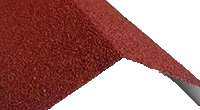
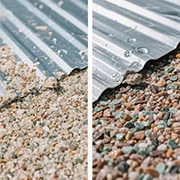
When evaluating stone-coated metal roofing tiles, most buyers focus on what they can see: the color of the stone granules, the profile shape, the surface texture. Fewer pay attention to what lies beneath — the steel substrate that forms the structural and protective foundation of the entire roofing system. Yet this hidden layer is where the roof's long-term resistance to rust, structural integrity, and weather endurance are determined.
At FUODE, we have observed that wholesale buyers who understand substrate specifications make measurably more informed sourcing decisions. This article provides a concise technical overview of stone-coated metal roofing substrate optimization — what it means, why it matters for corrosion resistance and weather durability, and how to evaluate substrate quality when selecting a manufacturing partner.

1. What Is "Substrate Optimization" in Stone-Coated Roofing?
The term "substrate optimization" refers to the selection and treatment of the steel base material before the stone granule coating is applied. In stone-coated steel roofing tiles, the substrate serves three simultaneous functions: it provides the mechanical strength that allows the tile to span roof battens without sagging, it carries the corrosion-resistant metallic coating that prevents rust, and it acts as the bonding surface to which the acrylic adhesive and stone granules must adhere.
A substrate that is too thin may deform under installation loads or thermal stress, compromising the granule bond. A substrate with insufficient metallic coating may corrode from the underside — a failure mode that can go undetected until structural damage has already occurred. A substrate with inconsistent surface preparation may exhibit uneven adhesive bonding, leading to localized granule shedding.
Substrate optimization, then, is the practice of specifying the correct steel grade, coating type and weight, and surface condition for the intended application environment. It is not about using the most expensive steel available — it is about matching the substrate to the performance expectations of the roof.
2. Galvalume Steel: The Industry Reference for Corrosion Resistance
2.1 What Is Galvalume?
Galvalume steel is a carbon steel sheet coated with an aluminum-zinc alloy — typically 55% aluminum, 43.4% zinc, and 1.6% silicon by weight — applied through a continuous hot-dip process. The resulting metallic coating provides corrosion protection through two distinct mechanisms working in combination.
The aluminum component forms a passive, tightly adherent oxide layer on the surface that acts as a physical barrier against moisture and oxygen — the two prerequisites for steel corrosion. The zinc component provides galvanic protection: when the coating is scratched or cut, the surrounding zinc sacrifices itself electrochemically to protect the exposed steel edge. The silicon content improves coating adhesion during the hot-dip process, ensuring uniform coverage across the steel surface.
This dual-mechanism approach distinguishes galvalume from traditional galvanized steel, which relies primarily on zinc's sacrificial action. In accelerated corrosion testing, galvalume-coated steel consistently demonstrates longer time-to-red-rust than equivalently thick galvanized coatings, particularly in environments with cyclic wet-dry exposure.
2.2 The Significance of AZ150 Coating Weight
The "AZ" designation followed by a number — AZ150, for example — indicates the total aluminum-zinc alloy coating mass applied to both sides of the steel sheet, measured in grams per square meter. An AZ150 coating means 150 grams of alloy per square meter, summed across both sides of the sheet.
At FUODE's Shandong production facility, AZ150 galvalume steel is specified for our stone-coated metal roofing tiles because this coating weight represents a practical balance between corrosion protection, formability during the roll-forming process, and cost efficiency. Coating weights below AZ100 may provide adequate protection in mild inland climates but can show premature edge corrosion in coastal or industrial environments. AZ150 extends the service interval meaningfully without introducing the forming challenges associated with heavier coatings.
For wholesale buyers serving markets in tropical, coastal, or high-humidity regions, the substrate coating specification should be among the first questions asked of any manufacturing partner. The answer directly affects the roof's ability to resist rust-related degradation over its design life.
2.3 Base Steel Thickness and Mechanical Properties
Beyond the metallic coating, the thickness and grade of the base steel itself influence how the tile performs under load. Standard stone-coated metal roofing tiles are produced from steel strip in the 0.12 mm to 0.60 mm thickness range, with the specific gauge selected based on the tile profile geometry and the structural loading requirements of the target market.
Thicker substrates provide greater dent resistance — relevant in regions subject to hail — and higher bending stiffness, which reduces deflection between battens. However, thickness alone does not determine performance: the steel must also have the correct yield strength and elongation characteristics to survive the roll-forming process without micro-cracking, which could create initiation points for corrosion.
3. How Substrate Quality Influences Rust Prevention
Rust — the oxidation of iron in the presence of water and oxygen — is the primary degradation mechanism for any steel-based roofing product. In stone-coated steel roofing, the substrate resists rust through a layered defense system:
• Layer 1: The galvalume metallic coating provides the primary barrier and galvanic protection as described above.
• Layer 2: The acrylic adhesive base coat seals the galvalume surface, preventing moisture from reaching the metallic coating at the tile surface.
• Layer 3: The stone granule layer physically shields the adhesive and substrate from direct UV exposure, impact, and abrasion.
• Layer 4: At cut edges and fastener penetrations, the galvanic action of the zinc in the galvalume coating provides targeted protection at the most vulnerable points.
When each layer is present and correctly applied, the substrate is protected from the conditions that initiate rust. When any layer is compromised — inadequate galvalume coverage, incomplete adhesive application, or granule loss exposing the surface — the system becomes reliant on the remaining layers. This is why substrate optimization is not a standalone consideration: it must be evaluated together with the granule adhesion system and the quality of installation workmanship.
At FUODE's Shandong manufacturing facility, the interaction between substrate preparation and adhesive application is managed as an integrated process: steel coils are inspected for coating continuity and surface cleanliness before entering the roll-forming line, and the adhesive is applied to a surface that has been verified free of oils, oxides, and contaminants that could interfere with bonding.
4. Weather Durability: Beyond Rust Resistance
Weather durability in galvalume stone-coated metal roofing extends beyond corrosion resistance to include performance under thermal cycling, UV exposure, and moisture ingress. These factors interact with the substrate in ways that are not always apparent from a product catalog.
4.1 Thermal Cycling
A metal roof experiences substantial temperature swings: surface temperatures can exceed 70 degrees Celsius under direct summer sun and drop below freezing on winter nights. The steel substrate expands and contracts with each thermal cycle. If the adhesive layer bonding the stone granules to the steel cannot accommodate this movement — either because it is too rigid or because it has degraded over time — the bond can fail, initiating granule loss.
The galvalume coating itself is engineered to withstand thermal cycling without delamination from the steel base. The aluminum in the alloy forms an intermetallic layer at the steel interface that remains stable across the full temperature range a roof experiences in service.
4.2 UV and Moisture Resistance at the Substrate Level
While the stone granule layer absorbs the majority of UV radiation before it reaches the substrate, some UV energy penetrates through gaps in the granule coverage — particularly at tile edges, around fastener heads, and in areas where granules are more sparsely distributed. The acrylic adhesive base coat is formulated with UV-absorbing additives to provide secondary protection, and the galvalume coating itself is inherently UV-stable.
Moisture resistance at the substrate level is primarily a function of the metallic coating's barrier properties and the integrity of the adhesive seal. In well-manufactured stone-coated metal roofing tiles, the adhesive layer forms a continuous waterproof membrane over the steel surface. Combined with the galvalume coating beneath, this creates a redundant moisture barrier: even if one layer is breached, the other provides continued protection.
5. Evaluating Substrate Quality: A Practical Checklist for Buyers
For wholesale buyers and importers evaluating stone-coated steel roofing from a manufacturing partner, the following checklist can help structure technical discussions around substrate quality:
• Request the substrate specification sheet. At minimum, this should state the base steel grade, the metallic coating type and weight (e.g., AZ150), and the steel thickness in millimeters. A manufacturer that cannot or will not provide these details warrants further investigation.
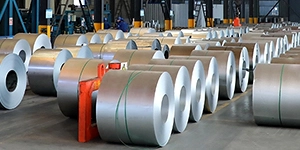
• Ask about coil sourcing. The quality of the incoming steel coil — including surface cleanliness, coating uniformity, and flatness — directly affects downstream manufacturing quality. Reputable manufacturers can identify their steel suppliers and describe incoming inspection procedures.
• Inquire about surface preparation before adhesive application. Between the roll-forming line and the adhesive station, the steel surface should undergo cleaning or treatment to remove forming oils and ensure adhesion. Ask what specific preparation steps are performed.
• Examine cut-edge quality on samples. The appearance of the cut edge — whether the galvalume coating extends cleanly to the edge or shows signs of peeling or uneven coverage — provides a visual indicator of coating adhesion quality.
6. Common Questions About Stone-Coated Roofing Substrates
6.1 Is a thicker steel substrate always a better choice?
Not necessarily. While thicker steel provides greater dent resistance and stiffness, the optimal thickness depends on the tile profile design and the structural requirements of the target market. A well-designed tile profile can achieve adequate spanning performance with 0.40 mm steel, while a different profile may require 0.45 mm. The key consideration is whether the manufacturer has validated the tile's structural performance — through testing or engineering calculation — for the intended application. At FUODE, substrate thickness is selected based on profile-specific engineering requirements rather than a one-size-fits-all approach.
6.2 What is the difference between AZ150 and AZ100 in practical terms?
The difference is the total aluminum-zinc alloy coating mass: 150 g/m2 versus 100 g/m2. In practical terms, AZ150 provides approximately 50% more coating material available for corrosion protection. In accelerated testing, this translates to measurably longer time before red rust appears at scribed areas. For projects in coastal zones (within 5 km of salt water), industrial areas with airborne pollutants, or regions with high annual rainfall, AZ150 is the more conservative specification. Buyers should discuss the target installation environment with their manufacturing partner to confirm the appropriate coating weight.
6.3 Can the substrate be visually inspected upon delivery?
While a comprehensive metallurgical analysis requires laboratory equipment, several visual indicators can be assessed during receiving inspection. Check that the galvalume surface at cut edges appears uniform and well-adhered, with no peeling or flaking. Examine whether the stone granule and adhesive coverage extends fully to tile edges — exposed bare steel at edges indicates a manufacturing gap. Look for consistency of surface appearance across the shipment: significant variations in the metallic sheen visible at edges or underside may indicate coil changes during production that warrant documentation review.
6.4 How does substrate quality affect the overall roof lifespan?
The substrate is one of several factors — alongside granule adhesion, installation quality, and environmental exposure — that collectively determine roof longevity. A well-manufactured tile built on an adequately specified substrate, correctly installed and maintained, can be expected to provide decades of service. The substrate's specific contribution is to prevent rust-initiated failures: a properly coated AZ150 galvalume steel substrate, protected by an intact adhesive and granule layer, should not be the life-limiting component of the roofing system under normal service conditions.
7. Conclusion
For wholesale buyers of stone-coated metal roofing tiles, understanding substrate optimization is a practical skill that directly influences sourcing decisions. The steel foundation beneath the visible stone surface determines how the roof responds to moisture, temperature extremes, and the passage of time. Galvalume steel with an AZ150 coating designation, processed through controlled manufacturing steps from coil inspection through adhesive application, provides a substrate specification that supports long-term corrosion resistance and weather durability.
Wholesale buyers and building material importers interested in discussing substrate specifications, requesting technical documentation, or evaluating Hainan FUODE Metal Materials Co., Ltd. as a supply partner for stone-coated steel roofing tilesare invited to visit www.fuode.com. The FUODE team can provide detailed product specification sheets and production samples for buyer evaluation.