Español
 العربية
 Francés
 Русский
 Português
 Deutsch
 日本語
 한국어
 Việt





Why Cut-Edge Protection Matters on Stone Coated Metal Roof Tiles
Why Cut-Edge Protection Matters on Stone Coated Metal Roof Tiles
A small edge detail can raise important questions
When evaluating stone coated metal roof tiles, buyers naturally focus on the roof-facing surface. Yet the edges and cut areas also deserve attention. A metal tile is formed and cut during manufacturing, and additional cutting may take place during installation to suit roof geometry. These operations can expose the substrate or create areas that need careful handling. Understanding how a manufacturer manages edges helps buyers ask more precise questions about product construction and site practice.
The subject should be discussed in practical terms rather than through alarming language. A cut edge is not automatically evidence of a defective product, and the correct treatment depends on the product design and manufacturer's instructions. What matters is that the factory explains its process and the installer follows the relevant guidance. Buyers should request clear information before placing an order, particularly where the roof design includes many valleys, hips, penetrations or perimeter cuts.
Where exposed edges occur
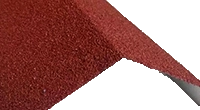
Edges may be visible around the perimeter of a tile, at cut-outs, or where components meet. The exact locations depend on the profile and the roof layout. Factory-cut edges and site-cut edges may be handled differently. A buyer should ask which edges are formed or finished during production and which are expected to be cut by the installer.
Roof plans can help identify areas that may require additional components or site adjustments. Valleys, gable edges, eaves, hips and roof penetrations should be reviewed before quantities are finalized. If a project has unusual geometry, share drawings or photographs with the supplier. This gives the manufacturer an opportunity to discuss compatible accessories and any limitations in the standard product arrangement.
Ask the manufacturer about its edge process
A useful supplier question is: how are edges created, finished and inspected during production? The answer should describe the actual manufacturing steps. Depending on the factory's process, relevant points may include cutting method, burr control, handling, protective treatment and final visual inspection. Do not assume that every manufacturer uses the same method or that one generic phrase describes all edge conditions.
If the factory applies a treatment to a cut edge, ask what material or process is used and whether it is intended for factory edges, installation cuts or both. Request the manufacturer's written instruction for any site treatment. Avoid applying an unapproved paint, sealant or chemical because compatibility with the existing coating system should be confirmed first.
The role of the metallic coating
The metallic coating on the steel substrate is part of the product's corrosion-protection system. Its specification should be documented separately from the steel thickness. Buyers should ask for the coating designation and measurement basis and should check whether the quotation matches the required specification. A supplier should be able to explain what it is offering without suggesting that one coating value makes the roof immune to corrosion.
Environmental conditions influence corrosion behaviour. Moisture, salts, industrial pollutants, scratches, standing water and contact with incompatible materials can affect the roof system. A product selected for a coastal or industrial location may need a more detailed review than one used in a less exposed environment. The project team should share site conditions and obtain appropriate technical advice.
Transport and installation can affect edge condition
Even a well-manufactured product can be damaged if it is dragged, stacked incorrectly or exposed to unsuitable storage conditions. Packages should be handled according to supplier instructions and inspected when received. If damage is visible, photograph the affected area and record the package identification before the products are distributed to the installation team.
During installation, workers should use suitable tools and follow the manufacturer's guidance for cutting, drilling, lifting and fastening. Metal filings and debris should be removed where instructed. Site cuts should be treated only in the manner specified by the manufacturer. The contractor should also ensure that water can drain as intended and that details around valleys, flashings and penetrations are correctly coordinated.
Inspection points for a sample or shipment
When reviewing a sample, look at the visible edge, the shape of the profile, the condition of the steel and the continuity of the surface finish. Check whether the sample is representative of the offered production specification. For a shipment, use the approved inspection plan and agreed acceptance criteria. Record the product identification, quantity checked, observations and photographs.
A visual review cannot replace a material test or a formal inspection where one is required. If the project calls for third-party inspection, define the scope, sampling method, timing and acceptance criteria before production. This avoids disagreement about what the inspection is expected to prove. The buyer and supplier should agree how any non-conforming items will be recorded and handled.
Coordinate edges with roof accessories
Edge protection is one part of a wider roof-detailing discussion. Flashing, ridge components, valleys, eaves trims and gable details should be compatible with the selected tile profile and roof geometry. The accessory schedule should identify material, dimensions, finish, quantity and installation interface. If accessories are sourced locally, the contractor should confirm compatibility before ordering.
A roof that has many intersections or penetrations may require more detailed planning than a simple gable roof. Drawings help the supplier understand the layout and estimate the required components. This is also an opportunity to confirm whether the tile system has standard details for the project conditions or whether a local designer needs to develop a specific solution.
Turn the edge discussion into a clear specification
Before ordering, record the steel and coating requirements, profile, dimensions, edge process, sample reference, accessory scope and installation guidance. Ask the supplier to identify the limits of its standard product and any site procedures that must be followed. If local regulations or project specifications require particular corrosion-protection measures, confirm them with the responsible technical professional.
FUODE ROOFING encourages buyers to raise edge and cut-area questions during the quotation stage. Sharing roof drawings, intended exposure and installation arrangements makes the discussion more useful. A clear understanding of edges helps the buyer assess the complete product and supports more consistent communication between manufacturer, importer and installer.

Visit www.fuode.com for more details.
— FUODE ROOFING —
Stone Coated Metal Roofing Source Factory | Shandong, China
www.fuode.com | Welcome factory visit & sample requests