Español
 العربية
 Francés
 Русский
 Português
 Deutsch
 日本語
 한국어
 Việt




Stone Coated Metal Roofing: Why Ammonia Testing Matters for Farm Buildings
Stone Coated Metal Roofing: Why Ammonia Testing Matters for Farm Buildings
Why Ammonia Matters in Livestock Building Roofing
When choosing roofing materials for a livestock building, buyers often focus on cost, roof structure, ventilation and weather resistance. These are all important, but there is another environmental factor that deserves attention: ammonia. In poultry houses, pig farms and other livestock facilities, ammonia can accumulate as a result of animal waste decomposition, particularly when manure and bedding are not managed properly. Combined with high humidity and insufficient ventilation, this creates a challenging environment for building materials.
Unlike ordinary outdoor exposure, a livestock building may experience repeated contact with ammonia-containing air. The concentration can change depending on animal density, cleaning frequency, ventilation performance, temperature and manure management. The roof is not necessarily exposed to the same conditions as the floor or lower walls, but warm, humid air can rise and circulate throughout the building. Over time, the roofing system may be exposed to an environment that is more demanding than that of a typical residential roof.
This is one reason why some farm owners and agricultural construction contractors ask about ammonia resistance when comparing Stone Coated Metal Roofing products. They want to know whether the roofing material can maintain its surface condition and protective function under the conditions found inside or around livestock buildings. It is a reasonable question, especially for projects where the roof is expected to remain in service for many years.
How Ammonia Exposure Can Affect Roofing Materials
Ammonia is a chemical compound commonly associated with livestock waste and certain industrial processes. In a farm building, it may be present in the air alongside moisture, dust and other substances. Its effect on roofing materials depends on the concentration, exposure time, temperature, humidity and the chemical properties of the materials involved.
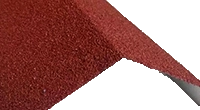
A Stone Coated Steel Roof is a layered product. It generally consists of a steel substrate, a metallic protective coating, surface treatment, adhesive and colored stone granules. Each part has a different role, and each should be considered when evaluating the product for agricultural use.
The metallic coating helps protect the steel substrate against corrosion. If this protective layer is damaged or exposed to unsuitable conditions, the underlying steel may become more vulnerable. The adhesive is responsible for retaining the colored stone granules, so its compatibility with the surrounding environment is also worth evaluating. The granules provide the textured surface and appearance, but their presence alone does not prove that the complete tile is resistant to ammonia.
It would therefore be inaccurate to describe every Stone Coated Metal Roofing product as ammonia-proof. Different manufacturers use different raw materials, coating systems and production processes. Buyers should look at the complete material structure rather than judging performance by the surface appearance or product name.
What Is an Ammonia Exposure Test?
An ammonia exposure test is intended to help evaluate how a material behaves when exposed to a controlled ammonia-containing environment. For roofing products, the test may be used to observe changes in the coating, surface appearance, adhesive condition, granule retention and exposed metal areas.
However, there is an important point buyers should understand: an ammonia exposure test is not automatically the same as a standardized corrosion test for every roofing product. The testing method and evaluation criteria need to be clearly defined. Factors such as ammonia concentration, humidity, temperature, exposure duration, sample preparation and inspection method can all affect the result.
For example, a test that exposes a small sample to ammonia under one set of laboratory conditions cannot automatically predict how a complete roof will perform inside a poultry house over ten or fifteen years. Actual farm conditions include ventilation cycles, moisture condensation, cleaning chemicals, dust and temperature changes. Laboratory testing provides useful information, but it does not reproduce every detail of real-world use.
When a supplier mentions ammonia resistance testing, buyers should ask what material was tested, how the exposure was conducted and what changes were observed after testing. A clear test description is more useful than a simple statement that the product has passed an ammonia test.
Which Parts of Stone Coated Roofing Should Be Checked?
For Stone Coated Metal Roofing Tiles, the inspection should not focus only on whether the colored surface changes appearance. The condition of the metallic coating, adhesive and granules also matters.
The steel substrate and its protective metallic coating should be reviewed first. Buyers should confirm the substrate type, thickness and coating specification. These details help establish what material is being supplied and provide a basis for comparison between manufacturers.
The adhesive layer deserves attention as well. Since it holds the stone granules in place, its condition can influence the appearance and surface integrity of the finished tile. If the adhesive becomes unsuitable for the exposure environment, granule retention may be affected. Buyers can ask whether the manufacturer has relevant inspection records or material compatibility information.
The granule surface should also be checked for visible changes, loose particles or uneven areas after exposure. In addition, cut edges, fixing points and accessories should not be overlooked. These areas may have different protective conditions from the main surface and can be affected by installation quality.
For agricultural buildings, it is sensible to evaluate the complete roof system, including ridge caps, flashing, fasteners, washers and drainage components. A suitable main roofing panel cannot compensate for accessories or installation details that are not appropriate for the building environment.
Why Ventilation and Maintenance Still Matter
Selecting a roofing material with suitable specifications is only one part of managing ammonia in a livestock building. Ventilation plays a major role in controlling indoor air quality. Poor ventilation can allow ammonia and moisture to accumulate, increasing the exposure of building materials as well as affecting the working environment for animals and farm staff.
The roofing system should therefore be considered together with the building's ventilation design. Air inlets, exhaust fans, roof openings and ceiling arrangements need to work as part of a coordinated system. The exact design depends on the type of livestock, building size, local climate and farm management practices.
Cleaning and maintenance also matter. Some farms use detergents or disinfectants during regular cleaning. These products may contain chemicals that are not compatible with every coating, sealant or accessory. Before applying a cleaning agent to the roof, users should check the manufacturer's recommendations. Strong chemicals should not be used simply because a material is described as durable.
Periodic inspections can help identify changes in the roof surface, drainage areas, fasteners and accessories. A maintenance plan based on the actual farm environment is more practical than assuming that every livestock building requires the same inspection frequency.
Choosing the Right Stone Coated Metal Roofing for Farm Projects
When comparing roofing products for poultry houses, pig farms or other agricultural buildings, buyers should consider the building environment before selecting a profile. The required specifications may differ depending on indoor humidity, ventilation, roof structure and the expected level of chemical exposure.
Buyers searching for Stone Coated Metal Roofing Tiles specifications should request clear information about the steel substrate, thickness, metallic coating, surface materials and available test documentation. If ammonia exposure is a particular concern, it is useful to explain the project conditions to the supplier and ask whether relevant material evaluation is available.
Product profiles should be selected according to the roof design and installation requirements. A Makuti Grained Stone Coated Roofing Sheet may be considered when its profile suits the project, but the profile name itself does not establish ammonia resistance. Buyers looking for a Makuti Grained Stone Coated Roofing Sheet Factory should compare not only product appearance but also material specifications, manufacturing consistency and the supplier's ability to explain the product structure.
Some buyers also request a Stone Coated Metal Roofing Tiles quote before completing their technical evaluation. A quotation is useful for comparing purchasing costs, but it should be based on a clear specification. Differences in steel thickness, coating requirements, accessories and packaging can affect the final price. Comparing quotations without checking these details may lead to an inaccurate assessment.
For distributors and importers, the availability of Stone Coated Steel Roof sheets and the supplier's export experience may also influence purchasing decisions. However, product availability should be confirmed for the required profile, color and specification rather than assumed from a general product listing.
FUODE ROOFING: Product Information from a Source Manufacturer
Hainan Fuode Metal Materials Co., LTD., operating under the name FUODE ROOFING, focuses on stone coated metal roofing products and related metal building materials. We understand that agricultural construction projects have practical requirements that may differ from those of ordinary residential buildings. Buyers need to know not only how a roof looks, but also what materials are used and whether the product information is suitable for the intended application.
As a manufacturer, we provide product information covering different roofing profiles and specifications. Customers interested in a Makuti Grained Stone Coated Roofing Sheet can discuss the required profile and material details with our team. For buyers comparing different Stone Coated Metal Roofing options, we encourage them to confirm the substrate, coating information, dimensions and accessory requirements before placing an order.
We also believe that technical communication should be clear. If a project involves poultry houses, pig farms or other livestock buildings, customers can share details about the building type, ventilation conditions and possible ammonia exposure. This helps us understand the application and discuss which product information or technical documents may be relevant.
For overseas buyers searching for a reliable Makuti Grained Stone Coated Roofing Sheet Factory or a Stone Coated Steel Roof exporter, product consistency and communication are important parts of the supplier evaluation. We aim to help customers understand the products they are purchasing, rather than relying on broad performance claims that may not apply to every project.
Make an Informed Decision Before Ordering
Ammonia exposure is a practical consideration for roofing materials used in livestock buildings. The actual effect depends on the building environment, chemical concentration, humidity, exposure time and the construction of the roofing system. Steel substrate protection, adhesive compatibility, granule retention, accessories and installation details all deserve attention.
Stone coated roofing sheets can be evaluated for agricultural projects, but buyers should not assume that every product has the same ammonia resistance. Reviewing material specifications, asking for relevant test information and discussing the actual application with the manufacturer are sensible steps before purchasing.
At FUODE ROOFING, we welcome enquiries from agricultural construction contractors, importers, distributors and project buyers. Whether you are comparing Stone Coated Metal Roofing Tiles, requesting a Stone Coated Metal Roofing Tiles quote or looking for a Makuti Grained Stone Coated Roofing Sheet, our team is ready to discuss your requirements and provide product information to support your decision.

— FUODE ROOFING —
Stone Coated Metal Roofing Source Factory | Shandong, China
www.fuode.com | Welcome factory visit & sample requests