Español
 العربية
 Francés
 Русский
 Português
 Deutsch
 日本語
 한국어
 Việt



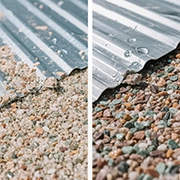




Salt Spray Test for Stone Coated Metal Roofing: Why It Matters Before Export
Salt Spray Test for Stone Coated Metal Roofing: Why It Matters Before Export
When purchasing roofing materials from overseas, buyers usually pay attention to the price, product appearance, steel thickness, color options and delivery time. These are all important factors, but there is another question that deserves attention before an order leaves the factory: how well can the material resist corrosion? For importers and distributors sourcing stone coated metal roofing, this question is especially relevant when products will be transported over long distances, stored in warehouses or eventually installed in coastal and humid regions.
One of the common methods used to evaluate corrosion resistance is the salt spray test. It is widely referenced in the metal and coatings industries and provides a controlled environment for observing how test samples respond to salt-containing conditions. But what exactly does this test tell us about stone coated metal roofing? Why might a manufacturer or buyer request it before export? And does passing a salt spray test mean that a roofing tile will never rust?
The answer requires a little more explanation. Salt spray testing is a useful part of quality evaluation, but it should not be treated as a guarantee of real-world service life. Understanding its purpose and limitations helps buyers make better decisions and gives them a clearer picture of what a manufacturer is actually checking.
What Is a Salt Spray Test?
A salt spray test, sometimes called a salt fog test, is a laboratory method used to evaluate the corrosion behavior of materials or coating systems under controlled conditions. During the test, prepared samples are placed inside a special chamber where a salt-containing mist is introduced under specified environmental conditions. The samples remain exposed for a defined period, after which their surfaces are examined for signs of corrosion or coating deterioration.
Two commonly referenced standards are ASTM B117 and ISO 9227. Both describe procedures for conducting salt spray testing, although their requirements and test environments should not be assumed to be identical. ASTM B117 is widely used for operating salt spray apparatus, while ISO 9227 covers neutral salt spray and other specified salt spray test methods. The selected procedure depends on the material, coating system and requirements of the project or customer.
It is important to understand that these standards primarily describe how the test is conducted. They do not automatically establish a universal pass or fail requirement for every roofing product. The acceptance criteria, including the test duration and the type or extent of corrosion considered acceptable, need to be defined separately according to the relevant product specification or customer requirement.
In simple terms, the salt spray test helps manufacturers and buyers observe how a material or coating behaves when exposed to a controlled corrosive environment. It provides useful comparative information, but it is only one part of a broader corrosion-resistance evaluation.
Why Does Salt Spray Testing Matter for Stone Coated Metal Roofing?
Stone coated metal roofing is a layered product. Its main structure is generally based on coated steel, with adhesive and colored stone granules applied to create the finished roofing surface. Different layers have different functions, and the corrosion protection of the underlying metal is an important consideration.
The steel substrate provides the structural base of the roofing tile. Its metallic protective coating helps reduce the risk of corrosion, while the surface treatment and other coating layers contribute to the overall product construction. The back surface also needs attention because it may be exposed to moisture depending on the roof assembly, storage conditions and installation environment.
If the protective coating is damaged, or if an area of the metal substrate becomes exposed, corrosion may develop under suitable environmental conditions. The risk can vary depending on the type and condition of the metallic coating, the thickness and integrity of the protective layers, the presence of scratches or cut edges, and the surrounding environment.
For a manufacturer, salt spray testing can help evaluate the corrosion behavior of selected material samples and coating systems. For an importer, it offers another way to understand the material specification behind the finished roofing tile. Rather than relying only on product photographs or general descriptions, buyers can ask what materials were tested, which standard was used and how the results were evaluated.
This is particularly useful when comparing products from different suppliers. Two roofing tiles may have a similar appearance, but their steel substrates, metallic coatings and surface treatments may differ. A clear test report can provide additional information about a specific material or coating system, provided that the tested sample accurately represents the product being purchased.
Why Check Corrosion Resistance Before Export?
International shipping involves more than moving products from one port to another. Roofing materials may be packed, loaded into containers, transported by truck, stored at ports, shipped by sea and unloaded at the destination. During this process, they can experience changes in temperature and humidity, as well as different handling and storage conditions.
One issue that deserves attention during sea transportation is container condensation. When temperatures change, moisture inside a container may condense on relatively cool surfaces. If packaging materials absorb moisture or ventilation and storage conditions are unsuitable, the risk of moisture-related damage may increase. If salt contamination is also present, corrosion concerns may become more significant.
However, it is important not to confuse a laboratory salt spray test with a simulation of the entire sea freight process. A salt spray chamber exposes a test sample to a defined corrosive environment. It does not reproduce every condition inside a shipping container, including temperature cycling, condensation patterns, packaging contact, vibration and handling damage.
This means that salt spray testing and export packaging inspection serve different purposes. Salt spray testing helps evaluate the corrosion behavior of selected materials or coatings, while packaging and loading checks help reduce the risk of damage during transportation. Both deserve attention, but neither should be presented as a substitute for the other.
For exporters, checking material quality before shipment can also help identify potential issues earlier. If a test result does not meet an agreed specification, the manufacturer and buyer can investigate the material, coating process or sample condition before the goods are delivered. This is more practical than waiting until the products reach the destination market and an issue is reported.
Which Parts of a Stone Coated Metal Roofing Tile Need Attention?
When evaluating corrosion resistance, looking only at the visible stone-coated surface may not provide enough information. The finished tile contains several material layers, and the condition of the underlying steel is particularly important.
The metallic coating on the steel substrate is one of the first areas to consider. Depending on the product specification, the steel may use a zinc-based or zinc-aluminium-based protective coating. The coating type and coating mass should be confirmed through the relevant material documentation rather than assumed from the product's appearance. Different metallic coating systems have different characteristics, so buyers should compare like with like.
Cut edges and exposed areas also deserve attention. During manufacturing, metal sheets are formed and processed into roofing profiles. Any cut edge, scratch or damaged area may expose part of the underlying material. The corrosion behavior at these locations can differ from that of an intact coated surface. This is why sample preparation and inspection conditions matter when interpreting salt spray results.
The back coating is another detail worth checking. Although it may not be visible after installation, it forms part of the product construction. Its specification and condition should be considered together with the steel substrate and other protective layers. A buyer who wants to evaluate the corrosion resistance of the complete product should clarify whether the test sample includes the same front and back coating arrangement as the production tile.
Finally, the adhesive and colored stone granules should not be confused with the metallic corrosion-protection layer. They are important components of the finished roofing product, but a salt spray result from the steel substrate does not automatically establish the bonding performance of the granules. Each property needs an appropriate evaluation method.
How Is a Salt Spray Test Conducted?
A salt spray test begins with sample selection and preparation. The sample should represent the material or coating system that needs to be evaluated. Depending on the purpose of the test, this may be a coated steel panel, a prepared metal specimen or a section of the finished roofing product. The sample dimensions, exposed surfaces and any required edge treatment should follow the selected test method and agreed specification.
Before testing, the sample is inspected and prepared according to the relevant procedure. Its condition should be documented, especially if there are scratches, cut edges or other features that may affect the evaluation. If the purpose is to compare two coating systems, the samples should be prepared in a consistent way so that differences in the results are meaningful.
The samples are then placed inside the salt spray chamber. The equipment produces a controlled salt-containing mist, and the chamber maintains the conditions required by the selected standard. The exposure period is determined by the test plan or product specification. There is no single number of test hours that automatically applies to every stone coated metal roofing product.
After the exposure period, the samples are removed and evaluated according to the agreed inspection procedure. Inspectors may examine the surface for visible corrosion, coating deterioration, blistering or other specified changes. The assessment should clearly distinguish corrosion on the main surface from corrosion around deliberately exposed edges or damaged areas, where relevant.
The results are then documented. A useful test report should identify the sample, material specification, test standard, exposure duration, preparation method and observed condition. Photographs can also help buyers understand the appearance of the sample before and after testing.
Does a Longer Salt Spray Test Mean Better Roofing Quality?
This is one of the most common questions buyers ask, and the answer is not as simple as it may seem. A longer exposure period may provide more information about how a particular sample behaves under the specified test conditions. However, it does not automatically mean that the product will last a corresponding number of years in actual use.
For example, it would be misleading to claim that a roofing tile that passes a certain number of salt spray hours will provide an equivalent number of years of corrosion protection. Laboratory salt spray exposure and natural outdoor weathering are different environments. Actual roofing conditions involve changing temperatures, rainfall, sunlight, humidity, airborne pollutants, coastal salt exposure and periods of drying.
The performance of a roof also depends on its design and installation. Scratches caused during handling, unsuitable fasteners, damaged edges, contact with incompatible materials and poor drainage may influence corrosion behavior after installation. A test conducted on an intact laboratory sample cannot account for every possible condition on a completed roof.
For this reason, buyers should avoid comparing products using test hours alone. It is more useful to understand the tested material, coating type, sample preparation, test method and acceptance criteria. If two suppliers provide salt spray reports, the results should only be compared when the testing conditions and sample characteristics are sufficiently consistent.
Salt Spray Testing and Sea Freight Packaging Are Both Important
Although salt spray testing is relevant to corrosion evaluation, it should be combined with sensible export packaging and transportation management. A product that performs well in a laboratory test can still be damaged if it is packed incorrectly or exposed to unsuitable storage conditions.
For stone coated metal roofing tiles, packaging should help protect the finished surface during handling and transportation. Tiles need to be arranged and secured appropriately to reduce unnecessary movement and friction. Packaging materials should be suitable for the expected shipping conditions, and the container should be checked for obvious damage or signs of water entry before loading.
Moisture management is also worth considering. Exporters and logistics teams should pay attention to the condition of the container, the dryness of the goods and packaging materials, and the possibility of condensation during long-distance transportation. The specific packaging arrangement may vary according to the product, destination, route and shipping duration.
Importers should also inspect the goods when they arrive. If there are signs of moisture exposure, damaged packaging or unusual surface changes, photographs and shipment records can help identify the possible cause. A clear inspection process makes communication between the buyer, supplier and logistics provider more effective.
The key point is that corrosion resistance is influenced by both material characteristics and the conditions the product experiences after manufacturing. A salt spray test helps evaluate one part of this picture, while packaging and transportation controls address another.
What Should Importers Ask Before Ordering?
When sourcing stone coated metal roofing from an overseas manufacturer, buyers should ask for clear information about the steel substrate and its metallic coating. The product specification should identify the relevant material details, while any salt spray report should state which sample was tested and which standard was followed.
It is also worth confirming whether the report applies to the raw coated steel, a finished roofing tile or another representative sample. These are not necessarily equivalent. A report for a coated steel panel should not automatically be presented as a test result for every layer of the finished stone coated roofing tile.
Buyers can also discuss the intended destination market and application. A project near the coast may have different corrosion considerations from one located inland. The local environment, building design, installation details and maintenance expectations should all be considered when selecting roofing materials.
At FUODE ROOFING, we focus on the production of stone coated metal roofing tiles and related materials, including steel coils, adhesive and colored stone granules. Based in Liaocheng, Shandong, China, we understand that international buyers need clear material information when evaluating a supplier. Questions about steel specifications, coating systems, product inspection and export packaging are all part of a practical purchasing discussion.
We encourage importers, distributors and contractors to clarify their technical requirements before placing an order. If a particular salt spray test standard, exposure duration or acceptance criterion is required, it should be confirmed in advance so that the test scope and documentation can be discussed accurately. This helps both sides avoid misunderstandings and ensures that the information provided relates to the product and requirements being evaluated.
A Better Export Decision Starts with Clear Quality Information
Salt spray testing is a useful tool for evaluating the corrosion behavior of metal materials and coating systems used in stone coated metal roofing. It can provide valuable information before export, help compare material performance under defined conditions and support a more structured quality inspection process. However, it is not a direct prediction of service life, a complete simulation of sea transportation or proof that a finished roof will never experience corrosion.
For buyers, the most important thing is to understand exactly what has been tested. The steel substrate, metallic coating, back coating, exposed edges and finished surface all need to be considered in the context of the product construction. Test reports should be reviewed together with material specifications, production inspection and export packaging arrangements.
At FUODE ROOFING, we believe that a trustworthy manufacturing relationship is built on clear communication and realistic product information. Whether you are sourcing stone coated metal roofing for wholesale distribution or selecting materials for a specific construction project, we welcome the opportunity to discuss product profiles, material options and quality requirements. Before a shipment begins its journey, understanding the materials and checking the relevant quality details can help make the purchasing process more transparent and predictable.

— FUODE ROOFING —
Stone Coated Metal Roofing Source Factory | Shandong, China
www.fuode.com | Welcome factory visit & sample requests