Español
 العربية
 Francés
 Русский
 Português
 Deutsch
 日本語
日本語
 한국어
한국어
 Việt
Việt

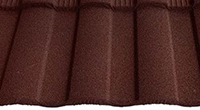
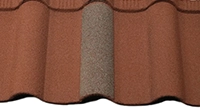
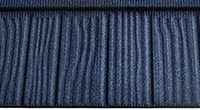

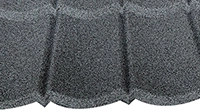


Stone-Coated Metal Tiles Formed for Curved Roofs
Stone-Coated Metal Tiles Formed for Curved Roofs
Anyone working with custom architectural builds understands just how demanding curved roof designs can be. Smooth arched rooflines are visually striking, and many homeowners and commercial building clients gravitate toward these flowing shapes for villas, resort buildings, community pavilions and boutique public structures. But aesthetics come with practical challenges, and most conventional roofing materials struggle to follow soft continuous roof curves without visible seams, cracking or compromised waterproofing. Clay roof tiles and concrete tiles are rigid and brittle by design. Even with careful on-site cutting, they can only accommodate gentle curves to a limited degree, and tighter arches almost always lead to breakage, uneven alignment and gaps that create vulnerability to rainwater intrusion. Standard asphalt shingles can bend over subtle contours, but they lack the durability to maintain their appearance over decades, and the overlapping layers often ripple or lift on pronounced curved surfaces. Flat metal panels are another common option for arched roofs, but they create long straight lines that clash with the textured natural look many architects want to achieve, and custom panel forming can push up project lead times significantly. This is where stone-coated metal roofing enters the conversation, and a recent custom curved roof project put our forming and quality control processes at FUODE ROOFING to the test.
Stone-coated metal tile relies on a galvalume steel substrate that offers controlled ductility, which means it can be carefully formed to fit curved roof profiles, though there are clear boundaries to what the material can handle. The natural basalt stone granules bonded onto the tile surface must stay firmly attached through the forming process, and excessive stretching or improper pressure can disrupt the adhesive layer and lead to granule loss. Before we committed to the fabrication phase of this curved roof project, our technical team worked closely with the architect and contractor to review the radius of the arch, roof slope, wind load requirements and local rainfall conditions. We started by producing small sample tiles, forming them to match the project’s curve specification and then carrying out inspection to check coating integrity, granule adhesion and dimensional consistency. These pre-production samples allowed all parties to see the finished texture and confirm that the stone granule finish would remain uniform once installed, avoiding surprises once manufacturing began. Many buyers underestimate the importance of this sample verification step, and rushing past it can create costly problems once production starts, especially on custom curved roof builds where every tile has to fit into a precise sequence.
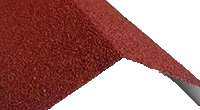
For this specific curved roof build, we did not rely solely on on-site bending, which is better suited for minor adjustments and small details. Instead, we formed the tiles in our factory workshop using controlled tooling, applying gradual, even pressure to shape each tile to the required arch radius. Factory forming gives us much tighter control over the steel substrate and the bonded stone surface compared to bending on a busy construction site, where uneven pressure or improper tools can easily damage the tile surface. Every formed tile went through visual inspection and granule adhesion checks before packing, to ensure no loose grains or subtle coating damage slipped through. We also produced matching custom curved ridge components that align seamlessly with the field tiles, as curved roof systems live or fail by the quality of their transition pieces. Even the most well-formed tiles will not deliver reliable performance if ridge caps, valley flashings and edge trims are not engineered to follow the same continuous curve. At FUODE ROOFING, we package the full set of compatible accessories with every custom roof order, so installers have everything required to maintain consistent coverage along every curved joint and roof edge.
Many people wonder about the long-term performance of pre-formed stone-coated metal tiles on an arched roof. Curved roof surfaces experience different stress distribution than simple straight gable roofs, with thermal expansion and contraction working across the arched plane as temperatures rise and fall. The galvalume steel substrate we use for our stone-coated metal tiles offers good thermal movement tolerance, and the interlocking tile design allows gentle movement without creating binding between adjacent pieces. We explained to the project team that while our formed tiles follow the arch beautifully, proper underlayment and flashing details remain essential. The curve itself does not eliminate the normal waterproofing best practices that apply to any roof, and high-wind or heavy rain environments still require careful attention to fastener spacing and sealing at overlaps. Our technical team prepared detailed installation drawings and shared video guidance tailored for this curved layout, walking the contractor through the order of installation, alignment markers and the best way to seat each formed tile to avoid twisting during fitting. We also made ourselves available for remote technical support during the installation phase, as custom curved projects often bring small site adjustments that benefit from quick communication with the tile manufacturer.

It is important to set realistic expectations when designing an arched roof with stone-coated metal tiles. The material works well for curves above a minimum radius, but it cannot be formed into tight, sharp bends. If an architectural design calls for an extremely compact arch, our team will communicate this limitation early in the quoting stage, and discuss alternative design adjustments rather than promising results the material cannot deliver. Honest technical communication is one of the core principles we follow at FUODE ROOFING, because we have seen many projects run into trouble when suppliers overstate what their roofing product can accomplish. We always share test samples and data with our clients before large orders, so they can physically examine the formed tiles and assess surface quality for themselves. This transparency helps build trust, and it reduces the risk of disputes once goods reach the job site. We have supported curved roof projects across several regions, including tropical high-humidity locations and areas that see strong seasonal winds, and each project teaches our team more about refining forming techniques for different climate and design requirements.
Visually, one of the biggest advantages of using formed stone-coated metal tiles on a curved roof is the way the natural stone granule texture flows smoothly along the arch. Long metal panels create obvious linear seams, while rigid clay tiles create a segmented, disjointed look when forced onto curved surfaces. With properly formed stone-coated metal tiles, the eye follows the continuous roof curve, and each interlocking tile blends into the next, preserving the organic aesthetic the architect envisioned. This makes the product popular for high-end resort roofs, chapel structures and distinctive residential villas where curb appeal is a central priority. Renovation projects can also benefit from this solution, when an older building already features an arched roof structure and the property owner wants to replace worn roofing while preserving the original curved architectural character. Instead of reworking the roof frame to accommodate conventional rigid tiles, custom formed stone-coated metal roofing can match the existing arch profile and refresh the exterior appearance without major structural modifications.
When planning a curved roof project, builders and property owners should evaluate roofing options based not only on appearance, but also on manufacturing capability, accessory matching and available technical support. Some suppliers only offer standard flat stone-coated metal tiles and do not have the tooling or experience to handle custom forming, leaving clients to attempt risky on-site bending that can compromise tile longevity. Choosing a source factory that has hands-on experience completing curved roof projects can save time, reduce material waste and give the project team greater peace of mind throughout fabrication and installation. If you are developing an arched or curved roof concept for your next build, you can reach out to FUODE ROOFING to discuss your design parameters and request physical formed tile samples. Reviewing samples and talking through the forming limits at an early stage helps keep your architectural vision grounded in practical material performance, so your finished curved roof delivers lasting beauty and reliable protection for many years ahead.

— FUODE ROOFING —
Stone Coated Metal Roofing Source Factory | Shandong, China
www.fuode.com | Welcome factory visit & sample requests