Español
 العربية
 Francés
 Русский
 Português
 Deutsch
 日本語
日本語
 한국어
한국어
 Việt
Việt





Stone Coated Metal Roofing Tile Scrap: The Factory Recycling System
Stone Coated Metal Roofing Tile Scrap: The Factory Recycling System
As more commercial and industrial roofing buyers factor a supplier’s production management and resource efficiency into their evaluation — beyond product specifications, lead times, and warranty terms — green manufacturing has moved from industry concept to a practical dimension of supply chain stability and total project cost. Many clients new to stone coated metal roofing tiles ask a straightforward question: during stamping, adhesive spraying, and stone-coating, the production line inevitably generates metal offcuts, excess colored granules, and a small number of substandard finished tiles. Where does all this scrap go? Is it simply discarded? At FUODE ROOFING’s production base in Liaocheng, these are daily operational realities. Over years of supplying factory building and commercial roofing projects across domestic and international markets, we have built a closed-loop recycling system tailored to stone coated metal roofing tile production. This article offers an objective look at how scrap is handled on the factory floor, so roofing procurement teams can see the operational details behind a source factory.
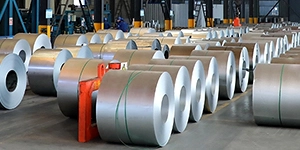
The waste streams from a stone coated metal roofing tile production line are straightforward — primarily galvalume steel offcuts from the cutting stage, excess sintered stone granules that did not adhere during sand-coating, a small number of defective tiles caught during inspection, and packaging material from auxiliary processes — each with its own distinct recycling path. After steel coils pass through decoiling, cutting, and pressing, substantial irregular metal offcuts remain. This galvalume steel carries high reuse value and is never handled as general waste. In the workshop, designated sorting and staging areas are set up; metal scrap is collected and categorized daily, kept separate from other materials. Once sufficient volume accumulates, it is transferred to qualified recycling partners who feed it back into steelmaking as raw material for re-production — completing the metal substrate loop. For a source factory, proper classification of metal offcuts is not only an environmental practice — it also enables reasonable control over raw material costs, a baseline in any scaled stone coated metal roofing tile production workshop. However, the level of rigor varies considerably between factories. Smaller workshop-style operations often lack standardized segregated storage; mixed materials reduce the recovery value of metal scrap, and in some cases scrap is simply piled up, degrading the overall quality control environment over time.
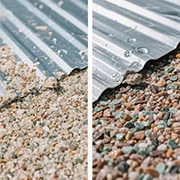
The loose stone granules from the sand-coating process are a distinctive waste stream in stone coated metal roofing tile production. The natural sintered stone granules on the tile surface rely on specialized bonding adhesive to adhere to the galvalume steel substrate. During production, a portion of granules fails to bond; without collection, this means both raw material loss and workshop dust. FUODE ROOFING’s Liaocheng production line is equipped with an enclosed recovery system at the sand-spreading and air-blowing stations. Qualified granules that drop off are screened and filtered to remove dust and fine impurities, then returned to the sand-coating stage, substantially reducing fresh granule consumption. Granules already contaminated with adhesive and unusable for direct reuse are handled as classified solid waste — never casually dumped off-site. Defective tiles identified on the line are sorted by the nature of the defect. Tiles with only cosmetic surface flaws and an undamaged substrate are stripped to recover usable base metal, which enters the metal recycling stream. Finished tiles with severe coating damage that cannot be separated are routed through the corresponding solid waste channel — they are never given a superficial touch-up and reintroduced to the market. This is a critical difference between a source factory and a small-scale processing point. Some low-cost supply sources downstream patch up unsellable defective tiles with quick fixes; once such products land on a factory roofing project, coating delamination and premature corrosion often follow, planting hidden risks in large-scale roofing works.
It is worth drawing a distinction between production scrap recycling and post-project roof demolition waste — two concepts that are occasionally conflated. The closed-loop system we have built covers materials generated during the factory’s own manufacturing stage; it does not encompass the recycling of old tiles from building demolition. That said, the galvalume steel substrate in stone coated metal roofing tiles remains recyclable at the end of a building’s service life — a meaningful contrast to traditional clay tiles and certain asphalt-based roofing materials, which mostly end up in landfill with limited reuse potential. Once metal tiles are removed, the surface coating can be stripped, and the steel returns to the metallurgical supply chain for circular use. Of course, post-construction old-tile recycling involves practical challenges around demolition, transport, and coating treatment, and is typically handled by local resource recovery enterprises. For now, the factory focuses on controlling material flows within its own production site — minimizing waste at the source.
A complete recycling loop is never the product of a single piece of equipment — it requires production workflow, on-site management, and personnel standards working together. From the initial workshop layout of the Liaocheng production base, storage points for different material streams were planned: metal offcuts, waste stone granules, and other industrial waste are stored separately, with general solid waste strictly separated from special production auxiliary material waste. Each stream is handled by qualified partner organizations, with disposal records retained throughout, making material flows traceable to the Dongchangfu District Ecology and Environment Bureau. In daily production scheduling, recycling and collection are integrated into regular workshop routines — not treated as periodic special campaigns. Material sorting is completed at the end of every shift, preventing scrap accumulation on the shop floor. We have worked with overseas commercial and industrial roofing buyers who, when evaluating suppliers, place real weight on the factory’s actual practices in resource utilization and waste management. Green manufacturing capability has become a meaningful evaluation dimension in B2B procurement, and this in turn pushes us to continuously refine the entire process rather than keeping environmental efforts as paperwork alone.
Why should someone responsible for factory roofing procurement care about a stone coated metal roofing tile factory’s scrap recycling system? At its core, the level of rigor in waste handling reflects the overall management standard of a source factory. A factory unwilling to handle production offcuts properly is unlikely to deliver the same discipline in raw material control, quality inspection, or warranty fulfillment. Production management is an integrated system, and the details visible on the workshop floor often reveal the true state behind the product. Many buyers focus solely on the ex-works unit price when comparing tiles, overlooking the operational differences between factories. A lower price may come from a stripped-down quality control process, or from skipping proper waste disposal to cut costs — and these hidden savings tend to shift onto the project eventually. Rework and maintenance costs from post-installation quality issues on a roof will far exceed whatever was saved on the initial purchase.
As a source factory supplying stone coated metal roofing tiles to global markets, FUODE ROOFING’s Liaocheng production base handles orders for factory buildings and commercial roofing projects across domestic and international markets. We understand that when clients choose us, their core requirement is roofing materials with consistent performance and uniform batch quality, backed by a supplier capable of long-term stable operation. Building a production recycling loop does not directly change the appearance of an individual tile, but it is part of the factory’s standardized production capability. From steel coil receiving, through stamping and forming, stone coating and curing, to finished product inspection and dispatch — and including the classified flow of all production waste streams — the standardization of the entire chain ultimately serves every batch delivered. We do not treat green production as a marketing device; we carry out the production management that a responsible source factory should. In project discussions, if clients are interested, we can share actual photos of the factory floor, showing the real scene of workshop material handling.
When procuring high-value fixed-asset materials like industrial roofing, evaluating a supplier means looking beyond the brochure specifications — pay attention to these easily overlooked production details. Understanding where scrap goes is, in essence, understanding a stone coated metal roofing tile factory’s attitude toward production. A stable raw material supply chain, rigorous finished-product inspection, and standardized internal material loop management — these layers together are what enable the continuous delivery of reliable commercial and industrial roofing tile products, helping factory buildings and large-scale construction projects build metal roofs with longer service life and lower long-term maintenance pressure.

— FUODE ROOFING —
Stone Coated Metal Roofing Source Factory | Shandong, China
www.fuode.com | Welcome factory visit & sample requests