Español
 العربية
 Francés
 Русский
 Português
 Deutsch
 日本語
日本語
 한국어
한국어
 Việt
Việt






Stone Coated Metal Roof Tiles for Villas — Six Details That Matter
Stone Coated Metal Roof Tiles for Villas — Six Details That Matter
In villa and high-end residential construction, owners and architects often devote considerable attention to facades, windows, doors, and garden layouts, while the roof’s contribution to a building’s overall presence is easily underestimated. The roof occupies a substantial portion of a structure’s visual footprint — when the roofing material is chosen without careful consideration, even heavy investment in wall finishes and landscaping can fall short of delivering a cohesive look. Stone coated metal roofing tiles have gained steady adoption across villa projects in recent years, yet many procurement decisions still rest on renderings or small samples alone. The real test comes after full installation, when discrepancies in texture, line consistency, and overall appearance become impossible to ignore — and corrections carry significant cost. FUODE ROOFING is a stone coated metal roofing tile factory that has supplied both villa-scale residential builds and large-footprint commercial and industrial roofing projects. Having worked through countless on-site outcomes, including cases where overlooked details undercut an otherwise well-planned roof, we draw on that experience here. The following six practical considerations are worth weighing carefully during the early selection stage, long before tiles reach the rooftop.
A clean, composed roofline depends on the base substrate long before surface color enters the picture. The foundation of every stone coated metal tile is the galvalume steel sheet — its thickness consistency and material grade set the stage for everything that follows. When the steel base has uniform gauge and stable composition, pressed tiles emerge with consistent contours and edge profiles, batch after batch. If the substrate raw material fluctuates in thickness, the finished tiles may show subtle warping even when the surface granule coating appears even. Once laid across a roof slope, these small deviations translate into irregular gaps between adjacent tiles. From a distance, the roof surface reads as disjointed rather than continuous — at which point even a carefully chosen color palette struggles to convey a well-resolved impression. Different supply channels offer base steel of widely varying specification; some suppliers select lower-cost substrate with looser thickness tolerances to keep quoted prices competitive. The initial procurement figure looks attractive, but once tiles go up, the appearance suffers, and under prolonged sun exposure and weather cycles, deformation becomes a real concern. Whether the project is a private villa or a larger-scale factory building, the raw material baseline is where the roofing outcome takes shape. A source factory’s control over steel grade specification and incoming material inspection directly shapes the roof surface that ultimately gets lived with.
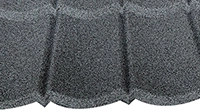
Surface granule quality defines what the roof feels like up close and what it looks like from across the property — and it is also where villa roofing projects most often go wrong. Properly manufactured ceramic-coated granules have a balanced particle size distribution, spreading across the tile surface with even density and no bare patches or heavy localized buildup. Under natural daylight, the granule layer reads as a soft, matte texture rather than an artificial, glossy reflection. Lower-cost products sometimes substitute ordinary dyed sand — vivid at first, but prone to fading and shedding after sustained UV exposure. The roof develops patchy light and dark zones, and the overall appearance breaks down. Many buyers examine a small sample tile and see nothing amiss; the trouble is that laying the same tile across a broad sloped roof magnifies every subtle inconsistency. Variations invisible in a hand sample become conspicuous across the full expanse of a finished roof. FUODE ROOFING controls the granule screening process during production, keeping the particle size range within a defined window, and applies a bonding process between the granule layer and the steel substrate that reduces the likelihood of abnormal granule loss over time. This standard is applied not only to appearance-driven villa roofing orders but equally to industrial and commercial roof projects where long-term stability is the priority.

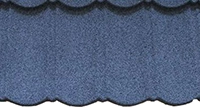
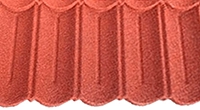
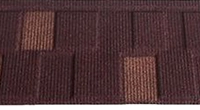
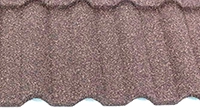
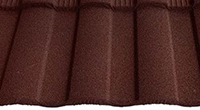
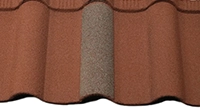
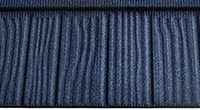
The profile contour and interlocking geometry of the tile itself have an outsized effect on the roof’s finished character — a factor that goes beyond what a single isolated tile sample can show. Different tile profiles — the Bond rounded arc, the Classic flat-faced line, the Milano sculpted shape — each cast a distinct pattern of light and shadow once laid in continuous rows. A tile with a fuller, more generous curve produces a softer, more flowing roofline that suits European-influenced and country-estate architecture. A profile with sharper, more angular edges works naturally with contemporary, minimalist building forms. Beyond the visible shape, the interlocking structure deserves attention beyond its functional role. Well-designed overlap geometry lets tiles seat snugly against one another, so that ridge lines, verge edges, and eave runs come out straight and clean, without visible stepping or unevenness. Where interlocking tolerance is poorly calculated, installers have little room to adjust alignment during laying, and even high-grade individual tiles will read as rough once assembled across the roof. Commercial and factory roofing projects also benefit from this same attention to profile — many modern industrial buildings weigh façade appearance alongside waterproofing and durability, so the logic behind tile shape selection applies across building types.
Color consistency within a single roof plane is a practical challenge specific to large roof areas, and villa roofs are rarely small. Two batches of tiles that carry barely detectable shade variation can look quite different once side by side on the same slope under direct sunlight. Buyers sometimes overlook the fact that stone coated metal roofing tiles are mass-produced industrial goods. Granule batches and production environment variables both introduce subtle shifts in finished color. A factory with disciplined production planning will schedule a single project’s tile output within a concentrated production window, sourcing from the same granule batch to keep cross-batch color drift to a minimum. When orders are placed in separate installments across different production cycles, the tiles that arrive may carry visible differences that no amount of on-site adjustment can correct. Many trading companies lack their own production lines and fulfill orders by sourcing from multiple facilities; when a single project’s tiles come from different factories, the risk of color mismatch rises. This is one reason villa and residential roofing buyers increasingly prefer working directly with a source factory — production scheduling, raw material allocation, and quality checks all happen under one roof, making it far easier to maintain visual consistency across the entire order.
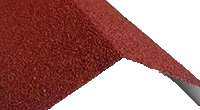
Roofing accessories often go unnoticed during the selection process, yet they have a concrete impact on how finished the completed roof appears. Ridge caps, verge trim pieces, valley flashing, and gutter covers are not afterthoughts. On a villa roof where a crisp, deliberate look matters, the edge and transition details carry disproportionate visual weight. If the main tiles are well made but the accessory components are roughly finished — with mismatched curvature, off-color tone, or inconsistent profile — the roof perimeter and ridge line will stand out as visually disconnected, undercutting the building’s overall presentation. A properly organized source factory supplies a full accessory suite produced with the same tooling, the same granule material, and the same finishing steps as the main tile body, rather than bundling generic off-the-shelf trim pieces. When the full system is designed and produced together, ridge transitions, verge closures, and eave terminations flow in continuous, unified lines. The same principle holds for commercial and factory roofing: accessory matching affects not only appearance but overall weatherproofing durability. A roofing system where main tiles and accessory components are engineered as one set delivers both.
Installation workmanship is the final variable that no tile quality can compensate for. However carefully manufactured the tiles, they still need to be laid by a crew on site. If batten spacing is inconsistent, or if tile alignment drifts during laying, the result is crooked seam lines and misaligned overlaps — undoing all the care taken during product selection. A source factory typically does not handle on-site construction in each region directly, but it can supply clear, detailed installation documentation: batten spacing references, overlap requirements, ridge treatment guidance. With these reference standards in hand, local installation teams can follow a consistent method, reducing the appearance defects that arise from avoidable workmanship errors. Across overseas villa projects and domestic factory building renovations alike, cases where the client receives the tiles and hands them over to a local crew are common. Well-organized, practical installation references go a long way toward closing the information gap that so often leads to a finished roof falling short of what the tile samples promised.
A roof that reads as well-resolved rarely comes from an outsized budget — it comes from sustained attention to detail across every layer. The substrate steel, the granule finish, the tile profile and interlock design, batch-to-batch color control, matching accessories, and disciplined installation — each layer adds its contribution, and together they form the complete roof impression. These considerations are not limited to private villa projects. Factory buildings, industrial parks, and mixed-use commercial developments present the same evaluation logic. Business buyers want roofing that holds up against weather, stays watertight, and performs reliably over time, and they increasingly care about how the building presents from the outside as well. At FUODE ROOFING, the raw material screening and production quality standards applied to a villa order and a large-scale factory roofing order are the same — project type does not change the factory’s baseline. During the early consultation stage, the team factors in building style, roof area, and local climate conditions to offer practical, grounded tile selection guidance rather than steering every conversation toward higher-margin profile options.
When sourcing roofing material, go beyond the first glance at a sample tile. Pay attention to the details that only become visible once tiles are actually on the roof. That approach leads to stone coated metal roofing tiles that balance a clean, enduring appearance with long-term weather resistance — a roof that holds its own through years of sun, rain, and wind, and gives the building dependable overhead protection across its service life.

— FUODE ROOFING —
Stone Coated Metal Roofing Source Factory | Shandong, China
www.fuode.com | Welcome factory visit & sample requests