Español
 العربية
 Francés
 Русский
 Português
 Deutsch
 日本語
日本語
 한국어
한국어
 Việt
Việt




Roofing Without Welding: How Stone Coated Metal Tile Cold Connection Keeps the Structure Safe
Roofing Without Welding: How Stone Coated Metal Tile Cold Connection Keeps the Structure Safe
Most people don't think about how a roof gets put together until they're standing on one. But if you've ever watched a metal roofing crew work, you've probably noticed something: a lot of them show up with a welder. Sparks drop to the ground, the coating gets scorched along the seams, and on a building that's still occupied, somebody has to deal with the fire risk and the hot work permits. It's been the standard for a long time, and it does the job. It's just not the only way to do it, and for more and more contractors it isn't the way they'd pick if they had a choice.
That's the part we keep explaining at FUODE ROOFING. We're a factory in Liaocheng, Shandong, China, and we make stone coated metal roof tiles and the steel coils they're stamped from. Over the years we've shipped these tiles to Europe, Central Asia, West Africa, and Southeast Asia, and customers keep asking the same thing in one form or another: does this roof really go on without welding? The answer is yes, and it's not a sales line. It's built into how the tiles are designed.
What we call a cold connection is actually simple. The tiles overlap and interlock with each other, they sit on a batten system, and they're fixed with nails or screws through slots that are already punched in at the factory. No heat touches the steel. No weld bead runs along the edges. No grinder opens up the surface. A small crew with a drill and a coil nailer can lay a whole roof that used to need a certified welder on site for days. That single change shifts the whole project, and it's worth walking through why.

First, the heat. Welding a metal roof is not gentle on the material. The steel core of a roof tile carries a protective coating, in our case a galvanized or alu-zinc coated steel base, and on top of that, the stone layer. When you weld on site, the heat travels well past the spot you're working on. It burns the zinc away from the surrounding steel, and once that protection is gone, that area is the first place rust will start. The stone coating doesn't survive a welder either. The granules are bonded with an acrylic layer, and open flame turns that bond brittle, so the stone starts coming off. A roof that's welded in the field can look fine the day it's finished and develop bare spots, rust lines, and loose granules a year or two later. That's not a hypothetical. It's a pattern you see on older jobs.
There's also the safety side, and this is where cold connection really earns its keep. A roof is often the last thing finished on a building that's already full of people. Schools, hospitals, hotels, offices, you can't always shut them down while sparks rain onto the roof deck and the insulation. With a no-weld installation there's no flame on site at all. No hot work permit, no fire watch, no risk of a spark finding its way into a gap and smoldering for hours. For a retrofit over an occupied building, that's often the difference between a project that happens and a project that gets delayed for months while somebody figures out the logistics.
Beyond safety, there's the schedule. A welded roof has to be handled by someone who really knows their way around a torch, and good welders don't come cheap or fast. Cold connection changes that. Because the tiles lock together and the fastening is purely mechanical, the learning curve is shorter and the crew moves quicker, which means less time on scaffolding, less rented equipment, and a finished roof sooner. On a big warehouse or a housing development, that speed shows up directly in the numbers.
Then there's the structure itself, which is where the title of this piece comes from. A lot of roofing damage isn't the roof, it's what the installation does to the building underneath. When a crew welds, or when fasteners get driven through the deck in a way that cracks the substrate, the structure is left a little worse than it was found. Stone coated metal tiles take a different path. They're lightweight compared to clay or concrete, so the existing structure doesn't need reinforcing just to hold them. They go on over the battens, and the fasteners only bite into the batten and the deck, so the load spreads out instead of concentrating in one spot. And because the tiles interlock and shed water down the overlap, you're not depending on a seam that has to be sealed or welded shut to keep the water out. The water runs off the top of each tile and over the one below it, the way it's designed to.
That matters even more when you're re-roofing. Tearing off an old roof is heavy, dusty, expensive work, and it's often the moment a structure gets knocked around the most. With stone coated metal roofing you can frequently go over the existing deck, fix the battens, and lay the new tiles on top. The old roof stays in place, the new one goes on without hot work, and the people inside barely notice the job is happening. We've seen this done on houses, warehouses, and public buildings, and it's one of the reasons contractors reach for this material.
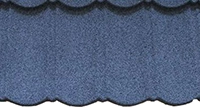
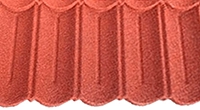
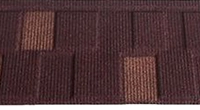
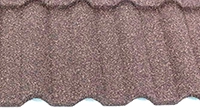
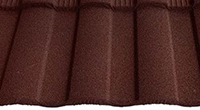
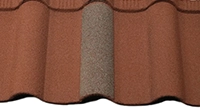
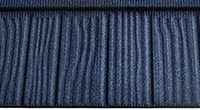
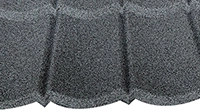
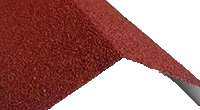
It helps that the material is honest about what it is. A stone coated metal roof tile is a 0.55mm steel base, coated for corrosion resistance, then covered with natural stone granules bonded in place. It reads like a shingle or a slate from the street, but it's metal underneath, so it's light, and stone coated steel has a reputation for doing well in wind and hail. The tiles come in a range of profiles, from a flat modern look to slate and shake styles, and the granules can be mixed to match just about any neighborhood. On our side of the factory, getting that stone layer even and the coating consistent is the part that separates a roof that stays looking good for years from one that fades and sheds. The tiles are pressed into shapes that interlock, which is the same reason they go up so quickly and why the cold connection works at all. The slots and overlaps are already built in at the factory, so the person on the roof is laying, aligning, and fixing. There's less room for error, and less depends on one worker holding a torch.
We get asked whether there's a downside, and there is, so let's be straight about it. A cold-connected stone coated metal roof is not a roof for someone who wants a cheap quick patch. It's a system. It needs the right battens, the right fasteners, the right flashing and valley details, and the ridge caps have to be handled properly. If you buy cheap tiles and throw them on with whatever screws are lying around, you'll have a bad time, and that's true no matter who makes the tiles. What a good supplier does is make sure the pieces fit, the coating is consistent, and the granules stay put. That's what we control at our own factory, and it's why customers come back to us instead of shopping for the lowest number every time.
Day to day, upkeep is fairly boring, and that's the point. The roof doesn't need repainting, and there's no tar or sealant line that has to be redone every few years. Mostly it comes down to keeping the gutters clear and checking the flashings after a big storm, the same routine you'd have with any decent roof. For owners who are tired of climbing a ladder to patch things, that low-maintenance side is a big part of the appeal.
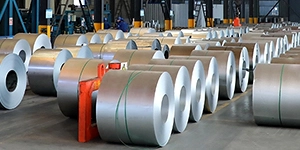
For us, being a source factory is the whole point. We're not a trading company reselling someone else's tiles. We make the steel coils, we run the presses, we apply the stone coating, and we ship in containers directly to contractors and distributors. When you buy from a factory, you're not paying a middleman, and you're not guessing about who's actually responsible if something's wrong. You talk to the people who made it. That's a different relationship, and in an industry where people get burned by bad batches, it tends to matter.
If you're planning a project and weighing a welded metal roof against a cold-connected stone coated metal roof, the honest advice is to look at your own situation. If you have a metal building where the panels are designed to be welded into place and the crew knows how to do it cleanly, that's a legitimate choice. But if you're roofing a building that's occupied, if you want to avoid hot work entirely, if you're covering an existing roof without tearing it off, or if you simply don't want a thin sheet of steel with burnt coating and rust starting at every weld, that's exactly the job this product was made for. The structure stays the way it was meant to be, the installation is faster, and you're not left with a roof that was already damaged in the making of it.
We're happy to walk through the details, tile profiles, fasteners, flashing, what fits your roof pitch and your wind and snow loads. Because we make the product, we can also tell you honestly what it will and won't do, and that's a conversation we'd rather have before you order than after. Get in touch with us at FUODE ROOFING, tell us about your project, and we'll take it from there.

— FUODE ROOFING —
Stone Coated Metal Roofing Source Factory | Shandong, China
www.fuode.com | Welcome factory visit & sample requests