
 Español
 العربية
 Francés
 Русский
 Português
 Deutsch
 日本語
日本語
 한국어
한국어
 Việt
Việt



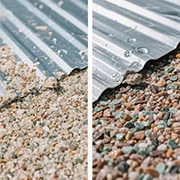




Why Choose a Complete Roofing System When Buying Stone Coated Metal Roof Tiles?
Why Choose a Complete Roofing System When Buying Stone Coated Metal Roof Tiles?
The Roof Is More Than Just the Tiles
When buyers start sourcing stone coated metal roof tiles, the first things they usually compare are the tile profile, color, steel thickness and price per square meter. That makes sense. The tiles cover most of the roof, and their appearance is often what attracts the customer in the first place. But once a roofing project moves from quotation to installation, another question becomes just as important: are you purchasing a complete roofing system, or only the main tiles with accessories sourced separately?
For distributors, roofing contractors, importers and building material wholesalers, this decision can affect more than the initial purchasing cost. It can influence installation coordination, accessory compatibility, material planning and the time required to solve problems on site. A roof is made up of connected parts, and those parts need to work together. The main tiles are important, but so are the ridge caps, hip caps, valley flashing, eave details, side flashing, fasteners and other components required by the roof design. The exact combination depends on the building, the selected tile profile and the installation method.
At FUODE ROOFING, we manufacture stone coated metal roofing tiles and understand why buyers need to look beyond the price of an individual tile. When comparing suppliers, it is worth asking what is included in the proposed roofing package, how the accessories match the selected profile, and whether the supplier can help clarify the material requirements before an order is confirmed.
What Does a Complete Stone Coated Metal Roofing System Include?
A complete stone coated metal roofing system is not simply a large quantity of roof tiles packed together. It is a coordinated set of roofing materials designed around the shape of the roof and the requirements of the project. The visible roof covering is one part of that system, while the supporting structure, underlayment, battens where required, fixing materials and finishing components all contribute to the final installation.
The main stone coated metal roof tiles form the primary covering. Their profile, effective coverage area, dimensions and fixing method influence how they are arranged across the roof. Ridge and hip caps finish the raised lines where roof sections meet, helping create a consistent appearance along the roof peak and sloping intersections. Valley flashing manages water where two roof slopes meet to form an internal angle, while eave and gable-edge details help finish the roof perimeter. Flashing around walls, chimneys, pipes and other penetrations needs particular attention because these areas interrupt the main roofing surface and require suitable detailing.
Depending on the roof design and local building requirements, the project may also need underlayment, ventilation components, closure pieces, sealants and specified fasteners. Not every building requires exactly the same package, and not every accessory is interchangeable between different tile profiles. A simple roof with two slopes may need a different combination of materials from a roof with several hips, valleys, dormers and wall intersections.
This is why a useful quotation should be based on the actual roof plan rather than only the estimated roof area. Two buildings with the same roof area can require different quantities of accessories because their shapes and junctions are different. Reviewing these details before production and shipment gives buyers a clearer picture of the complete material requirement.
Why Buying Tiles and Accessories Separately Can Create Problems
Compatibility Is the First Thing to Check
One common purchasing approach is to order the main tiles from one supplier, ridge caps from another, and flashing or fixing materials from a local distributor. This can work when the buyer has the technical knowledge and time to coordinate the specifications. However, it also creates more details to verify before the materials arrive at the job site.
For example, a ridge cap needs to suit the roof profile and the way the ridge is constructed. If the shape does not fit the surrounding tiles properly, the installer may need to spend extra time adjusting the layout or checking how the junction should be finished. Similar concerns apply to hip caps, edge trims and other profile-related components. A difference in dimensions or forming details may not be obvious when comparing product photographs, but it can become clear when the parts are placed together during installation.
The same principle applies to fasteners and sealing materials. Their suitability depends on the roofing product, supporting structure, exposure conditions and installation instructions. Choosing materials simply because they are available or inexpensive may create additional coordination work later.
A complete roofing package does not automatically guarantee a trouble-free installation, because workmanship, roof design and site conditions still matter. What it can do is give the buyer a clearer starting point for checking that the proposed components are suitable for the same project.
Missing Accessories Can Delay the Work
Roofing materials are often ordered well before installation begins. Once the tiles arrive, the contractor may already have a team, equipment and a project schedule arranged. If the main tiles are available but a necessary ridge cap, valley flashing or other finishing component is missing, work around that area may have to wait.
This becomes more complicated when the missing item comes from a different supplier or needs to be manufactured to a particular size. The buyer may need to confirm the specification again, arrange another shipment and coordinate delivery with the installation team. For international projects, additional transport time can make small omissions more inconvenient than they appear on a quotation.
Planning the accessory package together with the main tiles helps reduce the chance of overlooking these items. Before confirming the order, buyers should review the roof drawing, identify the major junctions and check the proposed quantities. It is also sensible to agree on which materials are included in the supplier's quotation and which must be purchased locally.
Roof Junctions Deserve as Much Attention as the Main Surface
When people look at a finished roof from the ground, they usually notice the color, profile and overall appearance. Installers, however, also pay attention to the points where different roof sections meet. These areas often involve more complicated cutting, overlapping, fixing or flashing work than the regular tile field.
Valleys are a good example. Rainwater from adjoining slopes flows toward these channels, so the valley design and flashing arrangement need to suit the roof geometry and expected drainage conditions. Ridge and hip areas also require suitable finishing components and fixing details. Along eaves and gable edges, the correct treatment helps complete the roof perimeter. Where the roof meets a wall or passes around a chimney, vent or pipe, the flashing arrangement must be planned for that specific junction.
These details cannot be solved by adding more main tiles. They require the appropriate components and installation method. The relevant product instructions, roof design and local building requirements should guide the choice of materials and how they are installed.
For buyers sourcing stone coated metal roofing for markets with heavy rainfall, strong winds or coastal exposure, it is especially important to discuss the local conditions before finalizing the order. The required fasteners, underlayment, flashing materials and installation details may vary by region and project. A supplier should not assume that one standard package is suitable for every building.
A Complete Package Makes Quantity Planning Clearer
Another reason to consider a complete roofing system is that it makes the material list easier to review. Buyers who order only by square meter may estimate the main tiles reasonably well but overlook the additional materials needed around roof edges, hips, valleys and penetrations.
The roof area is only the beginning of the calculation. Tile quantities depend on the product's effective coverage dimensions and the layout. Accessory quantities depend on the lengths and number of roof junctions, while cutting requirements and the roof's shape may affect the final amount of material needed. Allowances for cutting and waste should be based on the actual design rather than applied as an arbitrary percentage to every project.
A roof drawing or a detailed set of measurements can help the supplier and buyer review these requirements together. For a straightforward roof, the calculation may be relatively simple. For a more complex design, it may be useful to mark the ridge lines, hips, valleys, eaves, gable edges and penetrations before preparing the final material schedule.
This process also helps make quotations easier to compare. One supplier's price may cover only the main tiles, while another quotation may include several accessories and packing arrangements. Looking at the total package rather than the headline tile price gives buyers a more practical basis for comparing costs.
What Should Buyers Ask a Stone Coated Metal Roofing Manufacturer?
Before placing an order, buyers should first confirm the exact tile profile, product dimensions, effective coverage area, material specification and available colors. They should then ask which accessories are available for that profile and whether the quotation covers the components required by the project. If the building has valleys, multiple roof slopes, wall intersections or other special details, sharing the roof drawing early can help clarify the material list.
It is also worth asking how products are checked before shipment, how the tiles and accessories will be packed, and what information will be supplied for receiving and installation. For export orders, packaging and loading arrangements deserve attention because roofing materials may travel a considerable distance before reaching the final project. Clear product identification and an agreed packing plan help the buyer organize receiving, storage and distribution after delivery.
Buyers should also confirm the limits of the supplier's support. A manufacturer can provide product specifications, accessory information and available installation references, but the final roofing design and installation must account for local codes, structural conditions and site-specific requirements. Being clear about these responsibilities before the order is placed helps prevent misunderstandings later.
How FUODE ROOFING Approaches Roofing Material Supply
As a stone coated metal roofing tile manufacturer, FUODE ROOFING works with buyers who need to evaluate product profiles, specifications and order requirements for different markets. We know that an overseas buyer is not simply purchasing a stack of tiles. They also need to consider how the products will be packed, shipped, received and used within a real construction project.
Our product range includes different stone coated metal roofing profiles, allowing buyers to compare appearances and select options that suit their target market and project requirements. For orders that require accessories, the details should be discussed alongside the selected tile profile, roof layout and destination market. This gives both sides an opportunity to confirm the intended configuration and identify any project-specific requirements before production and shipment.
We believe a clear quotation is more useful than a low number without enough detail. Buyers should be able to understand which products are included, which specifications have been confirmed and which items still need to be checked. If a project requires special dimensions, particular accessory arrangements or customized order details, these requirements should be reviewed in advance rather than assumed after the order has been placed.
For distributors and contractors, this approach can make purchasing and project preparation easier to organize. It also gives both the buyer and manufacturer a clearer basis for discussing product selection, packing, delivery and technical questions. The exact supply scope should always be confirmed for each order, because the needs of a residential roof, a commercial building and a distributor's stock program may be different.
The Better Question Is Not Just “How Much Per Square Meter?”
Price remains an important part of any roofing purchase, and buyers naturally need to keep projects within budget. But the most useful comparison is not always the lowest price for the main tile alone. It is the price of the materials actually needed, their compatibility with the selected roof profile, the clarity of the specifications and the coordination required to get everything to the job site.
A complete roofing package is not necessarily the right choice in every situation. Some experienced buyers already have reliable local suppliers for flashing, fasteners and other components, and they may prefer to source those materials separately. What matters is knowing what the project requires and making that decision deliberately. If accessories are being purchased from multiple suppliers, compatibility, quantities and responsibilities should be checked carefully before installation begins.
For buyers who want a more coordinated supply process, discussing the complete stone coated metal roofing system at the quotation stage is a practical place to start. It allows the main tiles and the necessary finishing components to be considered as parts of the same project, rather than as separate purchases that only need attention when the materials arrive.
At FUODE ROOFING, our aim is to help buyers make informed decisions about stone coated metal roof tiles and their related supply requirements. A well-planned roof begins long before the first tile is installed. By confirming the product, reviewing the accessories and clarifying the project details early, buyers can make procurement more organized and give the installation team a clearer path from delivery to completion.

— FUODE ROOFING —
Stone Coated Metal Roofing Source Factory | Shandong, China
www.fuode.com | Welcome factory visit & sample requests


