Español
 العربية
 Francés
 Русский
 Português
 Deutsch
 日本語
日本語
 한국어
한국어
 Việt
Việt
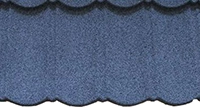
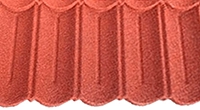

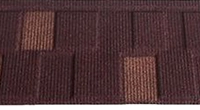
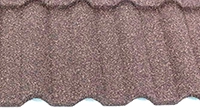







Why Don't Stone Coated Metal Roofing Tiles Fade for a Decade? Answers from the Factory Coating Workshop
Why Don't Stone Coated Metal Roofing Tiles Fade for a Decade? Answers from the Factory Coating Workshop
Every building materials buyer has been through this: the sample book shows tiles with rich, vibrant color, but after two or three years on a rooftop under the sun and rain, the color turns patchy—dark in some spots, pale in others, looking from a distance like a stitched-up quilt. The client calls to hold you accountable, and you pull out the supplier's original color card only to find it no longer matches what is on the roof. This is why experienced importers and contractors, when evaluating a roofing tile, do not start by asking about price. They ask how long the color will hold.
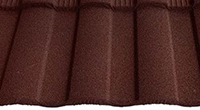
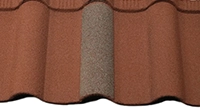
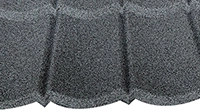
Stone coated metal roofing tiles have their own logic on this front. Many people seeing this material for the first time notice the granular surface texture and assume it is some variation of sandblasting or baked enamel. It is neither. The color does not come from paint or coating—it comes from the stone itself.
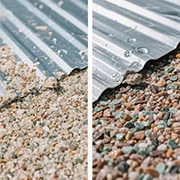
Let us unpack that. The granules on the surface of a stone coated metal roofing tile are crushed natural basalt. Basalt is a volcanic rock with inherently stable coloration; exposed to the elements for centuries, it barely changes. But the factory does not use the crushed stone straight away—right after crushing and sieving, the particle surfaces are a greyish-white powder and the color has not emerged yet. The granules must go through a high-temperature ceramic coloring process. The logic here is the same as firing ceramic glaze: the stone granules are heated to several hundred degrees in a rotary kiln together with inorganic pigments. At those temperatures, the pigment molecules penetrate into the microscopic pore structure of the stone. Once cooled, the color is locked inside the stone, not sitting on the surface as a skin. This is the fundamental difference from paint-based products. Paint covers; ceramic coloring penetrates. What is merely covered will be stripped away layer by layer by UV and rain over time. What has penetrated becomes one with the stone itself.
Coloring the granules is only half the job—they still need to be bonded to the steel tile substrate. This step uses an acrylic resin bonding agent. Its role goes beyond adhesion: it also functions as a transparent protective film. The UV resistance of acrylic resin is backed by extensive outdoor exposure data in the industrial coatings field. Being colorless and transparent, it does not interfere with how the granules display their color, while simultaneously filling and sealing the gaps between granules to prevent moisture and dust from getting underneath. The tile substrate is galvalume steel sheet, and the galvalume coating itself is engineered for a corrosion-resistance lifespan measured in decades. Each layer plays its own role from the inside out—the steel core provides strength, the coating prevents rust, the stone granules deliver color and appearance, and the resin locks everything in place and seals it.

Now to the question buyers actually care about: how long before the color actually changes? Let us be straightforward—saying it never fades would be imprecise. Any material exposed to the outdoors ages, and stone is no exception. But natural stone granules age in a completely different way from paint. Paint forms a thin film on the substrate surface; when UV breaks down the organic components in that film, it chalks, peels, and cracks, producing patchy color loss. The color change in stone granules is a mineral-wide, extremely gradual, uniform lightening—like the color of rocks on a mountain after years of wind and sun. You will not find blotchy dark-and-light patches on any single rock. Look at a roof covered with stone coated metal tiles after seven, eight, even ten years, and the color will be somewhat softer than when it was first installed, but the overall tone remains even, still reading as one continuous color from a distance. For the vast majority of property owners, this natural patina is not a drawback—it gives the roof more character.
Once a buyer understands this process, visiting a stone coated metal roofing factory becomes a far more targeted exercise. There are a few key things worth paying attention to.
First, look at the granules. Whether they are genuine basalt, whether the particle size distribution is consistent, whether color is uniform within a single batch—these factors directly determine the finished tile's appearance. There are only a handful of quality granule suppliers, and a stable mineral source is the prerequisite for stable color. To check whether the ceramic coloring has fully penetrated, scrape a few granules off a tile and crack them open to examine the cross-section. If the cross-section color matches the surface, the pigment has saturated through. If the cross-section is whitish, only the surface was colored.
Second, look at the bonding agent. The solid content and formulation of the acrylic resin play a decisive role in granule adhesion strength and weather ability. When the solid content is too low or the formulation is overloaded with fillers, the difference may be invisible at first, but after a year or two of outdoor exposure the granules will start shedding. A simple bend test can be done right in the workshop: flex a finished tile to a certain angle and see whether the granules fall off in large patches. On a properly processed tile, the granules stay firmly embedded in the resin layer at normal bending angles.
Then there is the pre-shipment inspection. Are tiles checked one by one for color variation? Are batch-to-batch color comparison samples kept on file? Is coating adhesion tested on a regular sampling basis? These are the daily routines that determine whether quality control actually keeps color consistency in check. Having a colorimeter sitting on a shelf does not make a QC system—it counts only when every batch, every day, is checked, the data is recorded, and any deviation can be traced back to its source. An export-oriented factory that cannot produce retained color samples has no way of knowing when a batch drifts, and by the time the goods reach the overseas port and the buyer discovers they do not match the approved sample, it is too late.
At our Shandong factory, every one of the four stages—granule incoming inspection, ceramic coloring, resin application, and high-temperature curing—runs against fixed process parameters with defined inspection checkpoints. Every production batch has color sample panels retained, marked with the production date and batch number. When a client specifies color requirements at the inquiry stage, the factory sends physical color samples for confirmation, and the production batch is controlled against the confirmed sample as the standard.
Ultimately, the long-term color stability of stone coated metal roofing tiles does not come down to some secret formula in a single step. It comes from having someone watching every link in the chain—from the granule mineral source to ceramic coloring, from resin formulation to curing, from pre-shipment inspection to batch sample retention.
To learn more about our stone coated metal roofing tile color range, customization options, and export cooperation terms, contact the FUODE ROOFING team directly. We will send physical color samples for your evaluation, along with a detailed product specification sheet and quotation.