Español
 العربية
 Francés
 Русский
 Português
 Deutsch
 日本語
日本語
 한국어
한국어
 Việt
Việt

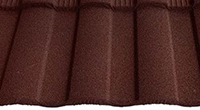
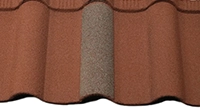
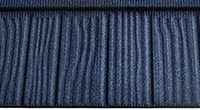

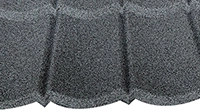
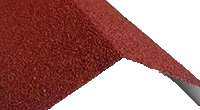
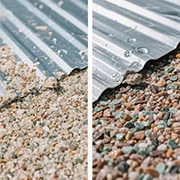




Clients Say “Send Five More Containers” — What High-Reorder-Rate Stone Coated Tiles Look Like
Clients Say “Send Five More Containers” — What High-Reorder-Rate Stone Coated Tiles Look Like
In the stone coated metal roofing export business, the repeat order rate matters more than the first order. A first order could be a buyer testing the water or comparing prices. A repeat order is a real vote of confidence. It means the tiles went onto the roof without issues, the shipment arrived at the port undamaged, and the color matched the previous batch. Only then does a client pick up the phone and send the next purchase order. Many distributors and contractors have said something similar: it is not the price per piece that worries them, it is paying a premium and still dealing with problems they then have to fix themselves. Stone coated tiles with a high repeat order rate are, at their core, products that filled in the potholes before the client ever stepped into them.
A repeat order is not about luck. It is about the product speaking for itself. Between a trial order and a repeat order, an importer runs through several rounds of real-world testing: unpacking at the port to check the appearance, installing on the roof to test the interlock, waiting through a rainy season to verify waterproofing, and watching for six months of sun to see if the color holds. One failure at any of these stages, and the next container never comes. Conversely, clients who are on their third, fifth, or even larger repeat order are not staying because of a good relationship with the supplier. They are staying because the tiles make their life easier once they arrive — no complaints from the job site, no delays to the construction schedule, and the margins still add up. High-reorder-rate stone coated metal roofing tiles build trust one delivery at a time.
Get the substrate right, and the tiles will stand up to a decade of weather. The structural core of a stone coated metal tile is the steel sheet, and its corrosion resistance directly determines the tile’s effective service life. There are two main types of coated steel used for roofing: galvanized steel and galvalume steel. Galvalume offers more consistent performance in both corrosion resistance and high-temperature endurance, and its advantage becomes clearer in coastal regions or areas with heavy seasonal rainfall — the zinc layer provides sacrificial protection while the aluminum forms a dense oxide barrier against moisture and oxygen, a dual mechanism that outlasts plain galvanized coatings. Steel thickness matters just as much: too thin, and the pressed profile concentrates stress and deforms easily; too thick, and you add unnecessary weight and cost. A seasoned factory balances thickness and strength based on the tile profile and the climate where the roof will be installed, rather than applying one specification to every order. If a buyer can obtain the substrate coating grade and the steel mill source when comparing quotes, that information goes a long way toward assessing long-term performance.
Color variation tends to show up by the second container. The previous batch arrives, the color looks fine, and the client places another container without hesitation. That next shipment reaches the job site and sits next to the leftover tiles from the first batch — and the color difference is immediately obvious. At the tail end of a construction project, this puts the client in a difficult position with the property owner. Color variation traces back to two production steps: batch-to-batch consistency of the stone granules, and the acrylic resin formulation and curing process used to bond them. The granules come from crushed natural stone, and different quarries or batches inherently differ in base tone. What the factory needs to do is screen out variation at the raw material stage — running small sample panels against a standard color card for every incoming batch of granules — and then ensure even resin coverage and proper curing temperature and dwell time at the coating line. Factories with high repeat order rates typically work with fixed quarries and maintain a standardized color-matching workflow. They catch the issue before the container leaves the yard, rather than scrambling after the client discovers it.
Waterproofing comes down to two details: the overlap and the flashing accessories. A stone coated tile roof does not rely on each individual tile being watertight. Its waterproofing logic depends on how the tiles interlock with one another and on the flashing pieces that finish the edges. Whether the lateral locking mechanism grips tightly enough, whether the headlap is deep enough, and whether the ridge and gable flashings are adapted to the roof pitches common in the local market — these details are invisible in a showroom sample board. They only reveal themselves during actual installation and use. Experienced factories adjust overlap dimensions and accessory specifications to suit the installation practices of different markets, rather than running one set of tooling for the entire world. For example, in many African markets where pitched roofs are common and rainfall concentrates in a few months, the overlap margins and flashing extensions are adapted accordingly. If a client can obtain the installation detail drawings and the accessory list before placing an order, that gives them a practical basis for evaluating waterproofing reliability.
Three checkpoints before the container leaves means no rework at the job site. A proper outgoing inspection for stone coated roofing tiles goes far beyond a quick glance before packing. Dimensional tolerance after pressing, stone granule coverage rate, adhesion after resin curing, flatness of each individual tile — every parameter has a corresponding gauge and specification. A mature QC workflow samples dimensions at the press line, checks coating uniformity at the spray line, and performs a final visual and quantity audit before packing. Once those three checkpoints are cleared, the tiles arrive at the client’s end requiring essentially no secondary sorting. For an importer, the cost of on-site rework far exceeds the price difference between tile suppliers — labor to tear down and reinstall, construction delays, an unhappy property owner. Any one of those costs more than whatever was saved on the purchase price. Tiles that arrive trouble-free are tiles worth reordering.
Export packaging is not about wrapping things up. It is about the tiles being usable when unwrapped. Stone coated roofing tiles go through loading, unloading, stacking, vibration, and possible moisture ingress during ocean freight. Every small gap in protective packaging translates into a higher breakage rate at destination. Standard practice includes separator sheets or foam pads between individual tiles, vertical placement rather than flat stacking to reduce vibration transfer, stretch film and strapping around each pallet, and moisture-proofing after the container is loaded. The packaging approach also depends on the sailing time — a thirty-plus-day voyage to East Africa and a one-week trip to Southeast Asia impose different requirements for moisture protection and reinforcement. Suppliers with high repeat order rates tailor packaging to the destination transit time and local unloading conditions: desiccant packs and moisture barrier film for long-haul routes, reinforced pallet structures for ports with rough handling. They do not send one packaging specification to every market.
Smart container loading means more pieces per shipment and a lower landed cost. Roofing tiles have an irregular shape, and how they are loaded directly affects the actual quantity per container and the client’s total cost at destination. Vertical loading fits more than flat stacking, the mix ratio of different profiles in a combined container needs to be calculated in advance, and pallet height must stay within the container door clearance — these details directly determine how many tiles arrive per shipment. Many importers focus solely on the FOB unit price when comparing offers, only to discover after loading that the actual piece count is far lower than expected, making the landed cost per tile higher in the end. Suppliers with high repeat order rates provide a container loading plan and estimated piece count at the quotation stage, laying out the mix ratio for different profiles, the number of pieces per pallet, and the total per container, so the client can calculate the full landed cost before committing to an order — rather than finding out after loading that the count fell short by an entire pallet.
When the trial order threshold is low, the path to repeat business stays open. For a client who has never worked with a supplier before, that first shipment is in itself a test. Many clients do not want to commit to a full container right away. They prefer to take a few hundred pieces, see the actual product, and install a model home to evaluate the result. A factory that accommodates small-volume mixed trial orders gives the client a low-cost verification window — and when the trial goes smoothly, the repeat order follows naturally. Starting from five hundred pieces, with different profiles and colors flexibly combined into one container, that kind of flexibility carries real weight with an importer who is qualifying a new supplier. Once the client installs that trial shipment on a model home and the color, interlock, and installation feel all check out, the next purchase order writes itself.

So what do high-reorder-rate stone coated tiles actually look like? At the end of the day, it is not about how persuasive someone is at a trade show, or how low the numbers are on a quotation sheet. It is about the client feeling a sense of reliability once the shipment arrives: the color matches the sample, the roof does not leak after installation, the next batch holds the same quality, the documents are clean, and the container piece count does not fall short. Every repeat client is proof that every previous container passed those checks. FUODE ROOFING, as a source factory based in Shandong, invests its effort across every one of these steps — and that effort shows up in the rhythm of our clients’ repeat orders. If you are looking for a stone coated metal roofing supplier who can keep delivering at scale, you are welcome to book a live video factory tour, appoint your own third-party inspector, and start with a trial container. See if our tiles can make you say those same words: send five more containers.