Español
 العربية
 Francés
 Русский
 Português
 Deutsch
 日本語
日本語
 한국어
한국어
 Việt
Việt




Can You Install Stone Coated Metal Roofing Directly Over an Old Roof Without Tearing It Off?
Can You Install Stone Coated Metal Roofing Directly Over an Old Roof Without Tearing It Off?
Distributors and contractors who have spent years in the building materials trade have all faced the same situation: an overseas client sends photos of a rusted-through metal roof, cracked tiles, leaks every time it rains, and asks if it can be replaced. Then you run the numbers on tearing off the old roof—labor, debris removal, substrate repair—and suddenly the budget jumps by thirty or forty percent, with another week or two added to the schedule. At that point, whether you are a contractor or a material distributor, one question comes to mind: can we just skip the tear-off and install a new layer right over the old roof?
From a practical engineering standpoint, the answer is yes in most cases, provided the supporting structure underneath is still sound. Whether the existing roof is corrugated iron, asbestos sheet, aged asphalt shingles, or cement tiles, the retrofit approach holds as long as the purlins are not severely rusted or rotted and the trusses show no obvious deformation or looseness. Get up on the roof, tap the purlins, check the rust level at the connection points—those two steps matter far more than anything else. It is not the old roofing material that decides whether this works; it is the skeleton holding it up.
The next question is obvious: what material do you use for the overlay? One figure decides the answer—weight per square meter. Traditional clay tiles easily run forty to fifty kilograms per square meter, and cement tiles are not far behind. An old roof simply cannot carry that load. Stone coated metal roofing tiles weigh just six to seven kilograms per square meter, roughly one-sixth of conventional tiles. That means the vast majority of existing roof structures need zero reinforcement before installation. Lightweight is the fundamental reason this material keeps gaining ground in the renovation market—no reinforcement costs, no tear-off labor, and the project timeline gets cut in half.

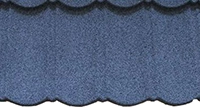
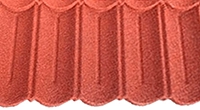
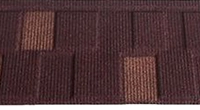
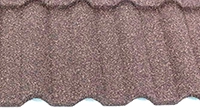
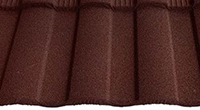
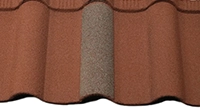
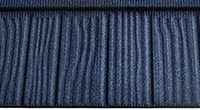
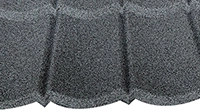
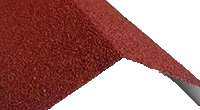
The structure of stone coated metal roofing is straightforward. The substrate is galvalume steel sheet, roll-formed and stamped into profiles that replicate the contour and interlocking logic of traditional tiles. A layer of natural basalt stone granules is bonded to the surface through a high-temperature curing process, giving the finished tile the texture and appearance of natural stone. What you get is the strength of steel and the weather-resistant look of real stone, fused into a single tile. For renovation projects, there is an added value beyond the weight savings: you do not have to accept the heavy burden of real stone tiles just to get that natural look, nor do you have to settle for the cheap appearance of plain painted steel sheets just to keep the weight down.
Light weight does not mean installation can be casual. There is one easily overlooked aspect of roofing over an existing roof: waterproofing at the detail points. The transition between old and new roofing surfaces, both sides of the ridge line, gable edge flashings, chimney base flashings—if any of these are handled sloppily, rainwater will find its way into the gap between the old roof and the new layer. A responsible installation sequence starts with laying a waterproof breathable membrane across the entire old roof surface, catching any potential seepage while allowing internal moisture to escape, followed by batten installation and then the main tiles. The accessories need to come from the same manufacturer as well—ridge caps, valley flashings, barge boards, all die-cut to match the tile profiles with tight tolerances so no on-site cutting or patching is required. Mixing accessories sourced from different suppliers rarely results in a clean fit; workers end up trimming and improvising on the rooftop, and that is exactly how leak points get built in.
When an importer or a contracting firm evaluates a roofing material, regardless of how good the sales pitch sounds, what they really care about comes down to a few things: will it fade under the sun, will it leak, how long will it last, and if something goes wrong, is there someone accountable to go back to.
On fading, stone coated metal roofing has a natural advantage. The surface granules are not a sprayed-on color coating. They are natural basalt stone particles whose color is locked in through high-temperature ceramic coloring—the pigment penetrates into the microscopic pores of the stone rather than sitting on the surface. UV exposure certainly has an effect over time, but it works far more slowly than on painted products. Even after seven or eight years, when a slight, uniform softening of the color does occur, you will not see patchy, uneven discoloration. It is essentially natural mineral aging, the same process as stone weathering in the open air.
On service life, combining the corrosion-resistance baseline of galvalume steel with the weather ability of the natural stone coating, a service life of twenty to thirty years under normal sloped-roof installation conditions is a reasonable expectation backed by project experience. For projects in coastal high-salinity zones or industrial areas with frequent acid rain, a heavier coating specification can be specified at the order stage—the galvalume coating weight is adjustable to project requirements. That is a flexible lever on the factory side, and it is also a technical parameter importers should clarify with the factory during the inquiry phase.
From an overseas buyer's perspective, choosing which stone coated metal roofing factory to partner with has never been about how many polished adjectives appear on a website. It comes down to whether a handful of concrete things can be clearly explained and backed up with evidence.
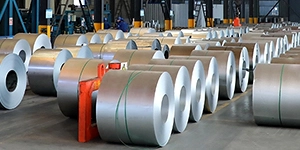
Can the raw materials be traced? The grade and origin of the galvalume steel coil, the mineral source and particle-size distribution of the basalt granules, the technical specifications and solid content of the acrylic bonding agent—every incoming batch carries supplier certificates and labels, and a legitimate manufacturing operation has no reason to hide any of it. From coil feeding, stamping and profiling, stone granule application, high-temperature curing, to cooling and final inspection, whether every step in the process runs against a fixed set of parameters and sampling frequencies—that is the real evidence of whether quality control is actually in place or just claimed.
What does the pre-shipment inspection look like? Tiles are checked one by one for visual defects—color consistency within tolerance, even stone coverage, no burrs or exposed base metal at the edges. Dimensional deviation and coating adhesion are tested on a batch sampling basis. Before packing, every order is cross-checked against the packing list to confirm tile profiles and accessory sets match. None of this is theater put on for visiting customers; it is the basic discipline an export-oriented factory needs to avoid claims when the container arrives at the destination port.
How familiar is the team with export documentation? Certificate of origin, packing list, bill of lading, fumigation certificate, preferential certificates of origin under various free trade agreements—different destination countries require different combinations of paperwork. Whether the factory has hands-on shipping experience in the target market directly determines whether the buyer can clear the goods smoothly at the port. Our team is well acquainted with the customs clearance requirements of three major markets: Africa, Southeast Asia, and Central Asia. How to handle letter of credit terms, how to fill in the consignee on the bill of lading, what format the shipping marks should follow—these are all confirmed point by point with the client before the contract is signed.
Is the factory open to inspection? Clients are welcome to appoint any third-party inspection agency to conduct sampling and testing at the factory—SGS, BV, TUV, Intertek are all fine. For clients who cannot schedule an in-person visit right away, a live video factory tour is a well-established alternative: walk through the entire production line on a video call, see the line in operation, inspect the steel coil inventory and its labels, check the orders currently in production—nothing is off limits, and you can get a clear picture of the factory's real situation without leaving your office.

For overseas buyers encountering stone coated metal roofing for the first time, starting with a trial order is the pragmatic approach. Order a batch of commonly used profiles and mainstream colors, ship an LCL or shared container, install them on one or two real projects locally, get a feel for the installation efficiency, end-customer feedback, and market price acceptance—then plan the product mix and container volumes for bulk purchasing based on that real-world experience. How many tiles a standard pitched-roof house needs, what ratio of accessories to main tiles, how to stack different profiles in a container to maximize loading efficiency—send over the roof dimensions or area data at the inquiry stage, and the factory will work out a material takeoff and container loading suggestion from the drawings. It takes little effort but makes the logistics cost picture much clearer.
Roofing over an old roof without tearing it off is, of course, not a one-size-fits-all solution. If the existing structure is already rusted through or the trusses are deformed, then the right move is to tear everything off and start fresh. But under the right conditions—the structural frame still has capacity to spare, the chosen material is genuinely lightweight, and every flashing and junction detail is executed properly—it truly is an effective way to save the owner a significant chunk of demolition cost and construction time. Stone coated metal roofing tiles are being adopted by more contractors and material suppliers in this scenario not because of any flashy selling points, but because they are light, because the installation logic is straightforward, and because everything from tiles to accessories follows a standardized system approach. When the material is right, the installation is right, and the detailing is right, a roof can perform reliably for decades.
To learn more about our stone coated metal roofing tile specifications, export solutions, and cooperation terms, contact the FUODE ROOFING team directly for a detailed product brochure and quotation.