Español
 العربية
 Francés
 Русский
 Português
 Deutsch
 日本語
日本語
 한국어
한국어
 Việt
Việt
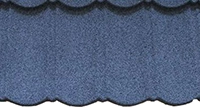
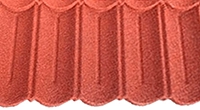

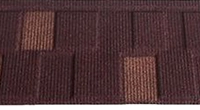
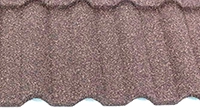
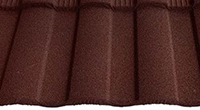
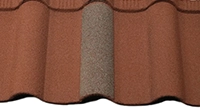
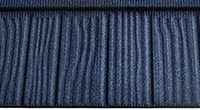

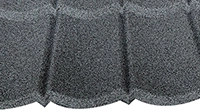



Stone Coated Metal Roofing Tile Source Factory — A Sourcing Cost Guide for Overseas Distributors
Stone Coated Metal Roofing Tile Source Factory — A Sourcing Cost Guide for Overseas Distributors
Distributors and project contractors who have spent years serving the overseas building materials sector, along with engineering firms handling residential and commercial construction projects, typically encounter two types of supply channels when procuring stone coated metal roofing tiles in bulk. On one side are source factories such as FUODE ROOFING that operate their own complete production lines; on the other are intermediary trading companies that maintain no manufacturing facility and function purely as goods transshipment operators. Quotations from these two channels for stone coated metal roofing tiles of identical specifications consistently show a noticeable price spread, and clients across Nigeria, Kenya, Cameroon, as well as Central Asia and Southeast Asia frequently ask the same question: when two batches of stone coated roofing tiles appear nearly identical on the surface, what cost components actually account for the price difference? Comparing only the face-value quotation makes it easy to overlook additional expenditure embedded in the supply workflow—expenses that, over months and years of recurring bulk purchases, steadily erode the project margins of distributors and contractors alike.
Many procurement managers equate a higher quotation with a trading company’s profit margin, assuming the price difference is simply a middleman markup, without examining the cost structure of each link in the supply chain. A trading company carries no factory premises, no production lines, and no quality-control workshops; its day-to-day operations generate office rent, multilingual sales team salaries, platform advertising, and customer acquisition costs—all fixed overheads that get amortized across every batch of stone coated metal roofing tiles sold to overseas buyers. The industry’s typical intermediary markup ranges from fifteen to thirty percent. For a single container load of stone coated roofing tiles of a given specification, the intermediary surcharge alone can reach several thousand dollars, and this cost is ultimately absorbed by the purchasing client on the other end. By contrast, a manufacturer like FUODE ROOFING that produces its own stone coated metal roofing tiles concentrates all operational expenditure around the production process itself. There is no intermediary markup layer; the client connects directly with the production source. The quotation reflects raw materials, line processing, standard packaging, and basic export documentation—costs genuinely tied to manufacturing—with no multi-tier intermediary accumulation. At the quotation level alone, the buyer can retain a meaningful portion of what would otherwise become intermediary overhead.
The price spread between supply channels extends beyond surface-level numbers into raw material sourcing and quality control standards—areas that often become long-term hidden costs for the buyer, and ones that are easily missed during supplier evaluation. A trading company typically sources stone coated roofing tiles from multiple small-scale workshops with varying production standards. To drive down its own procurement cost, the trader often selects substrate steel of a lower grade, stone granule adhesives with weaker bond strength, and anti-corrosion coatings that fall short of stated thickness specifications. Finished stone coated metal roofing tiles may receive only a cursory visual spot-check before dispatch, with no systematic salt-spray aging tests, thermal cycling assessments, or stone granule adhesion evaluations in place. Once the shipment reaches an overseas port, issues such as widespread granule shedding from the tile surface, substrate corrosion, and profile deformation become common. When a batch defect emerges, the trading company has no in-house production workshop to adjust or repair the goods and cannot issue a complete set of third-party quality inspection reports. The costs of returning, replacing, or resupplying defective stone coated metal roofing tiles—sea freight, port demurrage, warehousing—fall entirely on the purchasing client. When the arithmetic is done honestly, an apparently lower initial purchase price often leads to higher after-sales losses. FUODE ROOFING runs its entire production line on specification-compliant materials: aluminum-zinc alloy coated steel coil substrate, natural basalt stone granules, and high-molecular-weight elastic acrylic binders. Every batch of stone coated metal roofing tiles passes through multiple quality gates—multi-layer coating thickness measurement, high-pressure stone granule adhesion testing, salt-spray corrosion cycling, and roof-bearing overlap waterproofing assessment—all carried out in the factory’s in-house quality control laboratory. Starting from the production source, the probability of quality issues surfacing after the goods reach the destination port is materially reduced, and with it the additional expenditure tied to after-sales losses.

Custom order modifications and ancillary material procurement represent another significant component of the cost difference between the two supply models. Many overseas construction projects require stone coated metal roofing tiles to be adjusted to local building codes, regional climate conditions, or specific aesthetic requirements—variations in substrate steel thickness, tile profile shape, stone granule color range, and outer packaging specifications. A source factory can relay customization requests directly to its R&D unit and production team. The adjustment cost is transparent, with no intermediary service fee added. At the same time, FUODE ROOFING supplies a full range of complementary roofing installation materials—galvanized steel battens, waterproof underlayment, sealing strips, and stainless steel fixing accessories—enabling the client to consolidate stone coated roofing tiles and all associated components into a single purchase order shipped together in one container. The buyer avoids the fragmented process of coordinating separately with multiple accessory suppliers, saving the duplicated logistics fees, customs handling charges, and administrative overhead that accumulate when multiple small shipments are processed independently. A trading company, lacking production adjustment authority, must negotiate customization requests back and forth with third-party factories, incurring communication labor costs and rush-order coordination charges. Ancillary materials cannot be supplied as a one-stop consolidated shipment; the client must split the tile order and the accessory order across different vendors, with each partial shipment generating its own domestic transport, customs brokerage, and sea freight charges—pushing up the overall procurement total.
Order lead-time reliability and post-delivery technical support are two additional cost factors embedded in the price spread between supply channels—factors that do not appear on any quotation sheet but directly affect project cash flow. A trading company holds no finished-goods inventory. When an overseas client places an order, the trader then approaches a factory to schedule production, often while simultaneously managing orders from dozens of other buyers across multiple workshops. Production scheduling priority cannot be assured, and typical lead times run one to two weeks longer than what a source factory can deliver. For residential and commercial construction projects operating on fixed timelines, a delayed container arrival means an idle on-site installation crew, generating substantial labor downtime costs. Once the goods have landed, if the client’s roofing team encounters technical questions during installation—batten spacing, substrate preparation, tile overlap waterproofing—the trading company is rarely able to provide detailed, practical installation guidance; at most, it relays a brief written note from the factory, which seldom addresses the specific conditions of a given climate zone or roof structure. FUODE ROOFING maintains a large-scale finished-product warehouse stocked with stone coated metal roofing tiles in multiple colors and profiles as standard inventory. Standard-specification orders can be packed and dispatched quickly, shortening the overall delivery window. The factory’s dedicated overseas technical service team has accumulated hands-on experience with roofing installation across climate regions in Africa, Central Asia, and Southeast Asia. When a technical issue arises on site, the client can reach the technical team online for one-to-one practical recommendations. Every purchasing client also receives multilingual illustrated installation manuals and complete installation tutorial videos at no additional charge, reducing the likelihood of delivery delays and installation errors adding hidden costs to the project.
A concern frequently raised by overseas distributors is that source factories may impose higher minimum order thresholds, making it difficult for small and medium-volume buyers to obtain competitive stone coated metal roofing tile pricing. FUODE ROOFING addresses this with a tiered quotation structure matched to purchase volume. Whether the client is a large-scale building materials wholesaler replenishing multiple containers each month, or a project contractor placing a single-container order for a small self-build housing development, the pricing grid is transparent and aligned with actual procurement scale. Long-term cooperative buyers additionally qualify for annual volume-based replenishment incentives. Smaller orders do not attract disproportionately higher per-unit pricing, and every quotation breaks out cost components—raw materials, production processing, packaging, and export handling—so the client can see exactly what each line item covers in terms of service and materials, with no hidden charges. Most trading companies in the market operate with less granular quotation structures; they do not itemize cost components for the buyer, and small to medium-volume orders often carry separate order-processing service fees added of the unit price. Without line-item transparency, the buyer has no reliable way to distinguish reasonable production cost from intermediary markup.
Competition in the overseas construction and building materials market continues to intensify, and the decision criteria for distributors and contractors selecting a stone coated metal roofing tile supply partner need to go deeper than a side-by-side comparison of face-value quotations. A realistic assessment of total procurement cost weighs product quality consistency, one-stop complementary material supply capability, order lead-time reliability, and ongoing professional technical support alongside the unit price on the quote sheet. FUODE ROOFING operates on a direct factory supply model that removes multi-layered intermediary markups. This is combined with standardized quality control processes, consolidated roofing system supply, dependable production-to-delivery scheduling, and accessible online technical support—all working together to help purchasing clients across global markets reduce overall procurement expenditure and avoid the cumulative hidden costs that erode project margins over time. It is this combination—a transparent ex-factory quotation with no intermediary surcharge, consistent and verifiable product quality, comprehensive ancillary material supply, and long-term responsive technical after-sales support—that leads building material distributors, residential contractors, and commercial project developers across Africa, Central Asia, and Southeast Asia to choose FUODE ROOFING as their ongoing bulk procurement partner for stone coated metal roofing tiles, shipment after shipment.

— FUODE ROOFING —
Stone Coated Metal Roofing Source Factory | Shandong, China
www.fuode.com | Welcome factory visit & sample requests