Español
 العربية
 Francés
 Русский
 Português
 Deutsch
 日本語
日本語
 한국어
한국어
 Việt
Việt





Why Stone-Coated Metal Roofing Survives When Others Bare Their Frames
Why Stone-Coated Metal Roofing Survives When Others Bare Their Frames
Anyone who has reviewed posttyphoon site reports across coastal regions will recognise a recurring sight when storms pass through residential and commercial zones. Entire roof coverings get torn away, leaving only exposed structural framing underneath, while other buildings of similar height and layout keep their outer roof layer largely undamaged. This contrast often leaves property owners, contractors and project speculators wondering what creates such big differences in realworld storm performance, since two buildings can sit on the same street and face identical windloading conditions during a powerful typhoon. Many factors come into play, ranging from building frame design, substrate quality, fastening schemes, installation craftsmanship and the inherent physical properties of the roof covering material itself, and stonecoated metal roofing has drawn growing attention from overseas buyers operating in cycloneprone coastal territories for its observable field performance after extreme weather events.
It is easy to attribute total roof failure purely to the raw force of typhoonlevel winds, yet field observations from poststorm assessments show that total loss of roof cladding rarely happens only because wind speed is high. Wind uplift acts upon every exposed roof surface during a storm event, and air pressure can push underneath tile layers through small gaps, unsealed laps, poorly finished edges or weak fastening points. Once wind finds a way to get under the outer covering, it begins to lift sections of the roof system from below. If individual tiles or sheets cannot resist that upward force, failure can start at one corner or edge, and then spread rapidly across the whole roof surface, stripping away covering materials piece by piece until nothing remains except the underlying skeleton. This progressive failure mode explains why some roofs collapse completely while neighbouring structures hold up reasonably well, even when both are exposed to identical typhoonforce gusts.
Different roofing materials respond to uplift pressure in distinct ways. Traditional heavyweight tile systems such as concrete or clay roof tiles rely heavily on gravitational weight to stay in place, but heavy mass alone does not equal reliable wind resistance under typhoon conditions. When fastening is insufficient, heavy tiles can shift, crack and detach during powerful gusts, and once one unit breaks loose it becomes airborne debris that can strike neighbouring sections of the roof and trigger further damage. Lightweight bitumenbased roofing options can offer simple installation, yet many variants struggle to sustain prolonged exposure to strong cyclic wind pressure, with tearing and delamination common in harsh coastal storm zones. Stonecoated metal roofing operates on a different principle, depending on interlocking profile geometry alongside mechanical fastening rather than weight alone to hold each tile securely onto roof battens. Every tile locks into adjacent units along side and head laps, creating an interconnected roof assembly rather than a set of independent loose pieces, and when properly installed this interlocking structure helps distribute windinduced stress across multiple tiles instead of concentrating force on single points.
Still, it is important to set realistic expectations, as no roofing product can sustain indefinite damagefree performance under unlimited wind force. Stonecoated metal roofing delivers favourable performance within tested windloading ranges, yet realworld outcomes remain heavily tied to supporting components and site execution. Even wellmanufactured stonecoated metal tiles can experience issues if installers use undersized fasteners, skip specified fastener quantities, work with deteriorated or misaligned batten structures, or overlook perimeter edge details that are highly vulnerable to wind uplift. Many posttyphoon inspection reports note that damage to stonecoated metal roof assemblies very often traces back to installationrelated variables rather than inherent defects within the tiles themselves. That reality is something FUODE ROOFING emphasises consistently when communicating with international partners operating in typhoonexposed markets, because product quality forms only one segment of the complete stormresistant roof solution.
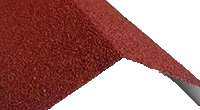
Working with distributors and contractors across multiple coastal export markets, FUODE ROOFING regularly collects realworld feedback from projects that go through cyclone and typhoon weather events. We pay close attention to reported site outcomes, compiling practical lessons to pass along to our client network instead of only relying on laboratory test figures. Our factory designs tile profiles with interlocking lap geometry intended to minimise winddriven water intrusion and limit uplift vulnerability, and we also put considerable focus on the full matching accessory set that goes alongside the main tiles. Ridge caps, gable trims, eave components and flashing pieces all play critical roles in sealing off those edge zones where wind most easily penetrates a roof system. Supplying mismatched or lowquality auxiliary parts alongside main roofing tiles creates hidden risk, even when the core stonecoated metal tiles themselves are wellproduced, and this is one reason our export packages bundle matched accessories for complete project sets.
Buyers new to stormprone regions sometimes make the assumption that tile thickness alone will decide typhoonsurvival performance. Thickness certainly contributes to material rigidity, yet profile design, interlock geometry, fastener compatibility and correct installation specification carry comparable weight. A tile with decent substrate thickness paired with poorlyconceived lap joints will still create weak points under uplift pressure. This is why FUODE ROOFING shares installation reference documentation tailored for highwindzone projects for our export partners. These reference materials cover recommended fastener types, fastener spacing patterns, perimeter reinforcement suggestions and batten layout guidance, all built from accumulated field feedback gathered from completed projects in cycloneaffected territories. We do not position these documents as universal sitespecific engineering specifications, but as practical reference points for local installers and engineers to adjust according to regional building codes and actual project conditions.
Debris impact represents another major source of roof damage throughout typhoon events. Flying branches, fragments of fencing and other windborne objects strike building envelopes at high velocity during storms. Stonecoated metal roofing built with qualified steel substrate can absorb a certain level of incidental impact without fullsystem failure, though sharp or heavy highspeed debris can still create dents or localised surface damage just as it would with most other roofing materials. The key difference observed on many poststorm sites is that localised denting or granule displacement on individual tiles rarely escalates into total roofcovering collapse. Damaged individual units can be replaced selectively after the weather clears, without needing to strip and rebuild the entire roof assembly, which helps lower repair complexity and overall recovery costs for property owners after typhoon events subside.
Project planners operating in coastal stormrisk zones need to look beyond surfacelevel product comparisons when selecting roofing solutions. It makes sense to examine how a given roofing system behaves as a complete assembly, not just test results for single standalone tiles. A supplier’s familiarity with highwindzone project requirements also matters significantly. Many factories only manufacture tiles without giving meaningful guidance on accessory matching or highwindarea installation bestpractice, leaving overseas contractors to figure out critical details entirely on their own. At FUODE ROOFING, as a source factory serving numerous cycloneprone export destinations, we incorporate realstormsite learnings into how we prepare shipments and supporting documentation for our clients. Trialorder customers can receive our highwindzone reference guides together with sample shipments, giving local teams a chance to review practical considerations before largescale project material arrives at port.
It is also worth noting that building structure itself sets the baseline for roof performance during typhoons. No outer roof cladding, regardless of material, can compensate for serious shortcomings in the underlying roof framing, trusses or batten framework. If the structural substrate fails under wind load, the roof covering will fail alongside it, no matter how wellmade the tiles are. This explains why some buildings end up with only bare framing after typhoon landfall, and reinforces the point that stonecoated metal roofing works as one component within a larger building system. Property developers and contractors who combine appropriatelyspecified structural design, qualitygrade stonecoated metal roofing, fullset matched accessories and codealigned installation practices tend to achieve far more predictable outcomes when powerful tropical weather systems move through their locations.
For global distributors and contractors sourcing roofing materials for coastal markets exposed to typhoon and cyclone activity, seeing realworld poststorm project feedback offers valuable context alongside labgenerated performance data. Observing how different roof assemblies hold up when realworld extreme weather arrives helps buyers make more informed sourcing decisions. FUODE ROOFING continues to engage with partners across highwindrisk regions, gathering onsite observations, refining accessory offerings and updating practical installation guidance for our export client base. Those interested can reach out for sample evaluation, trialorder consultation or factoryvisit arrangements, to understand how our complete stonecoated metal roofing system can fit within their upcoming coastal building projects.

— FUODE ROOFING —
Stone Coated Metal Roofing Source Factory | Shandong, China
www.fuode.com | Welcome factory visit & sample requests