Español
 العربية
 Francés
 Русский
 Português
 Deutsch
 日本語
日本語
 한국어
한국어
 Việt
Việt


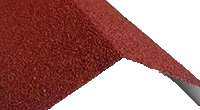
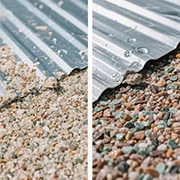



Stone Coated Metal Roofing Walkability — What Concentrated Load Testing Reveals About Rooftop Foot Traffic
Stone Coated Metal Roofing Walkability — What Concentrated Load Testing Reveals About Rooftop Foot Traffic
For contractors and self-build homeowners working with stone coated metal roofing tiles, one practical question comes up again and again: once the roof is installed, can you actually walk on it? Routine roof inspections, gutter cleaning, solar panel mounting, and finishing work all require workers to step onto the roof surface. Some say the tiles handle foot traffic without any issue; others report finding dents, loose stone granules, or even minor leaks shortly after workers have been on the roof. Online advice varies widely, leaving many buyers uncertain about what to expect — and quite a few projects end up facing rework or disputes over foot-traffic damage that could have been avoided. As a factory that manufactures stone coated metal roofing tiles day in and day out, FUODE ROOFING has conducted countless concentrated load tests on real production batches and observed how tiles perform on active job sites. This article lays out what we have learned — no exaggeration, no misleading claims, just practical findings from the factory floor and the field.
The core question is not about surface appearance or stone granule thickness — it is about the overall structural load-bearing capacity of the tile, what the industry refers to as concentrated load performance. Many people assume stone coated metal roofing is fragile because the surface is granular, while others believe metal roofing is tough enough to handle anything. Both assumptions miss the full picture. Tiles from lower-cost producers and those from established manufacturers can look nearly identical when laid side by side on a roof — but the moment a person's weight is applied to a single point, the difference becomes immediately apparent. Many budget products use thinner substrate material, and their stamping pressure and forming dwell time are insufficient to produce a rigid, well-supported tile profile. The center section of these tiles may sit partially unsupported above the batten. When someone steps on that spot, concentrated pressure acts on a small area, and the tile can develop a subtle depression. It may be barely visible at a glance, but over time the deformation becomes more pronounced — overlapping seams lose alignment, the stone granule layer gets stretched and begins to shed, and a series of small problems steadily emerges.
At our factory, concentrated load testing is conducted under conditions that replicate real-world job site foot traffic, not idealized lab scenarios designed to produce impressive figures. We mount tiles at the standard batten spacing used in actual installations, reproducing the genuine support conditions of a finished roof. Pressure is then applied at multiple positions — directly above batten support points, across overlapping seams, and at the unsupported center span of each tile — to compare how tiles built with different specifications and processes respond under load. The clearest finding from these tests is that stone coated metal roofing tiles can tolerate foot traffic, but the outcome depends heavily on where you step, how you step, and whether the tile's manufacturing process produces adequate structural rigidity. Areas directly above battens and support framing carry load comfortably, and light, occasional inspection access at these points poses little risk. The unsupported curved center section of a tile, however, is the most vulnerable zone — it does not respond well to concentrated single-point pressure. Regardless of brand, repeated or heavy stepping on the center span will carry a risk of deformation and granule loss over time.
A significant share of job site problems trace back not to product quality but to how workers move across and handle the installed roof surface. Many workers step onto the roof wearing hard-soled shoes, often with sand and small stone fragments embedded in the tread. Each step grinds abrasive particles against the stone-coated surface, and after repeated passes, the protective granule layer begins to thin and wear away in high-traffic paths. Once the granule layer is compromised, the metal substrate underneath loses part of its weatherproofing shield, and long-term weatherability declines. Another common practice is stacking tools, spare tiles, or materials directly on the roof surface during installation or repair work — applying sustained, multi-point loads that can exceed the tile's normal working range. The effects may not show up for months, but subtle depressions, loosened overlaps, and hidden pathways for water ingress can all take root during these early handling stages. Many importers and project managers do not notice these details during the construction phase; when problems surface later, attention turns to the tile quality, when in many cases the root cause lies in how the roof was accessed and treated during and after installation.
Here is a point worth clarifying directly: passing a standardized load test does not mean a stone coated metal roof can be treated as a walkway. Laboratory testing takes place in static, controlled conditions — load is applied uniformly, support spacing is precise, and environmental variables are absent. A real roof has slope, temperature fluctuations, minor batten spacing variations, wind loads, and prolonged outdoor weathering, all of which introduce variables that no lab setup fully captures. The core function of stone coated metal roofing tiles is waterproofing, wind resistance, weather protection, and building envelope integrity — the product is not designed as a working walkway or a regularly trafficked platform. Our consistent recommendation to all clients is to reduce rooftop foot traffic to the practical minimum. When access is necessary for inspection or maintenance, step lightly, choose support points directly above battens, avoid pacing back and forth, and never leave heavy materials or equipment sitting on the roof surface. These simple habits significantly extend the service life and keep the roof in stable condition.
Having supplied stone coated metal roofing to engineering contractors and importers across multiple overseas regions over the long term, we have seen projects where roofs remain flat, intact, and problem-free for well over a decade — and others where deformation and surface deterioration appear within just two or three years. Beyond installation and usage practices, the single biggest differentiator is the manufacturing process at source. To reduce pricing and capture market share, some factories trim substrate thickness and shorten the forming cycle. Tiles produced this way lack the structural backbone to carry load reliably over time. The upfront savings on procurement are real, but the downstream costs — rework, repair, after-sales claims — tend to be larger. Since its establishment, FUODE ROOFING has maintained consistent standards for substrate material selection and tile profile forming. Every production batch undergoes routine sampling for load performance, wind uplift resistance, and weatherability. We do not shorten process steps or reduce material specifications to compete on price alone. Our experience tells us that roofing buyers are not purchasing a short-term bargain — they are purchasing long-term roof stability and peace of mind.
A stone coated metal roofing tile that genuinely performs well over the long term combines clean visual appearance and a firmly bonded stone granule surface with structural load-bearing capacity solid enough to handle normal construction access and occasional maintenance — without denting or shedding granules under light contact. We provide every client with practical guidance on roof installation and safe access procedures, walking their installation teams through common foot-traffic pitfalls and construction-phase handling errors, so that each project maintains its integrity long after handover. Many long-standing clients tell us that what they value most is not a particular price point, but the straightforward, hands-on approach — real understanding of job site conditions and the ability to help buyers steer clear of hidden risks before they turn into visible problems.
When evaluating stone coated metal roofing for your next project, look past surface appearance and unit pricing. What separates one product from another over a 10- or 15-year horizon is the substrate material specification, the precision of the tile forming process, and the structural load capacity — verified through repeated load testing, not claimed in a brochure. If you are sourcing stone coated metal roofing that needs to hold up under real job site conditions — whether for a residential build, a villa, a commercial structure, or an overseas engineering project — FUODE ROOFING welcomes you to review our standardized manufacturing process and load-test records. We want your roof to look good the day it is finished and stay flat, intact, and trouble-free for many years afterward.

— FUODE ROOFING —
Stone Coated Metal Roofing Source Factory | Shandong, China
www.fuode.com | Welcome factory visit & sample requests