Español
 العربية
 Francés
 Русский
 Português
 Deutsch
 日本語
日本語
 한국어
한국어
 Việt
Việt

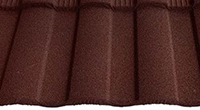
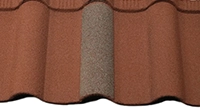
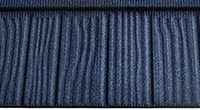

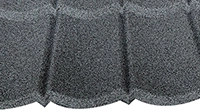


Large-Span Factory Roofing — How Stone Coated Metal Tiles Manage Thermal Expansion and Contraction
Large-Span Factory Roofing — How Stone Coated Metal Tiles Manage Thermal Expansion and Contraction
For those involved in industrial factory construction and roof refurbishment, a recurring challenge is almost unavoidable: large-span steel structure factories, with their expansive roof coverage and extended single-run spans, face year-round seasonal temperature swings and repeated day-night thermal cycles. Roofing materials in these conditions are highly susceptible to damage from thermal expansion and contraction. Many factory projects, in an effort to cut costs and simplify early-stage construction, choose materials based solely on low upfront pricing. Within a year or two, problems begin to surface — tile edge lifting, cracking at overlap joints, loosening of fastening screws, water seepage and leaks. In more severe cases, panel deformation can exert pulling forces on the entire steel structure, resulting in frequent repairs that disrupt normal factory operations. Over time, the cumulative maintenance expense far exceeds the initial material cost savings. This is the core reason why, in recent years, a growing number of engineering contractors and factory owners have moved away from standard corrugated steel sheets and traditional iron roofing, turning instead to stone coated metal roofing tiles. As a source factory focused on roofing material production, FUODE ROOFING has handled a substantial number of large-span factory roofing projects, both domestic and international. We understand clearly that industrial roofing demands far more rigorous standards in material stability, structural compatibility, and long-term weather resistance than residential roofing does. Among all contributing factors, problems triggered by thermal expansion and contraction remain the primary cause of industrial roofing deterioration.
Many clients ask a reasonable question: if both are metal-based roofing materials, why do ordinary metal roofs begin to deform and leak within a few years, while stone coated metal tiles can withstand the demanding conditions of large-span factory roofs? The fundamental difference lies not in the base material itself, but in the thermal stabilization process of the sheet, the overlap joint structural design, and the overall roofing system compatibility. The span of a large-scale factory roof is substantially greater than that of a standard building, meaning the total thermal displacement of the entire roof is significantly larger. In regions with pronounced seasonal temperature differences, the daily expansion and contraction displacement of a roofing sheet can reach over ten millimeters. If the roofing material lacks adequate built-in expansion allowance, if the substrate lacks sufficient toughness, and if the fastening method is excessively rigid, repeated thermal expansion and contraction cycles will cause stress to accumulate continuously. Over time, this leads to sheet warping, seam tearing, waterproof adhesive layer detachment, and a cascade of related problems — the root cause behind the majority of industrial roofing failures.
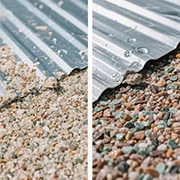
Standard single-layer corrugated steel sheets widely available in the market use thin, lightweight substrate with a simple structure. They lack a multi-layer composite protective system, and their thermal expansion coefficient is unstable — expanding rapidly when temperatures rise and contracting incompletely when temperatures drop. When installed across large areas without adequate stress release channels, the deformation pressure of the entire roof concentrates at screw fastening points and overlap seams. Over time, screw loosening, fastener pullout, and gap widening with consequent leaking become routine occurrences. The surface protective layer on these sheets is thin; prolonged exposure to alternating temperature cycles leads to oxidation and rust formation. Corroded areas further worsen deformation and cracking, creating a destructive feedback loop. Typically within three to five years, such roofing requires a complete overhaul — it can hardly meet the demands of long-term, stable factory operation.
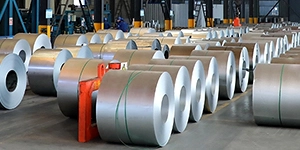
When producing stone coated metal tiles for large-span factory roofing, FUODE ROOFING optimizes every stage — from substrate selection and surface processing to installation overlap design — specifically targeting the thermal expansion and contraction challenges of industrial roofing. Our approach adapts comprehensively to the temperature deformation patterns of large-area roofs, reducing stress accumulation at the source and preventing deformation-related leaks. The core substrate we use is high-weather-resistance galvalume steel sheet, whose aluminum-zinc alloy coating forms a protective barrier against moisture-triggered oxidation of the steel base. Through repeated process refinement and testing, the thermal expansion and contraction coefficient of our sheets achieves balanced, stable performance. Under alternating exposure to intense sun heating and low-temperature cooling, the expansion and contraction range remains uniform and controlled, avoiding localized deformation or stress concentration. The toughness and fatigue resistance of the substrate allow it to withstand years of repeated temperature cycling — even when installed across large-span roofs over the long term, issues such as warping, distortion, or embrittlement do not arise.

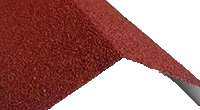
Unlike the single-layer surface design of ordinary metal roofing, our stone coated metal tiles feature a multi-layer composite structure. The high-temperature-sintered basalt stone granules on the surface layer and the heat-resistant acrylic resin bonding layer in the middle serve multiple functions — thermal insulation, UV and corrosion resistance — while also cushioning the expansion and contraction forces that temperature changes exert on the sheet. This substantial composite protective layer dampens the direct impact of external temperature on the metal substrate, reducing the daily temperature-induced deformation range of the sheet and helping the metal substrate avoid fatigue damage from rapid thermal cycling. The result is a smoother, more stable deformation rhythm across the entire roof, substantially lowering the probability of damage caused by large-area expansion and contraction on wide-span factory roofs.
What truly addresses the core challenge of thermal expansion and contraction on large-span roofs is our flexible overlap joint and floating installation system — a detail advantage absent from many lower-priced stone coated metal tiles. Many tiles produced by smaller manufacturers simply replicate the installation structure used for standard residential roofing, with an overly rigid fastening approach and insufficient expansion gaps between tiles. When installed across large areas, such systems cannot release temperature-induced deformation stress at all. FUODE ROOFING has optimized the overlap system specifically for the characteristics of large-span factory roofing, using a fixed-point plus sliding-buffer installation logic. Adequate expansion buffer gaps are reserved at tile overlap joints, paired with purpose-designed flexible waterproof accessories. When temperatures rise and sheets expand, stress is freely released through these pre-engineered gaps. When temperatures drop and sheets contract, the tiles remain tightly fitted without gap loosening or misalignment. The entire system achieves controlled thermal displacement, avoiding the cracking, tearing, and tile deformation caused by rigid fastening. This design is fully compatible with the installation requirements of industrial roofing spanning several dozen meters in continuous length.
To accommodate diverse climate conditions across different regions, we provide customized installation recommendations based on the project location’s temperature range and roof span dimensions. For extra-long, large-span factory roofs, we plan segmented overlap zones strategically to help disperse overall roof deformation stress and prevent localized stress overload. Many steel structure engineering teams we work with report that our stone coated metal tiles offer strong adaptability during large-span factory installation — no complex expansion joint modifications are needed. Standardized conventional installation effectively resolves thermal expansion and contraction issues, substantially reducing the workload of subsequent roof maintenance.
For factory owners and project procurement managers, selecting roofing tiles is never about short-term purchase price alone — long-term stability and value over the full service life matter far more. Once a large-span factory roof is fully installed, the cost of refurbishment and repair is extremely high: not only materials and labor, but also the need to halt production and clear the factory floor, resulting in revenue loss from operational downtime. Frequent leak repairs and deformation fixes accumulate costs that far exceed the price difference of higher-quality roofing materials over time. As a source factory, FUODE ROOFING operates without intermediary markups. All products are developed in-house and manufactured on fully automated production lines. From raw material procurement, sheet forming, and composite coating curing to final factory inspection, the entire process is under our direct quality control. Every batch of stone coated metal tiles produced for industrial roofing undergoes thermal cycling weatherability testing, tensile deformation testing, and waterproof sealing spot checks, ensuring the product can handle diverse temperature environments and large-span roofing conditions.
We handle ongoing orders year-round for steel structure factories, warehouse facilities, and large-scale industrial park roofing across both domestic and international markets, spanning tropical high-heat zones, temperate four-season climates, and inland regions with wide day-night temperature swings. We have accumulated a substantial portfolio of large-span roofing case studies. Whether for standard-span factory buildings or extra-long, extra-large-span industrial structures, we provide appropriately matched tile specifications and construction support plans. We also supply clients with complete product testing documentation and roofing installation guidance manuals, helping construction teams execute to standardized specifications. From product, to process, to installation — we address thermal expansion and contraction challenges across every dimension.
Many lower-priced stone coated metal tiles on the market may appear similar at a glance, but the substrate thickness falls short of specified standards, the resin bonding layer has poor heat resistance, and the overlap joint structure has not been optimized for industrial operating conditions. Short-term use may reveal no obvious issues, but after one or two full seasonal temperature cycles, problems begin to emerge one after another — deformation, granule shedding, water leakage. FUODE ROOFING consistently upgrades its products to meet the demanding requirements of industrial buildings. We do not cut raw material costs, nor do we simplify core production processes. Our focus is on producing high-stability stone coated metal tiles purpose-built for large-span factory roofing — keeping factory roofs flat, intact, and trouble-free over the long term, reducing the need for later repairs and refurbishment, and helping clients reduce long-term operational maintenance costs. This is the fundamental reason why a growing number of engineering contractors and factory owners choose to maintain long-term cooperation with us.
In summary, the thermal expansion and contraction challenges of large-span factory roofing are not unsolvable industry problems. The key lies in selecting roofing materials and structural solutions that are properly matched to industrial operating conditions. With stable substrate performance, multi-layer composite weatherability engineering, and a scientifically designed flexible overlap and expansion structure, stone coated metal tiles can effectively resolve the full range of problems caused by temperature-induced deformation on large-span roofs — delivering stability, durability, and value. For factory roofing new-build or refurbishment procurement needs, if you want to avoid the ongoing issues of thermal expansion leaks and deformation, FUODE ROOFING as a source factory can provide professional material selection guidance and project implementation support — so every section of factory roofing stays sound and serviceable, sparing you from countless post-installation maintenance concerns.

— FUODE ROOFING —
Stone Coated Metal Roofing Source Factory | Shandong, China
www.fuode.com | Welcome factory visit & sample requests