Español
 العربية
 Francés
 Русский
 Português
 Deutsch
 日本語
 한국어
 Việt




How to Verify a Stone Coated Roof Tile Manufacturer in China
How to Verify a Stone Coated Roof Tile Manufacturer in China
Search results for stone coated metal roof tiles manufacturer in China return a mix of factories, trading companies and marketplace storefronts. They can all look similar on a website. Verification is less about finding one decisive proof and more about collecting several consistent signals. The checks below are written for importers and distributors who are about to place a first container order.
Separate a factory from a trading intermediary
Start with the business registration. A manufacturer's registered scope normally includes production or processing, and the registered address should match a site with equipment, not an office floor. Ask for the licence, the factory address and a contact person at the plant, then cross-check that the same entity name appears on the quotation, the proforma invoice and the bank account.
This is not a judgement on trading companies. Many are reliable and useful. The point is to know which one you are dealing with, because it changes who controls the production schedule, the colour approval and the batch records. Our factory walkthrough lists the equipment that should be visible if production is in-house.
Documents worth asking for
A document request is more useful when it is specific:
· Business licence with the legal entity name and registered scope.
· A recent third-party test report for the exact profile and coating system.
· Quality management certificate, with the certifying body and scope.
· Product data sheet showing dimensions, coverage and coating mass.
· Packing specification including pieces per pallet and pallet size.
· A sample of the inspection record format used for finished goods.
For help reading the first three, see our guide to ISO, CE, SGS and ASTM documents. Note that a certificate covers a scope and a validity period; check both rather than the logo on the cover page.

What a video or on-site audit should show
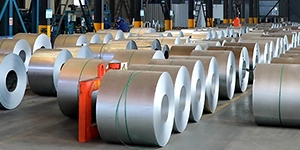
A live video walkthrough is a reasonable middle step before travelling. Ask to see the coil storage area, the press in operation, the granule application section, the oven, and the finished-goods warehouse in one continuous shot. A continuous view is harder to stage than a set of polished clips.
During an on-site audit, look for batch labels on raw materials and finished cartons, retained samples, and an inspection station with measuring tools. Ask how a non-conforming batch is handled. The answer tells you more about the quality system than a wall chart does. An independent factory audit and pre-shipment inspection is an option when the order value justifies it.
Comparing samples with production batches
Samples are often prepared with extra care. To reduce the gap between a sample and a shipment, request a sample kit from a regular production run, seal a counter-sample signed by both parties, and reference it in the purchase contract. On arrival, compare dimensions, weight, colour and granule coverage against that sealed set.
This is also where MOQ and sample policy becomes practical: a supplier that documents the approval workflow usually documents the production workflow too.
Red flags in a supplier conversation
Be cautious when a supplier avoids naming the production site, provides test reports with no method or date, or quotes a price per piece without defining coverage and steel thickness. The same applies when a quotation changes materially after a small question about coating mass. None of these issues proves a problem on its own, but each one makes the quotation comparison unreliable until it is resolved.
A measured approach works well: verify the entity, verify the line, verify the documents, then verify the sample. That sequence gives you four independent reasons to be confident, or four clear places to dig deeper.
Frequently Asked Questions
Is a business licence enough to confirm a factory?
It confirms a legal entity, not a production capability. Combine it with a site or live-video audit and a test report tied to the exact product you plan to buy.
Can a third-party inspection replace a factory audit?
They cover different things. An audit looks at capability and systems; a pre-shipment inspection looks at the goods in a specific order. Larger orders commonly use both.
Should the OEM brand name appear on the documents?
The manufacturer's legal name should appear on the commercial documents. Brand or private-label artwork belongs on the packaging and can be referenced separately in the contract.

Visit www.fuode.com for more details.
— FUODE ROOFING —
Stone Coated Metal Roofing Source Factory | Shandong, China
www.fuode.com | Welcome factory visit & sample requests