Español
 العربية
 Francés
 Русский
 Português
 Deutsch
 日本語
 한국어
 Việt
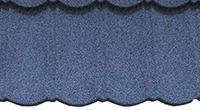
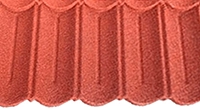

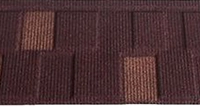
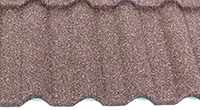
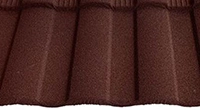
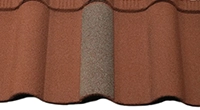
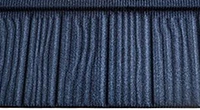

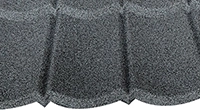



What Are Stone Coated Metal Roof Tiles? An Importer's Guide
What Are Stone Coated Metal Roof Tiles? An Importer's Guide
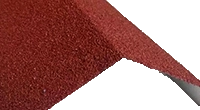
Stone coated metal roof tiles are pressed roofing units built on a coated steel sheet and finished with a bonded layer of stone chips. For importers, distributors and roofing contractors, the product sits between a bare metal sheet and a traditional clay tile: the steel core keeps the roof light, while the stone surface gives the textured appearance that many residential and hospitality projects call for. This guide explains how a stone coated steel roofing sheet is built, which specifications matter in a quotation, and what to check before a container order.
How the tile is built, layer by layer
A tile starts as a steel coil with an aluminium-zinc metallic coating, commonly described as galvalume or AZ coating. The coil is pressed into a profile, then a primer and an acrylic basecoat are applied. Stone chips are spread over the wet basecoat, cured in an oven, and sealed with a topcoat that fixes the granules and adds colour consistency.
Each layer has a defined job:
· Steel substrate provides the shape and the mechanical strength.
· Metallic coating protects the steel against corrosion at the surface.
· Primer and basecoat bond the stone granules to the metal.
· Stone chips create texture, colour and a degree of surface shielding.
· Topcoat reduces granule loss and helps the finish weather evenly.

The build-up is worth understanding because most quality complaints trace back to one of these layers. A tile that loses granules early, for example, usually points to the basecoat or the curing cycle rather than to the steel itself. Our quality control checklist for stone coated metal roof tiles maps each layer to the checks that belong to it.
Common profiles, sizes and effective coverage
Profiles are usually named after the roof styles they imitate: classic or roman, shingle, flat, bond and milano are widely seen in export catalogues. Profile choice affects the visual rhythm of a roof, the overlap geometry and the accessory set that must be ordered with it.
Dimensions commonly quoted in the trade are around 1,300–1,400 mm in length and 400–430 mm in width, with base steel thickness in the range of 0.35–0.50 mm. Effective coverage is smaller than the physical tile area because of the head and side overlap; a figure near 0.45–0.50 m² per piece is often used for planning. Weight commonly falls between 2.5 and 3.3 kg per tile. These are indicative ranges, not commitments: confirm them against the current factory data sheet for the exact profile you are buying, which is one of the points covered in our specification checklist for stone coated roofing sheets.
What the stone chip finish actually does
The granule layer is a finish, not a structural component. It gives the roof its colour and texture, breaks up the flat metallic reflection, and changes how rainfall is distributed across the surface. Lighter blends reflect more solar radiation than dark blends, which matters in hot climates. It also changes the acoustic behaviour of the roof compared with an uncoated sheet.
The finish does not replace a correct fastening pattern, a suitable underlayment or a sound roof structure. Buyers who treat the stone chips as a performance layer rather than a surface layer tend to specify the rest of the roof build-up more accurately.
Specifications to request from a supplier
Before comparing prices, ask every supplier for the same document set:
1. Base steel grade and nominal thickness, with the tolerance.
2. Metallic coating type and coating mass per square metre.
3. Tile dimensions, overlap and effective coverage per piece.
4. Weight per piece and per square metre of installed roof.
5. Stone chip type, colour blend reference and topcoat system.
6. Pieces per carton or pallet, and pallet dimensions.
7. Available profiles and the matching accessory list.
8. Current test reports and the methods they reference.
Getting these eight items in writing makes a quotation comparison meaningful, because it puts every offer on the same unit of measurement.
When this roofing type fits a project
Stone chip coated roofing is often specified for villas, townhouses, resorts, schools and roof renovation work where the structural load of clay or concrete tile is a concern. It also suits projects that need a tiled appearance with a lower dead load and fewer breakages in transit. In high-wind or coastal locations, the fixing pattern, edge detailing and coating mass need to be reviewed against the site conditions rather than chosen from a catalogue alone.
For buyers evaluating a first order, the useful next step is to review how samples and MOQ are handled, then ask for a sample kit that matches the intended profile and colour blend.
Frequently Asked Questions
Is a stone coated metal roof tile the same as a colour steel sheet?
No. A colour steel sheet is a flat or corrugated painted sheet. A stone coated metal roof tile is a pressed, interlocking unit with a bonded stone granule finish, and it is fixed to battens with a defined overlap.
How many tiles are needed per square metre?
Divide 1 m² by the effective coverage per piece, then add a wastage allowance for cuts and hips. Because coverage depends on overlap, use the figure in the supplier data sheet rather than the physical tile area.
Can the tile colour be customised?
Yes, colour blends are usually selected from a chip card or matched against an approved sample. Custom blends should be sealed as a retention sample before mass production, as described in our OEM/ODM overview.
Visit www.fuode.com for more details.
— FUODE ROOFING —
Stone Coated Metal Roofing Source Factory | Shandong, China
www.fuode.com | Welcome factory visit & sample requests