Español
 العربية
 Francés
 Русский
 Português
 Deutsch
 日本語
日本語
 한국어
한국어
 Việt
Việt
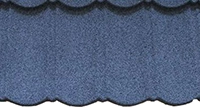
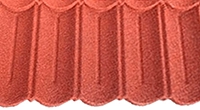

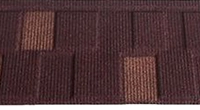
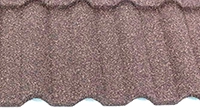
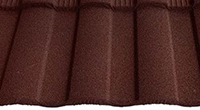
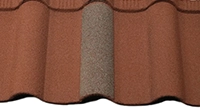
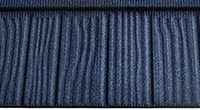

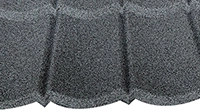



Stone Coated Metal Roofing Tiles: Realistic Wood Grain, Slate & Clay Tile Effects
Stone Coated Metal Roofing Tiles: How Realistic Wood Grain, Slate, and Clay Tile Surface Textures Are Achieved
As a source factory specializing in stone coated metal roofing tile production, FUODE ROOFING works with industrial, commercial, and institutional roofing projects worldwide and handles products built to varied process standards. Many factory construction managers and roofing contractors face a familiar challenge during the design phase: balancing visual appeal with practical constraints. Architects and designers often lean toward natural slate, wood shake, or traditional clay tiles to shape a building's character—whether for modern factory office roofing, aging industrial park renovations, or commercial complex roofing—natural-textured roofing materials elevate the overall architectural impression. Yet natural stone carries substantial weight, wood shakes exposed to outdoor conditions are prone to moisture damage and decay, and traditional clay tiles involve high transport and crane lifting costs, making them difficult to execute on sites with limited access. A growing number of procurement teams are turning to stone coated metal roofing tiles, with wood grain, slate-look, and clay tile-effect profiles seeing steady demand growth. At the same time, buyers frequently raise a pointed question: why do finished products from different factories show such pronounced gaps in surface realism, and what processes actually deliver a convincing natural texture? Drawing on years of production and export experience from China, we share the complete manufacturing logic behind realistic surface texturing to help engineering procurement teams make informed comparisons during material selection.
Achieving a visual effect close to natural materials starts with mold precision at the tile forming stage—this is what separates standard stone coated metal roofing tiles from high-fidelity textured profiles. Entry-level stone coated metal roofing tiles on the market typically use simplified molds. The surface contour lines are basic, producing only simple wave profiles, and these molds struggle to reproduce the irregular grain and texture characteristic of natural materials. When our factory develops wood grain, slate-effect, and clay tile-effect stone coated metal roofing tiles, we apply three-dimensional scanning technology to capture surface data from real timber, quarried slate, and fired clay tiles, then carry out precision mold machining. During single-pass hydraulic press forming, the depth and variation of natural textures are transferred directly onto the galvalume steel substrate—wood grain profiles reproduce the organic growth rings and grain flow of natural timber, slate-effect profiles replicate the irregular fractured surfaces of real stone, and clay tile-effect profiles restore the gentle curvature and subtle surface undulations of traditional terracotta tiles. When mold precision falls short, the pressed patterns appear shallow and rigid; even after subsequent stone chip coating, the overall look remains stiff, and the industrial imprint is visible even from a distance. This is the core reason many lower-cost finished products fall short on realism. The base plate uses galvalume steel of a suitable thickness, balancing forming ductility with long-term corrosion resistance. After forming, the sheets undergo thorough surface cleaning to remove oil residue and metal debris, preparing a sound foundation for the bonding layer and stone chip application—any shortcut in pretreatment compromises the stability of the surface structure.

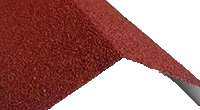
Once the mold establishes the foundational texture contour, the surface stone granule system directly determines visual depth—this is the key stage where stone coated metal roofing tiles achieve a realistic appearance. Quality-consistent stone coated metal roofing tiles use high-temperature sintered basalt granules as the surface material, which differ markedly from standard dyed sand. Natural basalt granules carry irregular natural edges, and when different particle sizes are blended and applied in coordinated proportions, they simulate the varied granular texture found on stone and wood surfaces. After sintering with high-temperature inorganic pigments, color penetrates into the interior of each granule rather than staying on the surface, producing softer color transitions capable of rendering the light-to-dark gradients of natural timber, the mixed-toned veins of slate, and the matte vintage hues of clay tiles. Some manufacturers, to reduce costs, use single-size dyed sand—uniform, regular granules that produce a flat, monotonous appearance lacking the natural color depth of real materials. In FUODE ROOFING's production workflow, stone chip blends are tailored to each textured profile: slate-effect profiles use deep-to-light gray mixed-toned granules, wood grain profiles use brown-gradient blends, and clay tile profiles use terracotta and ochre-toned granules. The color appears deeper in recessed grain lines and lighter on raised positions, using light and shadow to reproduce the three-dimensional presence of natural materials.
Whether the stone chips bond securely to the textured substrate depends on a multi-layer resin bonding and protection system. The formed steel sheet first receives a spray application of specialized acrylic primer. The primer is formulated with the right balance of penetration and adhesion to conform to every raised line and recessed groove across the textured surface. Sintered stone granules are then uniformly broadcast, allowing the granules to partially embed into the adhesive layer rather than sitting on the tile surface. After the surface layer is complete, a clear weather-resistant topcoat is applied for sealing protection. This protective film does not mask the matte character of the stone granules—it locks the granules in place, reduces the risk of granule loss from prolonged rain exposure, and improves UV and stain resistance. Products from simplified production lines sometimes skip the topcoat step or use lower-performance bonding resins. In the short term, the visual difference is subtle, but after a period of service, granule shedding and color fading become apparent, and the roof's overall appearance deteriorates noticeably. For factories and commercial buildings that operate on long timelines, the appearance stability of roofing materials is a meaningful consideration—frequent roof refurbishment means additional downtime costs. Selecting a product with a complete process chain helps maintain the desired appearance over a longer service period.
Some clients ask whether focusing on realistic surface design compromises the roofing material's essential performance characteristics. Stone coated metal roofing tiles are inherently lighter than natural slate or clay tiles, placing less stress on the roof structure. For factory roof renovation projects, substantial reinforcement of the existing roof framework is typically unnecessary—workers can carry and lay tiles by hand without mobilizing large lifting equipment. When installed according to specifications, the interlocking tile structure withstands routine high-wind conditions and adapts to rainy environments, coastal salt-spray zones, and regions with wide day-night temperature swings. Across factory projects supplied to various countries, large numbers of slate-effect and wood grain profiles have been in service for years with stable surface texture and color retention, meeting both the architect's aesthetic requirements for the building facade and the practical demands of long-term factory use. Many industrial park office buildings, warehouse annexes, and factory reception buildings need a roofing material that avoids the monotony of standard metal panels without incurring the heavy cost and construction expense of natural stone—stone coated metal roofing tiles with convincing surface realism serve as a practical alternative.
As a source factory for stone coated metal roofing tiles, FUODE ROOFING supplies directly to engineering contractors and building materials traders without intermediary channels. The market offers a wide range of textured stone coated metal roofing tile products, and in procurement it is easy to focus on unit price while overlooking the long-term performance gaps created by process differences. Multi-layer bonding, high-precision forming molds, and high-temperature sintered stone chips all contribute reasonable production costs—lower-priced products tend to cut back on these exact steps. The differences are hard to spot in the short term but become increasingly visible over years of service. Beyond the established wood grain, slate-effect, and clay tile-effect profiles and color ranges, we can also adjust color schemes to match a project's architectural style. We provide full samples so clients can evaluate surface texture and appearance in person, along with matching installation accessories and construction reference materials to help overseas projects plan the roofing system as a unified package, backed by practical export logistics experience.
Roofing material selection requires balancing appearance, material durability, construction conditions, and long-term maintenance costs. Realistic surface texture is one criterion among several—material stability and supply consistency carry equal weight. Many traders source from scattered suppliers, which can result in texture and color variation between batches; when installed across large roof areas, the overall appearance loses coherence. An in-house production line from a source factory with unified control over mold standards, raw material ratios, and production workflow helps finished products remain consistent across large-volume orders—a factor of particular importance for large-scale factory roofing projects. When a project calls for visual performance approaching that of natural building materials, we recommend requesting physical samples in advance. Examining the samples under natural light at close range—observing texture depth, layering, and color transition—provides a direct way to distinguish between products built to different process standards.
Leveraging source factory manufacturing strengths, FUODE ROOFING provides clients with stone coated metal roofing tile solutions that balance realistic appearance and reliable outdoor performance. Architectural preferences continue to evolve, and a growing number of factory and commercial projects are moving beyond uniform industrial exteriors toward warmer, more natural roofing aesthetics. Stone coated metal roofing tiles, with their adaptable surface design capability, are gaining wider adoption. FUODE ROOFING continuously gathers feedback from roofing projects worldwide, refining tile texture molds and surface granule blending formulas, and steadily improving the wood grain, slate-effect, and clay tile-effect series—advancing surface realism while reinforcing the fundamental weather resistance of the product. A well-made roofing material should carry its aesthetic qualities on a foundation of durability, meeting both design intent and the demands of long-term outdoor exposure to deliver meaningful value for factories, commercial buildings, and institutional projects. Partners seeking samples or project solution consultations are welcome to contact the factory directly—we provide material selection recommendations aligned with the project's local climate, building type, and design requirements.

— FUODE ROOFING —
Stone Coated Metal Roofing Source Factory | Shandong, China
www.fuode.com | Welcome factory visit & sample requests