Español
 العربية
 Francés
 Русский
 Português
 Deutsch
 日本語
 한국어
 Việt




Stone Coated Steel Roof vs Clay and Concrete Tiles
Stone Coated Steel Roof vs Clay and Concrete Tiles
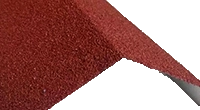
Clay and concrete tiles have covered buildings for generations, and they remain a reasonable choice in many projects. Stone coated steel roofing entered the same conversation from a different direction: it copies the visual language of a tiled roof while changing the material underneath. The comparison below is organised around five decisions a project team actually faces, starting with the one that affects the structure.
Weight and structural implications
The difference here is an order of magnitude, not a margin:
Covering | Typical installed weight | What it implies |
Stone coated steel tile | around 5–7 kg/m² | Compatible with light timber and cold-formed steel frames |
Concrete tile | around 40–50 kg/m² | Requires a structure designed for the load |
Clay tile | around 45–60 kg/m² | Heaviest common option; fixing and batten design follow |
On a new build, the weight simply becomes an input to the structural design. On a renovation, it becomes a constraint: an existing roof may not have been designed for an additional 40 kg on every square metre, and strengthening can cost more than the covering itself. This is the single most common reason a lightweight tile is specified on retrofit work. Our lightweight roofing article develops the structural side.
Breakage during shipping and installation
Clay and concrete tiles are brittle. Handling losses are a normal planning item, and a sensible order includes a wastage allowance for breakage in transit, on site and during cutting. Broken pieces also create sharp waste that has to be managed.
A steel-based tile resists impact differently. It can dent or deform if mistreated, and the granule surface can be scuffed, but it does not shatter into fragments. That changes site logistics: fewer spare pieces, easier stacking, and less breakage-related argument between supplier, transporter and installer.
The trade-off is that deformation may not be obvious from the ground. Handling guidance — stacking limits, walking paths, lifting method — belongs in the site handling instructions, and it should be issued with the delivery rather than discovered on site.
Water absorption and surface ageing
Clay and concrete are porous bodies. Their performance depends on density, surface treatment and, in cold climates, on freeze-thaw behaviour. A saturated tile is heavier, and repeated cycles can affect the surface over decades.
A coated steel tile does not absorb water. Its ageing path is different: the metallic coating protects the steel, the primer and basecoat hold the granules, and the topcoat slows surface change. Where the protective system is interrupted — at cut edges, fastener heads and scratches — touch-up is required. Coastal and industrial atmospheres accelerate that process, which is why coating mass appears in the corrosion discussion.
Both material families can develop surface soiling or biological growth in wet, shaded conditions. Neither is immune, and neither requires aggressive cleaning.
Fixing systems and wind uplift
Clay and concrete tiles are traditionally held by their own weight, often supplemented by mortar, clips or screws in exposed locations. The fixing strategy is therefore closely tied to the tile mass.
A stone coated tile is mechanically fixed. Each tile is screwed to a batten, and the interlocking edges transfer load across the field. Uplift resistance comes from the fastener pattern, the batten spacing and the detailing at edges, ridges and hips rather than from mass. That makes the installation manual a load-bearing document, not an accessory. See the wind resistance article for where the load concentrates.
Which projects suit each material
There is no universal answer, and a supplier who claims one is not describing the project.
· Historic or heritage context: clay or concrete tiles are often retained for appearance and planning reasons.
· Structural capacity is limited, or the roof is being replaced: a lightweight tile avoids strengthening work.
· High-wind or coastal sites: both families can work, but the fixing design and coating specification have to be selected for the exposure.
· Long transport distances or difficult site access: lower weight and lower breakage reduce landed cost and site risk.
· Tight budget with simple roof geometry: concrete tile remains competitive in many markets.
A useful exercise is to price the complete roof — covering, battens, fixings, accessories, labour, freight and wastage — for both options on the same drawing. The quotation comparison guide shows the line items, and the specification checklist shows which fields to request.
Frequently Asked Questions
Is a stone coated roof as quiet as a clay tile roof?
Clay and concrete are dense and heavy, which helps at low frequencies. A stone coated roof with a proper deck, underlayment and insulation performs differently from a bare metal sheet; the rain noise article explains the variables.
Can the two materials be mixed on one building?
It happens on extensions and phased projects, but the visual match, the batten set-out and the load path need to be designed together rather than assembled on site.
Does lighter weight mean a weaker roof?
No. It means the structure carries less dead load. Wind and impact performance are governed by the fixing system, the profile and the substrate, not by mass alone.

— FUODE ROOFING —
Stone Coated Metal Roofing Source Factory | Shandong, China
www.fuode.com | Welcome factory visit & sample requests