Español
 العربية
 Francés
 Русский
 Português
 Deutsch
 日本語
 한국어
 Việt




Stone Coated Metal Roof Tiles vs Asphalt Shingles
Stone Coated Metal Roof Tiles vs Asphalt Shingles
These two products are compared more often than any other pair in residential roofing, and the comparison usually collapses into a price per square metre. That single number hides the differences that matter on a real roof: how the material behaves in heat and wind, how many people and hours the installation takes, and what maintenance the owner should expect in year eight. This article sets out the comparison category by category so a buyer can weigh it against a specific project.
Material composition and weight
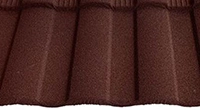
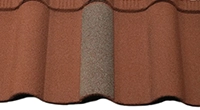
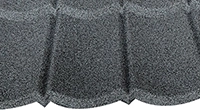
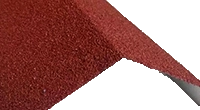
An asphalt shingle is a fibreglass mat saturated with asphalt and surfaced with mineral granules. It is a flexible sheet product, supplied in strips and fixed with nails or staples. A stone coated metal roof tile is a pressed steel unit with a metallic coating, a primer, a basecoat, a granule finish and a topcoat, fixed to battens with screws.
Installed weight is the first practical difference:
Roof covering | Typical installed weight | Effect on the project |
Stone coated metal tile | around 5–7 kg/m² | Light enough for most timber and light steel frames |
Asphalt shingle | around 3–5 kg/m² | Lightest common option in this comparison |
Concrete tile | around 40–50 kg/m² | Needs a heavier structure |
Clay tile | around 45–60 kg/m² | Heaviest of the group |
Both products in this comparison sit at the light end. That means the structural argument rarely decides between them; it more often decides against clay or concrete. For a full structural discussion, see the comparison with clay and concrete tiles.
Behaviour under sun, rain and wind
Asphalt shingles are flexible, which helps them follow minor irregularities in a deck. The trade-off is that the asphalt binder ages under ultraviolet light and thermal cycling, and granule loss is a recognised part of that ageing process. Performance depends heavily on the shingle grade and on ventilation beneath the deck.
A stone coated tile is rigid and relies on overlap geometry and a defined fixing pattern rather than on adhesion to the deck. Its surface handles rain by shedding it from tile to tile, so the underlayment acts as the secondary barrier. In wind, the critical details are the same for both products: edge fixings, ridge and hip terminations, and the condition of the perimeter. Our article on wind resistance in high-wind regions explains where uplift concentrates.
A point that applies to both: a roofing system performs as an assembly. Fixing pattern, underlayment and ventilation matter as much as the covering.
Installation crew, tools and time
Asphalt shingles are familiar to most roofing crews, and the tool set is simple: a hammer or nailer, a knife and a straight edge. Labour availability is usually not a constraint.
Stone coated tiles need batten set-out, a defined overlap, screws with washers and accessory trims at hips, valleys and ridges. A crew that has not installed the product before will be slower on the first roof, and the learning curve sits in the setting-out rather than in the fixing. That is why suppliers usually provide an installation manual and, for larger distributors, on-site training. The step-by-step installation guide covers the sequence.
For a project schedule, the honest comparison is not "hours per square metre" in the abstract but "hours per square metre for this crew, on this roof shape". A roof with many hips and valleys penalises both products, and penalises the tile more if the crew is new to it.
Maintenance expectations over time
Neither product is maintenance-free, and neither needs routine work every year. What differs is the type of attention.
· Asphalt shingles: periodic visual checks, prompt repair of lifted or missing tabs, and attention to granule accumulation in gutters.
· Stone coated tiles: periodic checks of fasteners, flashings and ridge fixings, occasional cleaning of debris, and replacement of an individual tile if it is damaged. The maintenance guide sets out a simple annual routine.
The cost of maintenance is driven less by the material than by access. A steep roof or a multi-storey building makes any inspection expensive, whichever covering is used.
Cost per square metre over the roof area
A fair cost comparison normalises four things: the unit of sale, the effective coverage, the accessory set and the waste allowance. Asphalt shingles are sold by the bundle with a stated coverage; stone coated tiles are sold per piece with an effective coverage that depends on the profile and overlap.
Add the accessories that complete the roof — underlayment, ridge and hip trims, fasteners, flashings — plus labour, freight, duties and the waste generated by the roof geometry. The quotation comparison worksheet provides a structure for this, and the total roofing cost framework extends it across the whole service interval.
A practical conclusion for most buyers: choose on the basis of the project's climate exposure, the owner's maintenance capacity and the crew's experience, then compare cost on a normalised basis. Price per piece or per bundle on its own does not answer the question.
Frequently Asked Questions
Which of the two is lighter?
Asphalt shingles are lighter per square metre, but both are far lighter than clay or concrete. The difference between them is rarely decisive for a structure.
Can stone coated tiles be installed over existing asphalt shingles?
Sometimes, after the deck, ventilation and local rules are checked. The overlay article sets out the conditions and the cases where full removal is the better route.
Does a metal tile roof make more noise in rain?
A bare metal sheet does. A stone chip surface plus deck, underlayment and insulation changes the result considerably; our rain noise article covers the variables.

— FUODE ROOFING —
Stone Coated Metal Roofing Source Factory | Shandong, China
www.fuode.com | Welcome factory visit & sample requests