Español
 العربية
 Francés
 Русский
 Português
 Deutsch
 日本語
 한국어
 Việt







MOQ, Samples and Private Label: A First-Order Sourcing Guide
MOQ, Samples and Private Label: A First-Order Sourcing Guide
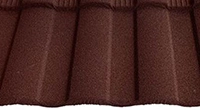
The first order of stone coated metal roof tiles is where most of the long-term working rules get set: which specification is being bought, which sample defines the colour, and which artwork defines the brand. Getting these three things documented early makes every repeat order simpler. This guide is written for importers and distributors placing a trial or first container order.
Why minimum order quantities exist
MOQ is usually driven by production economics rather than by policy. A coating line needs a set-up run for each profile and each colour blend; granules, primer and topcoat are prepared in batches; cartons are printed in print runs. Small quantities spread those fixed steps across very few tiles.
MOQ may therefore be expressed in pieces, in square metres, or as a minimum per colour per profile. The third form is the one to watch: an order that meets the total MOQ but splits into eight blends may still be difficult to schedule. Ask how MOQ is defined before designing the opening stock range. Our lead time article explains how those changeovers affect the delivery schedule, and the OEM/ODM guide covers what a custom blend requires.
Building a useful sample kit
A single tile tells you very little. A workable sample kit usually includes:
· Two or three full-size tiles in the target profile.
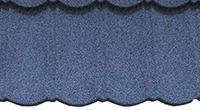
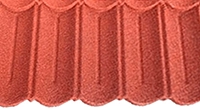
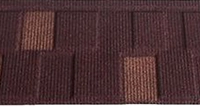
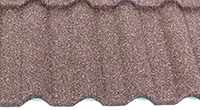
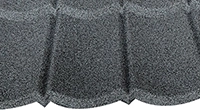
· A chip card or a set of colour-blend options.
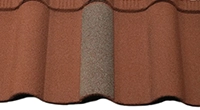
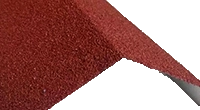
· The matching ridge cap and one valley or barge trim.
· The specified fastener type with washer.
· A carton label or artwork proof.
· The current data sheet and packing specification.
With the full set you can check overlap geometry, trim fit, fastener compatibility and packaging in one review. The sample evaluation routine describes the checks to run on each item.
Colour chip approval and retention samples
Colour on a stone coated tile comes from a blend of mineral granules, so it varies slightly between lots. The practical control is not a promise of identical shade but a sealed reference.
A typical approval sequence: factory produces sample tiles → buyer reviews them in daylight and in showroom lighting → both parties sign and seal a retention set → the blend reference is written into the contract → each batch is compared with the retained set. Keep one sealed set at the factory, one with the importer, and one with the inspector if a third party is involved. This is also the point where the QC checklist becomes an agreed document rather than a supplier brochure.
Private label artwork and carton approval
Artwork files should be print-ready and checked against the actual carton die, including bar code placement, batch code field, net and gross weight, and any country-of-origin wording required by the destination market. A proof that looks right on a screen can still be wrong on the printing plate.
Packing quantity should be decided at the same time. Pieces per carton influences pallet dimensions, container utilisation and how much handling damage occurs on site. Include the carton specification in the quotation comparison, because freight is calculated on real packing data, not on an assumed one.
Moving from trial order to repeat order
A trial order is most useful when it is treated as a documented rehearsal: note the batch codes, photograph the first pallets on arrival, record any installation feedback, and compare the goods with the sealed samples. Those records make the second order faster, because the specification, artwork and blend reference already exist.
If the first shipment is destined for a new market, check the document requirements with the local broker before production rather than after packing; the documentation guide lists the standard set. For buyers who want an extra check, a pre-shipment inspection can be written into the same agreement.
Frequently Asked Questions
Is MOQ negotiable on a first order?
Sometimes, particularly if the order uses one profile and an existing colour blend. A trial quantity with many custom variants is harder to accommodate than a straightforward one.
Who pays for samples and freight?
This is a commercial term to agree in writing. Clarify it together with the courier account and the sample lead time before the kit is produced.
Should the artwork be approved before or after the tile samples?
Both are needed, and they can run in parallel. The tile samples define the product; the artwork proof defines the packaging. Neither should be assumed approved by the other.

— FUODE ROOFING —
Stone Coated Metal Roofing Source Factory | Shandong, China
www.fuode.com | Welcome factory visit & sample requests