Español
 العربية
 Francés
 Русский
 Português
 Deutsch
 日本語
 한국어
 Việt





Hail Impact Performance of Stone Chip Coated Metal Roof Tiles
Hail Impact Performance of Stone Chip Coated Metal Roof Tiles
Hail is one of the few loads that arrives without warning, acts on a small area and leaves evidence behind. For metal roofing, the question is not whether the surface will mark, but how the assembly absorbs the energy and whether the mark becomes a functional problem. This article explains what happens at the surface, how impact behaviour is described in test reports, and which questions separate a useful data sheet from a marketing claim.
How a stone chip surface responds to impact
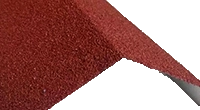
A stone coated tile is a layered system, and each layer plays a different role under impact. The granule layer distributes the contact pressure over a wider area. The basecoat and topcoat provide a degree of elastic recovery. The steel core absorbs the remaining energy by deflecting, and then either returns or retains a shallow deformation.
That sequence explains the two outcomes seen after a hail event. A cosmetic mark, where granules are displaced or the topcoat is scuffed, is common and does not necessarily affect water shedding. A permanent dent, where the steel has yielded, is a deformation of the profile; whether it matters depends on depth and location relative to the overlap. A puncture is a different category altogether and is not expected from hail on a coated steel tile of normal thickness.
Impact test methods and what they measure
Impact resistance of roof coverings is described by standardised tests in which a known mass is dropped from a known height onto a sample, and the sample is then assessed. Different markets reference different methods, and the classification scales are not interchangeable.
When reading a report, four details determine whether it applies to your order:
1. The exact sample description — profile, steel thickness and coating system.
2. The test method and its edition or year.
3. The classification achieved, expressed in the units of that method.
4. The date of the test and the identity of the laboratory.
A report that names a method but omits the sample description cannot be mapped onto a specific product. Our certificates guide explains this reading discipline in more detail.
Steel thickness and profile stiffness
Two physical properties dominate the response: how thick the steel is and how stiff the formed profile is. Thickness increases the energy required to reach yield. Profile depth and rib geometry increase stiffness without adding mass, which is why a deeper profile can outperform a flat sheet of the same gauge.
There is a design trade-off. A stiffer, thicker tile costs more and weighs more, and the benefit is only realised in hail-exposed regions. For a project in a low-hail area, that specification may be paying for a load that will not occur. This is the practical argument for matching the specification to the region rather than ordering the heaviest option by default.
Inspection after a hail event
After a storm, an inspection should be structured rather than impressionistic:
· Walk the roof and record the location and approximate size of visible marks.
· Distinguish granule displacement from permanent deformation.
· Check laps, ridges and valleys, where water is concentrated.
· Examine fastener heads and washers for damage.
· Look inside the roof space for daylight or water staining.
· Photograph and date the findings for any insurance or warranty discussion.
A written record with photographs is more useful than a verbal opinion, because hail claims are often assessed weeks later. The maintenance guide provides a routine that can be adapted for post-storm checks.
Questions for the technical data sheet
Ask the supplier to state, in writing:
1. Whether the product has been tested for impact, and to which method.
2. The classification achieved, and the sample description that was tested.
3. The steel thickness range covered by that result.
4. Whether the result applies to all colours and profiles in the range, or only to the tested variant.
5. The recommended inspection interval for hail-exposed regions.
If the answer to item four is unclear, treat the result as applying only to the tested variant. That is a conservative reading, and it protects the specification. For buyers comparing suppliers, the quotation guide shows how to place this information alongside price.
Frequently Asked Questions
Will hail crack a stone coated metal tile?
A coated steel tile of normal thickness is expected to deform rather than crack under hail. Severe events can leave dents, which is why post-storm inspection and records matter.
Does the stone chip layer improve impact resistance?
It spreads contact pressure and protects the coating beneath, which helps. The dominant factors remain steel thickness and profile stiffness.
Does a higher test classification suit every project?
It describes behaviour under that test method. Whether it is needed depends on the hail exposure of the site and on the project's requirements.

— FUODE ROOFING —
Stone Coated Metal Roofing Source Factory | Shandong, China
www.fuode.com | Welcome factory visit & sample requests