Español
 العربية
 Francés
 Русский
 Português
 Deutsch
 日本語
日本語
 한국어
한국어
 Việt
Việt

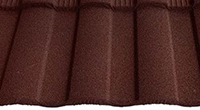
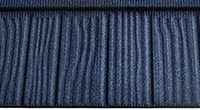

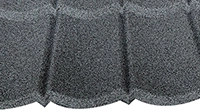




Don’t Just Look at Tile Prices — These Five Accessories Are Just as Critical in a Stone Coated Metal Roofing System
Don’t Just Look at Tile Prices — These Five Accessories Are Just as Critical in a Stone Coated Metal Roofing System
Many buyers start their inquiry with “what’s your stone coated metal roofing tile price per piece?” That’s a fair question — tiles do make up the largest portion of roofing materials. But focusing entirely on tile unit pricing often means missing a key reality: a complete stone coated metal roofing system goes well beyond the tiles themselves. Accessories and auxiliary materials typically account for 15 to 25 percent of the total cost, and they directly determine the waterproofing lifespan and wind resistance of the finished roof. We’ve seen quite a few projects where the tiles were specified to a high standard, yet problems emerged years later exactly from the accessories — ridge caps coming loose and leaking, barge boards torn off by wind, corroded fasteners causing tiles to slip out of place. The repair costs for these issues far exceed whatever was saved by cutting corners on accessories, not to mention the collateral damage that a leaking roof does to the building interior.
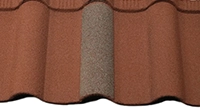
Ridge caps carry the waterproofing responsibility for the entire ridge line — and they’re far more than decorative trim. The ridge is where two roof slopes meet, and it’s also the spot most vulnerable to wind-driven rain. Properly made ridge caps need to interlock seamlessly with the main tiles in structure, and their material and coating specifications should match the main tiles. Some suppliers, aiming to drive down the overall quote, use thinner substrate or reduced coating thickness on the ridge caps. The difference isn’t visible in the short term, but the ridge line gets the longest sun exposure and the most extreme temperature swings — discoloration and rust, three to five years in, almost always start at the ridge. Experienced contractors will spot-check ridge caps during inspection for galvalume coating thickness and stone chip adhesion precisely because they know this is where the roof first reveals its weaknesses. From a procurement standpoint, listing ridge cap specifications separately when requesting a quote — and confirming they use the same batch of substrate and the same coating formulation as the main tiles — goes a lot further than simply comparing tile unit prices.

Barge boards determine the edge security of a roof in high winds,something coastal and open-terrain projects feel most acutely. Installed at the eaves and gable edges, their job is to lock down the edge tiles and stop strong wind from peeling the roof open from the side. If the barge board’s folded edge isn’t deep enough, or if the fastening spacing is too wide, it’s not uncommon to see edge tiles ripped off when a typhoon passes through. For projects shipped from China to coastal West Africa or Southeast Asia, we proactively increase the fold depth and tighten the fastening spacing on barge boards — a practice built up across multiple real-world projects. From a purchasing perspective, two parameters are worth paying close attention to: the substrate thickness of the barge board, and its interlocking depth with the main tile. On projects where barge boards are fabricated locally, the question becomes whether the fabrication precision actually matches the tile profile — gaps from a poor fit will catch wind and leak water just the same.
Gutter and drainage system design often deserves more attention than the material itself. Cross-section shape, slope angle, downspout spacing — these details directly determine whether the system overflows and backfills during heavy rain. In high-rainfall regions, such as the Gulf of Guinea coast in West Africa or the monsoon zones of Southeast Asia, gutter drainage capacity needs to be calculated with redundancy based on local meteorological data, not a one-size-fits-all template. In terms of material, the matching gutters in a stone coated metal roofing system are typically roll-formed from the same color-coated galvalume steel, but the key question is whether the coating can withstand prolonged water pooling — unlike the tile surface, which self-cleans via its slope, gutters hold standing water longer, and the coating’s hydrolysis resistance matters more here than on the tile face.
Fasteners are the lowest-cost component in the entire system and yet carry some of the most severe consequences when they fail. A single screw costs a fraction of a cent, but one corroded screw can cause an entire tile to break loose in a storm. Stone coated metal roofing fasteners need to satisfy three things at once: corrosion resistance, an integrated waterproof washer, and a screw head color that blends with the tile surface. For corrosion resistance, 304 stainless steel is the baseline; for coastal or high-salt-spray environments, stepping up to 316 stainless is advisable. The waterproof washer looks trivial, but its EPDM material grade and thickness determine whether the screw hole becomes a seepage point — dig into many leak investigations and what you find isn’t a cracked tile but an aged washer at the fastener hole. On the appearance side, screw heads that don’t match the tile color create a scattered speckled look across the roof from any distance, which matters a great deal for high-end residential and hotel projects. Experienced installation crews also control torque during fastening: too tight cracks the tile coating, too loose and the washer never forms a proper seal — a detail well worth the time spent covering it in installation training.
Underlayment is the invisible line of defense beneath the tiles, but its place in the roofing waterproofing system is irreplaceable. Tiles themselves rely on physical water shedding and overlapping for waterproofing, and they perform well under normal rainfall. But in wind-driven rain conditions, water can get forced up under the tile overlaps — at that point, the underlayment installed over the roof deck becomes the final insurance policy. Underlayment selection depends on the climate type where the project is located: for hot and rainy regions, a breathable composite underlayment is the better choice, waterproof while still allowing interior moisture vapor to escape and preventing condensation and mold on the underside of the roof deck. For hot and dry regions, the high-temperature stability of a self-adhesive modified bitumen underlayment is the more important metric. Some projects try to save budget by substituting ordinary construction waterproofing membrane — but under repeated thermal expansion and contraction, this material tends to become brittle and crack. Once the underlayment beneath the tiles fails, locating the leak point is extremely difficult, and repair means stripping and re-laying a large area of tiles at a cost far exceeding whatever was saved on materials.
Looking at these five accessories together, they all point to the same logic: a roof is a system, not a single product. A weak link anywhere in the system drags down the overall performance floor. This is why some larger-scale projects already include “whether the supplier can deliver a complete roofing system” as a scoring criterion in tender evaluations, going beyond tile samples and price sheets. From the perspective of direct sourcing from a Chinese factory, choosing a stone coated metal roofing supplier that can provide a complete roofing system solution brings advantages on several fronts.

Standardized specifications eliminate hidden on-site coordination costs. From main tiles to ridge caps, barge boards, gutters, fasteners, and even underlayment — when all components come from the same factory and the same quality control process, the post-delivery fit doesn’t require the buyer to go back and forth confirming compatibility. Tiles and accessories from different suppliers can carry millimeter-level dimensional deviations; individually they look minor, but accumulated across an entire roof they turn into gaps, misalignment, and rework.
Clear accountability removes the overhead of finger-pointing. When a roof has an issue, there’s no back-and-forth between the tile supplier and the accessory supplier — one source factory takes responsibility for the entire roofing system. Anyone who has handled import procurement knows how inefficient cross-supplier liability tracing is: from discovering the problem, to pinning down which party is responsible, to actually getting compensation — the time and energy lost in between often exceeds the material value itself.
There aren’t that many stone coated metal roofing manufacturers on the market that can genuinely deliver a complete system, because accessory production and main tile production run on separate lines and require years of supply chain integration capability. When evaluating whether a factory truly has system supply capability, beyond looking at samples and quotations, there are a few specific questions worth asking: Are the ridge cap substrate and coating produced in the same batch as the main tiles? Are the barge board tooling dies purpose-built for that specific tile profile? What grade of stainless steel is used for the fasteners?
We’ve always positioned ourselves as a stone coated metal roofing source factory that delivers complete roofing systems. Accessory quality sits on the same standard as main tile quality, because a roof is one integrated whole — customers don’t remember only that the tiles held up well while overlooking the headaches caused by leaking accessories. Whether you’re a contractor preparing a new project or an importer planning to switch from an existing supplier, you’re welcome to bring your specific roofing requirements to the table — from tile profile selection to the accessory list, from container loading plans to arrival inspection, we’re happy to lay out the details transparently right at the quotation stage.