Español
 العربية
 Francés
 Русский
 Português
 Deutsch
 日本語
日本語
 한국어
한국어
 Việt
Việt
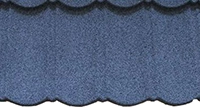
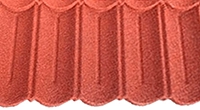

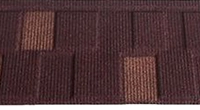
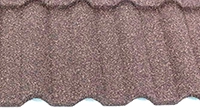
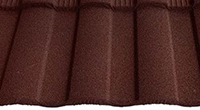
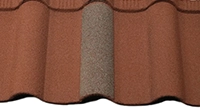
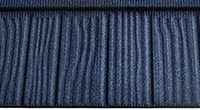

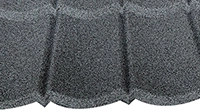


Lightweight Meets High Performance Roofing
Builders and homeowners often face a dilemma when selecting roofing materials: traditional clay tiles are beautiful but heavy, while asphalt shingles are affordable yet short-lived. Stone Coated Metal Roofing has completely shattered this trade-off. It perfectly replicates the classic textures and visual appeal of clay tiles, wood shakes, and slate while harnessing the formidable strength of steel. For decades, the industry has searched for a material that delivers the aesthetic warmth of Mediterranean clay, the rustic charm of cedar shakes, and the elegant precision of natural slate, all while overcoming the inherent weaknesses of each — clay cracks under freeze-thaw cycles, wood rots and attracts pests, slate is prohibitively expensive and demands specialized labor. Stone coated metal roofing answers all of these challenges in a single integrated system. By starting with a high-strength steel substrate and layering it with precisely formulated stone coatings, this category of roofing looks indistinguishable from premium traditional materials yet outperforms them in virtually every measurable dimension: weight, longevity, fire resistance, wind uplift resistance, and total cost of ownership. For the builder, this means fewer callbacks and faster installation. For the homeowner, it means a roof that looks stunning on day one and continues performing for half a century with minimal maintenance. You no longer have to choose between beauty and brawn, between upfront cost and long-term value, or between architectural authenticity and modern engineering. Stone coated metal roofing gives you both, and the market has taken notice — global demand has grown at nearly nine percent annually, driven by stricter building codes in hurricane and wildfire zones and a shift toward materials offering genuine sustainability without aesthetic compromise.
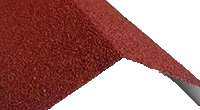
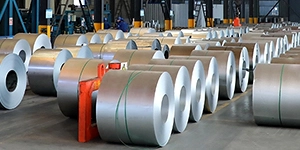
At Fuode, our manufacturing process bonds natural stone granules to a Galvalume steel core using high-grade acrylic resin adhesives. This is not a superficial coating that fades and peels within a few seasons; it is a permanent molecular bond fusing stone directly into the steel substrate. The Galvalume steel core — an alloy of zinc, aluminum, and silicon — provides extraordinary corrosion resistance, outperforming standard galvanized steel by a factor of two to four in accelerated salt-spray testing, making Fuode tiles particularly well-suited for coastal installations where salt-laden air rapidly degrades conventional roofing. The natural stone granules are crushed and graded to precise specifications, ensuring consistent color, texture, and coverage across every batch. Unlike synthetic colorants that bleach under intense UV exposure, natural stone retains its hue indefinitely because the color is inherent to the mineral itself. The acrylic resin adhesive is an advanced thermosetting polymer that remains flexible after curing, allowing the stone coating to expand and contract with the steel substrate through temperature cycles without cracking or delaminating. This three-layer architecture — steel for strength, acrylic resin for bonding and flexibility, and natural stone for aesthetics and UV protection — is the result of continuous refinement on our production lines in Shandong, China. Every batch undergoes rigorous quality control, from incoming inspection of steel coils and stone shipments to final dimensional and adhesion tests on finished tiles before export. The result is a product ready to withstand the most demanding environments, from the typhoon-battered coastlines of the Philippines to the scorching interior of sub-Saharan Africa.
This results in a product only one-sixth the weight of traditional concrete tiles, significantly reducing structural load and lowering construction costs for foundations and framing — a critical advantage in both new builds and retrofits. A typical concrete tile roof imposes a dead load of 60 to 90 kilograms per square meter, requiring heavier rafters, larger beams, and more substantial foundations. Fuode tiles, by contrast, weigh approximately 6 to 8 kilograms per square meter installed, falling comfortably within the capacity of standard light-frame construction without reinforcement. For architects and engineers, this unlocks design freedom — larger spans, taller walls, and more ambitious rooflines become feasible when the roof is not the heaviest component of the building envelope. For developers, the savings cascade through the entire project: smaller structural members, less steel and concrete, lower material costs, reduced transportation, and faster erection cycles. On retrofit projects, the benefit is even more pronounced. Many older buildings were never designed to carry concrete or clay tile roofing, and upgrading would require expensive structural reinforcement or would violate local building codes. Fuode tiles can be installed directly over existing roofing in most situations, eliminating tear-off costs while adding negligible load. This makes stone coated metal roofing the ideal choice for the growing global market of roof replacement, where owners want a premium aesthetic upgrade without the engineering headaches that heavy traditional materials inevitably bring.
The surface stone coating provides exceptional UV resistance and sound insulation, keeping the building cool in summer and quiet during rainstorms. Beyond these everyday benefits, the performance advantages extend to extreme conditions. In fire-prone regions, Fuode tiles carry a Class A fire rating — the highest available — because the steel core is non-combustible and the stone coating will not ignite, making them code-compliant for wildfire-urban interface zones where asphalt shingles and wood shakes face increasing restrictions. In hurricane and typhoon corridors, the interlocking tile profile resists wind uplift exceeding 120 miles per hour, meeting or surpassing the most stringent coastal building codes including Florida's High Velocity Hurricane Zones. Hail impact resistance is another decisive advantage: the flexible steel substrate absorbs and dissipates impact energy rather than shattering, while the stone coating distributes the point load across a wider area. Independent testing confirms Fuode tiles withstand hailstones up to 50 millimeters in diameter without functional damage — a threshold that would destroy a conventional asphalt shingle roof. Thermal performance also deserves attention. The natural stone surface has high thermal mass and emissivity, absorbing solar energy slowly during the day and radiating it efficiently at night. Combined with the reflectivity of the metallic substrate and an optional ventilated air gap, a Fuode roof can reduce attic temperatures by 15 to 25 degrees Celsius compared to dark asphalt shingles. This translates directly into lower air conditioning loads, reduced energy bills, and a smaller carbon footprint over the life of the building.
From a total cost of ownership perspective, stone coated metal roofing represents one of the most compelling value propositions in the building materials industry. While upfront material cost is higher than entry-level asphalt shingles, it is competitively priced against premium architectural shingles, natural slate, and high-end clay tiles — and when installation speed, structural savings, energy performance, and longevity are factored in, the lifetime advantage becomes decisive. An asphalt shingle roof requires full replacement every 15 to 25 years, meaning a building owner buys that roof three or four times over a 50-year period, each cycle bringing material costs, labor, and disposal fees — asphalt shingles alone contribute over 12 million tons of landfill waste annually. A Fuode roof is engineered for a service life exceeding 50 years with minimal maintenance, and the steel content is fully recyclable at end of life. Maintenance is limited to periodic visual inspection and debris clearing — no re-sealing, re-coating, moss treatment, or cracked tile replacement. For commercial property owners and municipal housing authorities managing large portfolios, this near-zero maintenance profile represents an enormous operational cost reduction over decades. Insurance companies have begun recognizing these benefits, with some carriers offering premium discounts for buildings equipped with Class A fire-rated, wind-resistant metal roof systems. The cheaper roofing option often proves the most expensive choice over a full building lifecycle. Forward-thinking builders and homeowners increasingly recognize that a Fuode roof is not an expense but an investment — one that pays for itself through reduced energy costs, eliminated replacement cycles, lower insurance premiums, and higher property resale value.
As the global construction industry confronts the twin challenges of climate resilience and resource sustainability, the choice of roofing materials has never been more consequential. Buildings account for nearly 40 percent of global carbon emissions, and roofing — the primary interface between interior and exterior — plays an outsized role in determining both energy performance and material replacement cycles. Every roof replacement avoided through durable, long-life materials represents a significant reduction in construction waste, manufacturing emissions, and transportation energy. Fuode's manufacturing philosophy is aligned with these imperatives: we build roofing that lasts, that performs, and that makes the buildings it protects more efficient. Our factory in Shandong, China, serves importers, distributors, and project developers across Africa, Southeast Asia, Central Asia, and the Middle East with consistent quality, competitive factory-direct pricing, and logistics reliability from our location near one of the world's busiest container ports in Qingdao. Whether you are developing a luxury resort on a tropical coastline, building affordable housing at scale in a rapidly urbanizing market, or replacing an aging roof on a family home, Fuode stone coated metal roofing tiles offer a solution that makes no compromises — between beauty and performance, between upfront cost and lifetime value, and between the demands of the present and the responsibilities we owe to the future.